Until the end of 2025, cryptocurrency taxes in Romania used to be even simpler. Everything was just charged at a very straightforward 10%, extremely reasonable for traders. The basis was Romania’s flat income tax rate. Everything was simply charged as regular income, since digital currency isn’t legally regarded as money in Romania. Gains realized by individuals up to July 31, 2025 were even exempted from debt to ANAF under a temporary Fiscal Code amendment.
Since January 1, 2026, a new change is in effect, the capital gains rate moving up to 16% (Law 141/2025). As we all know, digital currency is anything but simple. Developers and entrepreneurs are extremely innovative, and the fields of investment in blockchain continually just grow ever more sophisticated and varied. So every area of virtual cash endeavors needs to be examined and discussed in its own right, as well as how it’s treated by ANAF.
ANAF Crypto Taxes 101
There are two primary distinctions in the way crypto tax is examined by ANAF in Romania:
- Income in the form of digital assets in exchange for work
- Profits from digital asset disposals
Income
This refers to digital assets you earn directly, rather than profits made from trading or disposing of assets you already own. This includes rewards from mining, staking, yield farming, or other DeFi platforms, as well as occasional token distributions from third-party products like exchange-based savings accounts.
The 10% personal income tax applies to these earnings, calculated based on the fair market value of the tokens in Romanian lei on the day you receive them. Unlike capital appreciations, income charges are triggered immediately upon receipt. For example, if you mine 1 BTC worth 200,000 lei on the day it’s mined, that 200,000 lei counts as relevant income – even if you don’t sell the asset right away.
Capital Gains
This here is triggered when you decide to lock in your profit from a particular digital asset after a rise in asset value. So, the time when you end up owing is when you actually part with a specific digital coin. Such transactions are charged 16%.
Even if no cash changes hands, the difference between your original purchase price and the market value at the time of disposal counts as an appreciation. For example, if Elena bought 2 ETH for 10,000 RON each and sold 1 ETH for 15,000 RON, her applicable enrichment would be 15,000 − 10,000 = 5,000 RON.
It’s important to note that not all disposals are charged. However, once an asset leaves your control or changes hands, you must calculate the rise in RON and report it on your annual return.
Offsetting Losses
Just as importantly, when you go into the red with a digital coin, you get to use that to reduce your obligation to pay for other appreciations. Professional sources report that unused losses can be carried forward for as long as 7 years, though ANAF has not issued detailed crypto-specific guidance on this – confirm your situation with a tax adviser. ANAF also hasn’t declared a position on lost or stolen digital currencies, so document such cases carefully before claiming anything.
Specific Cases of ANAF Crypto Tax
Since the intricacies of many business ventures in blockchain are highly novel and unique, we’ll have to break down how those crypto taxes work one by one. ANAF has not declared official stances on many investment areas, instead placing the burden on the traders.
Staking
You lock in your tokens for a set period of time until they are returned to you and you are compensated with more coins. Rewards from staking are considered earnings and must be reported as such. The fair market value of the coins at the time they are received is used to calculate applicable income, charged at 10%. If you later sell, swap, or spend those staked coins and their value has increased, the rise is also subject to the capital gains rate of 16%.
Lending Interest
In this case, you will likely be charged on additional coins obtained throughout this process, and if your digital coins grow in value and then you dispose of them, you will owe for that too. Crowdlending has quickly become one of the most appealing ways for investors in Romania to earn interest income without constantly trading volatile assets. Instead of worrying about short-term market swings, you can lend your digital assets to borrowers—either through peer-to-peer networks or decentralized finance platforms—and earn interest or fees in return.
For those comparing options, 8lends stands out. Loans on the platform are backed by real-world collateral and screened against 40+ due diligence criteria by Maclear AG, with borrowers rated on an AAA–D scale, helping mitigate risk for lenders. By primarily using stablecoins, 8lends keeps the value of interest payments steady and easy to track, making both your earnings and your reporting far more straightforward. Capital remains at risk, and returns depend on borrower performance.
Airdrops
You will likely only be charged for your disposals on these.
Gifts
These are likely exempt right now, as there has been no tax declared at least for now on any gifts.
Importance of Records in Crypto Taxes
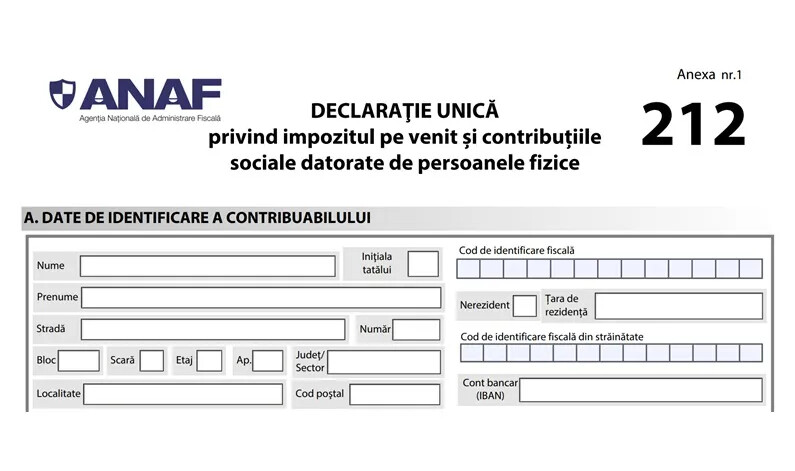
In Romania, the responsibility for calculating and reporting crypto taxes rests entirely on the payer. Good record-keeping is therefore a must. For a step-by-step walkthrough of the filing process itself, see our guide to reporting crypto taxes to ANAF on Form 212.
You do start with an allowance of 600 lei, and before reaching that point, gains under 200 lei per transaction need not be reported.
Important details to keep track of are:
As proof, be sure to hold onto:
- Exchange or wallet statements showing deposits, withdrawals, and trade history
- Records of staking, airdrops, hard forks, and liquidity pool participation
- Documentation of gifts received or sent
- Invoices and receipts
- Bank statements
- Wallet histories and account balances
Calculation of Capital Gains Tax on Crypto: Average Cost Basis
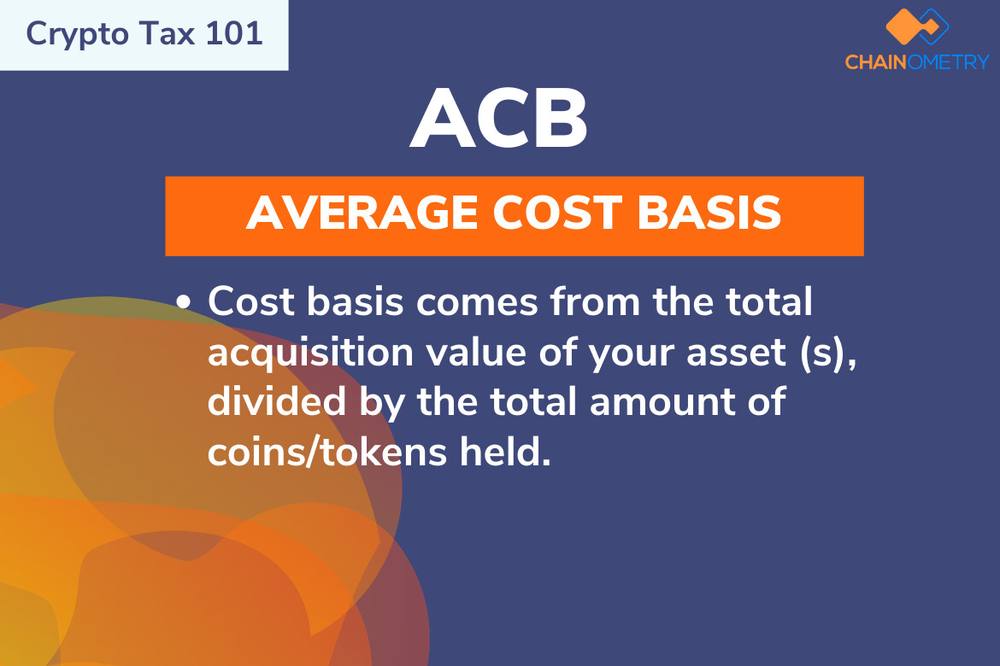
ANAF has not mandated a specific cost basis method for crypto. Corporations commonly choose between LIFO, FIFO, and average cost basis; for individuals, the weighted average cost method – the same approach used for shares – is the common way to compute crypto tax gains.
It’s done as follows:
- Calculate the total cost: Add up the RON value of all purchases of a specific digital asset, including any allowable transaction or network fees.
- Divide by total units held to get the average cost per unit.
- Determine appreciations or declines: When you sell, swap, or spend assets, subtract the average cost per unit from the fair market value at the time of disposal.
Using the average cost basis method is particularly useful for Romanian investors with frequent trades or for those participating in staking and other profit-generating activities.
MiCA and DAC8: Implications for Romanian Crypto Taxation
Romania, as part of the European Union, is affected by two major regulatory frameworks that influence crypto tax reporting and compliance: the Markets in Crypto-Assets Regulation (MiCA) and the EU’s eighth amendment to the Directive on Administrative Cooperation (DAC8). Both are poised to change how ANAF tracks and audits activity.
MiCA
Though its primary focus is investor protection, transparency, and market stability, it also indirectly affects debt to ANAF. By enforcing clearer rules on issuance, trading platforms, and service providers, MiCA ensures that exchanges operating in Romania maintain robust KYC and reporting procedures.
DAC8
This specifically targets cross-border reporting. It requires exchanges and custodial wallet providers in EU countries to report user transactions to their respective fiscal authorities, which then share this data across the EU. In practice, this means Romanian residents using EU-based exchanges may see their trades automatically reported to ANAF.
Conclusion
The need to grow more farsighted has increased since the 16% capital gains rate came into effect. This calls for strategy built around income and capital gains, capitalizing on breaks, and correctly understanding average cost basis. Temporary exemptions, allowances, and the ability to offset losses provide some relief, but careful planning remains key. For the full rate structure and how disposals are treated, see our guide to how Romania taxes crypto in 2026, and for the wider European picture, how P2P lending and crypto crowdlending income is taxed in Europe.
For Romanian digital asset investors, planning for earnings and capital gains charges can feel like walking a tightrope. That’s where 8lends and crowdlending come in. With collateral-backed loans, 40+ due diligence criteria assessed by Maclear AG, borrowers rated on an AAA–D scale, and interest paid in stablecoins, 8lends helps you generate fixed-rate earnings defined in advance, without the constant churn of trading volatile assets. This means your earnings are easier to track and simpler to report to ANAF. Capital is at risk, and returns depend on borrower performance — before investing, review whether P2P lending is safe and how collateral protects you.
About 8lends
8lends is a crypto crowdlending platform where investors fund vetted, collateral-backed SME loans in USDC, with every investment, interest payment, and principal return recorded on the Base blockchain. Borrowers pass 40+ due diligence criteria assessed by Maclear AG and are rated on an AAA–D scale, with selected projects covered by BuyBack protection returning 100% of principal if a borrower delays beyond 60 days. Maclear AG operates as a financial intermediary in the non-banking sector and is a member of PolyReg SRO, under Swiss financial regulations including AML, KYC, and GDPR.