How Romania classifies crypto
Romania does not recognise cryptocurrency as legal tender. Instead, the tax authority (ANAF) treats digital assets as intangible assets, and crypto earnings are categorised as "income from other sources." That classification, rather than a capital-markets regime, is what shapes how everything below is taxed.
Unlike several EU countries where exchanges pre-report investor activity to the tax office, Romania places the reporting duty on the individual. You self-declare crypto income and gains on the annual Single Return (Declarația Unică, Form 212). The burden of proof — and of accuracy — sits with you.
When crypto is taxed: income vs disposals
Romania separates two situations: earning crypto (income) and disposing of it (a realised gain). They are charged differently, so identifying which one a transaction is matters before any rate is applied.
How is crypto income taxed in Romania?
Crypto you earn — through mining, staking, or other rewarded activity — is taxed as ordinary income at Romania's flat 10% income rate, the same rate that applies to most personal income regardless of amount. It is valued in RON at the time you receive it.
How are crypto disposals taxed in Romania?
A disposal is taxed on the gain — the difference between acquisition cost and disposal value in RON. Disposals were historically charged at 10%; the copywriter's source indicates a move to 16% from 1 January 2025, and further changes affecting 2026. Because this rate is the single most important — and least settled — number for Romanian investors, confirm the current disposal rate directly with ANAF before filing rather than relying on any secondary source.
Do you pay tax on crypto-to-crypto swaps in Romania?
Yes. A common mistake is assuming tax only applies when cashing out to lei or euros. Exchanging Bitcoin for ETH or a stablecoin is a disposal, and the RON market value at the moment of the swap is used to calculate the gain or loss. Spending crypto works the same way, even with no fiat involved.
Untangling the two charges
The two charges can overlap on the same coins. Suppose you are paid in crypto for design work, and you also mine or stake. That earned crypto is income, taxed at 10% when received. If you later sell, swap, or spend it and its value has risen since receipt, that increase is a separate disposal gain — taxed under the disposal rate, not the income rate.
This double touchpoint is where most Romanian crypto errors begin: investors report the income but forget the later disposal, or apply the wrong rate to one of them. Stablecoin-denominated activity reduces the problem, because a coin engineered to hold its value rarely produces a large disposal gain to track.
Lower-admin income: stablecoin crowdlending
For investors who want crypto income without the disposal-tracking overhead of active trading, crowdlending is a structurally simpler option. You lend to vetted borrowers and earn interest, rather than chasing price movements that each create a taxable disposal.
Why is lending income simpler to report than trading?
Interest credited in a stablecoin arrives as a defined amount at a defined time with a near-constant RON value, so each receipt is straightforward to record as income. Note that lending interest is still taxable income and must be declared — the benefit is a cleaner, more predictable paper trail, not an exemption. For comparable EU regimes, see our guides to Denmark's crypto loss rules, Sweden's 30% crypto tax, and Portugal's crypto tax regime.
Cost basis: FIFO, LIFO, and average cost
Most investors buy the same coin repeatedly at different prices, so the gain on a disposal depends on which "batch" is treated as sold. Romanian rules generally direct individuals toward the average cost method, while other methods illustrate how the choice changes the result. Confirm the method you are required to use with ANAF.
Losses, allowances, and offsetting
A loss arises when the RON disposal value is below the acquisition cost. Only realised losses from genuine disposal events count — a drop in value while you simply hold a coin is an unrealised loss and is not deductible.
The practical takeaway is unchanged regardless of how the loss question is resolved: keep complete records of every disposal in RON terms, because no offset — if available at all — can be claimed without them.
Key takeaways
About 8lends
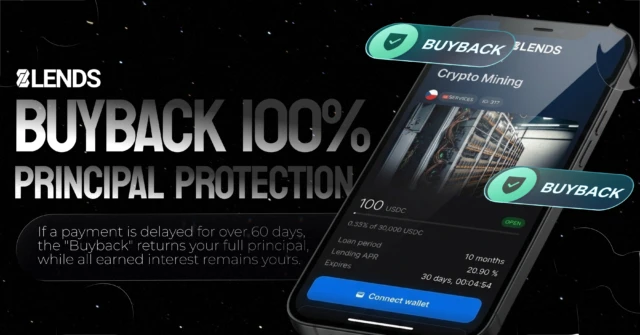
8lends is a crypto crowdlending platform built by the team behind Swiss-based Maclear AG, giving investors access to real small and medium-sized business loans funded in USDC on the Base blockchain. Borrowers pass 40+ due diligence criteria assessed by Maclear AG and are rated on an AAA–D scale, with loans backed by real-world collateral and selected projects covered by BuyBack protection. Maclear AG operates as a financial intermediary in the non-banking sector and is a member of PolyReg SRO, under Swiss financial regulations including AML, KYC, and GDPR.