In Romania, crypto is reported to ANAF on the annual Single Return — Form 212, the Declarația Unică — for the previous calendar year. You self-declare both crypto income, taxed at the flat 10% rate, and gains on disposals. Strong records are your main defence under ANAF's burden-of-proof system.
VerifyRomanian crypto rules shifted during 2025–2026 and remain partly unsettled — including the disposal rate, the reported H1-2025 exemption, and the treatment of losses. The process below is accurate in outline, but confirm every rate, threshold, and deadline against current ANAF guidance or with a Romanian tax adviser before filing. Figures are illustrative.
Before you file: assemble your records
Documentation is your primary line of defence. ANAF operates a burden-of-proof system: it is your responsibility to justify every number you declare. Even a transaction that is not immediately taxed can affect a future cost basis, loss offset, or the income-versus-disposal classification. Missing records lead to over-reporting, denied deductions, or trouble in an audit.
Before you file: assemble your records
Documentation is your primary line of defence. ANAF operates a burden-of-proof system: it is your responsibility to justify every number you declare. Even a transaction that is not immediately taxed can affect a future cost basis, loss offset, or the income-versus-disposal classification. Missing records lead to over-reporting, denied deductions, or trouble in an audit.
Keep for every year you hold or trade crypto
Exchange trade histories and wallet transaction logs
Deposit and withdrawal confirmations
Staking and lending reward statements
Bank statements linking fiat on-ramps and off-ramps to blockchain activity
Old purchase confirmations that establish cost basis for coins sold years later
On-chain transaction hashes and protocol dashboards for DeFi activity
Bank records matter because they let ANAF trace the origin of funds and verify declared values in lei. Document internal transfers between your own wallets too — they prove no disposal occurred. Export CSVs and save screenshots in case a platform restricts access or shuts down; failed trades, refunds, and exchange closures all create gaps that raise questions later.
Bank records matter because they let ANAF trace the origin of funds and verify declared values in lei. Document internal transfers between your own wallets too — they prove no disposal occurred. Export CSVs and save screenshots in case a platform restricts access or shuts down; failed trades, refunds, and exchange closures all create gaps that raise questions later.
Who must file, and by when
Crypto is reported on the Single Return for the previous calendar year. You file through the ANAF online portal (Spațiul Privat Virtual) or on paper at an ANAF office.
The ANAF online portal (SPV), where the Declarația Unică is submitted electronically. Source: ANAF (anaf.ro).
What is the deadline to file Form 212 in Romania?
The return covers the previous calendar year and is reported as due by 25 May of the following year. Deadlines have moved in recent years, so confirm the exact current date with ANAF before relying on it.
Who counts as a Romanian tax resident?
You are generally a Romanian tax resident if you spend 183 days in the country during the year, or if your centre of vital interests is in Romania. That centre is assessed on where your family lives, schools and works, plus your banking, investment, and business ties. Residency determines the scope of what you must declare.
Do you need to file if you had no gains?
A small annual allowance (reported at 600 RON) and a per-transaction reporting threshold (reported at 200 RON) mean low-level activity may not need reporting. Even so, filing in a loss year can be worthwhile so the loss is recorded and available against future gains, where Romanian rules permit — a point covered under deductions below.
How to complete and submit Form 212
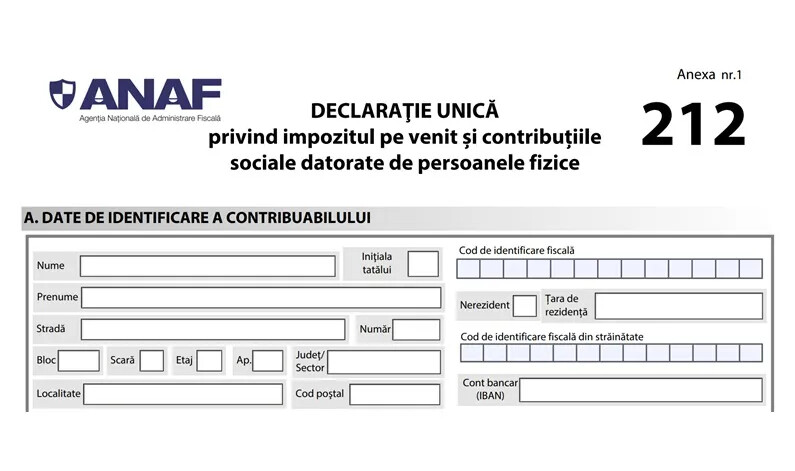
Form 212 — the Declarația Unică — is the single return that covers personal income and social contributions for individuals, including crypto. You enter crypto income and disposal gains in the relevant sections, declare any social contributions due, and submit. Confirm the current section and field references on the form itself, as ANAF updates them periodically.
ANAF Declarația Unică (Form 212) — the single return used to report crypto income and gains. Source: ANAF (anaf.ro).
Whether you file online or on paper, attach nothing you cannot substantiate. Every figure on the form should trace back to the records assembled in step one. After submission, keep that evidence for years — ANAF can review prior periods, and a 2021 cost basis may need proof when you dispose of the holding in 2026.
What you'll pay: income vs disposals
Romania separates earning crypto from disposing of it. Getting the classification right is what determines the rate.
How are mining and staking rewards taxed?
Crypto earned through mining, staking, yield farming, or lending interest is taxed as income at the flat 10% rate, on the fair market value in lei on the day you receive it. The charge arises on receipt, even if you keep holding the coins and never sell.
How are disposals taxed?
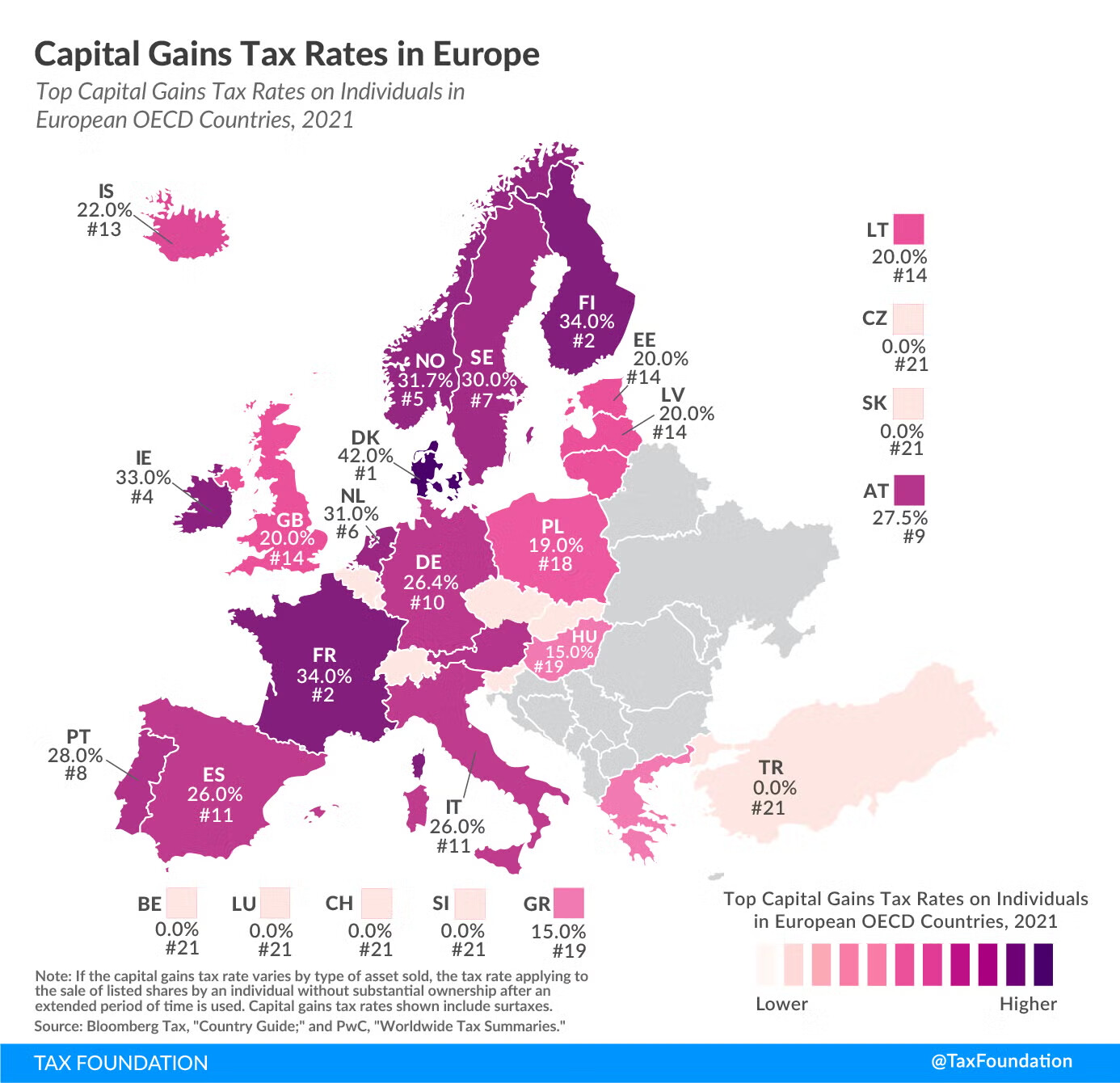
A disposal is taxed on the gain. This rate was historically 10%; the copywriter's source reports an increase to 16% — though the two source articles disagree on whether it took effect from 1 January 2025 or 1 January 2026. Because this is the single most consequential and least settled figure, confirm the current disposal rate and its effective date directly with ANAF.
Triggers a disposal charge
Converting crypto to fiat
Swapping one coin for another
Spending crypto on goods or services
Generally not taxable
Holding crypto
Unrealised increases in value
Moving assets between your own wallets
UnverifiedBoth copywriter drafts state that all individual crypto earnings were exempt for the first seven months of 2025 (to 31 July). We could not independently verify this temporary exemption; treat it as a claim to confirm with ANAF, not an established fact. A separate health contribution (CASS) may apply once income exceeds set multiples of the minimum wage.
Deductions and business expenses
Where mining, staking, or similar activity is carried on as a registered business or professional activity, ordinary and necessary expenses directly tied to generating the income may be deducted before the 10% income tax applies. Activity in a purely personal capacity is treated differently, so confirm your status before claiming expenses.
01Electricity for mining rigs or staking nodes
02Internet and connectivity fees
03Hardware — GPUs, ASICs, servers
04Software subscriptions and tools
05Accounting and legal services
06Maintenance and repair costs
ContestedThe source states that crypto losses can offset gains and carry forward up to seven years. The deductibility and carry-forward of crypto losses under Romania's "income from other sources" regime is genuinely unsettled. Keep complete loss records regardless, but do not rely on a carry-forward without written confirmation from ANAF or a professional.
Crowdlending: lower-admin crypto income
For investors who want crypto income without the disposal-tracking overhead of active trading, crowdlending is structurally simpler: you lend to vetted borrowers and earn interest, rather than generating a taxable disposal on every price move.
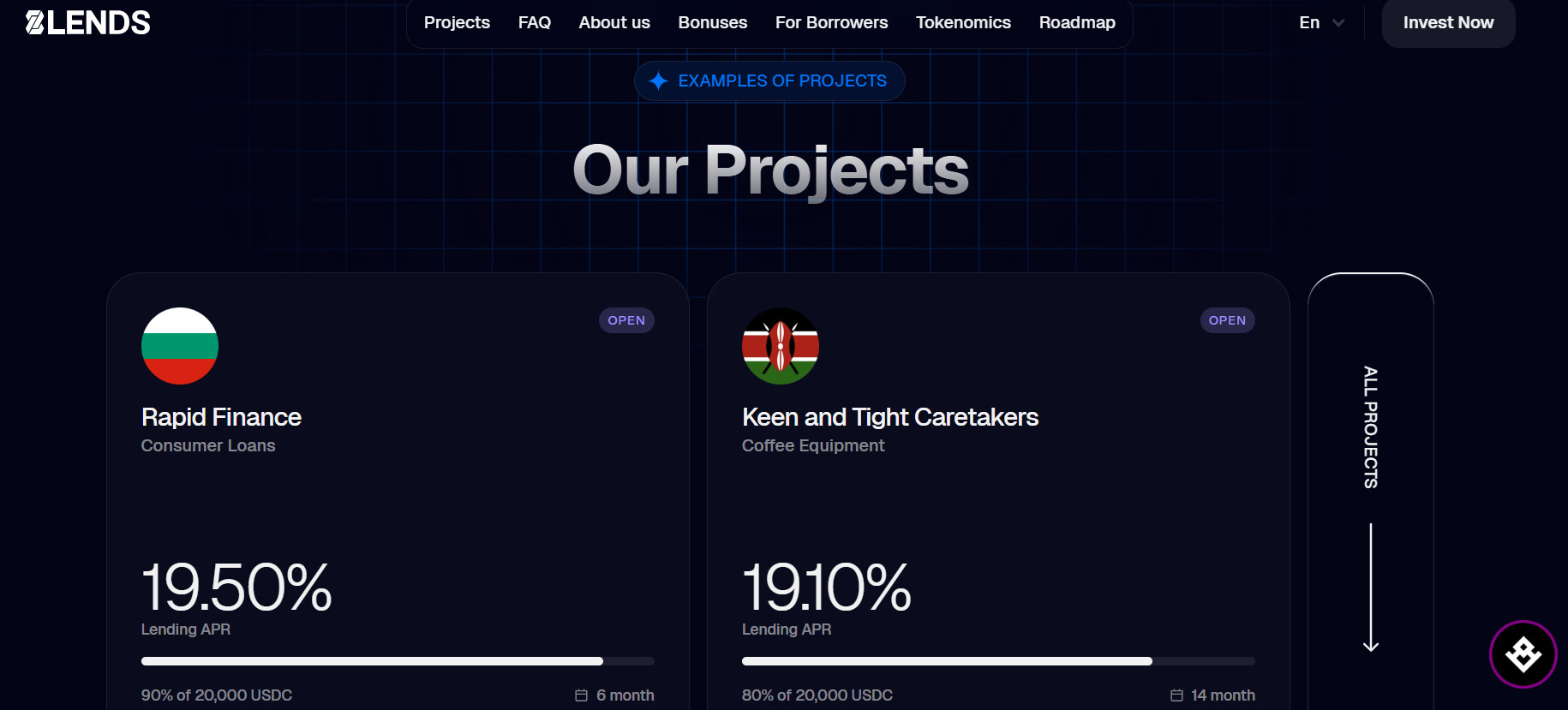
Example projects on 8lends, each with a fixed lending APR, funding progress, and term. Source: 8lends.
Spotlight — 8lends
Predefined income, cleaner reporting
8lends is the crypto-native crowdlending platform built by the team behind Swiss-based Maclear AG. Investors fund real small and medium-sized business loans in USDC and receive monthly interest at fixed rates. Because the unit of account is a stablecoin, the price volatility that complicates Romanian disposal calculations is largely removed from the income itself.
Every investment, interest payout, and principal return is executed by smart contract on the Base blockchain and recorded immutably on-chain. The income type, amount, and timing are defined in advance, giving you a complete, timestamped record that maps onto ANAF's self-reporting requirements — dates, amounts in RON terms, counterparties, and fees.
Each borrower passes 40+ due diligence criteria assessed by Maclear AG and is rated on an AAA–D scale before listing. Loans are backed by real-world collateral, and selected projects include BuyBack protection, returning 100% of principal if a borrower delays beyond 60 days. Lending interest is still taxable income and must be declared. Returns are not guaranteed and capital is at risk.
Crypto and tax are both full of exceptions, so errors are common. The avoidable ones cluster around classification and records.
Reporting only trading profits while ignoring staking, DeFi rewards, lending interest, and airdrops, which also count.
Skipping returns in loss years — filing can preserve losses for future use where allowed.
Mis-stating fair market value — record the RON value of each receipt on the day it occurs, from a reputable source.
Ignoring small rewards and payments, which still count and accumulate.
Overlooking deductible costs such as exchange fees and network fees where the activity qualifies as a business.
Confusing income with disposals — receipt is taxed at 10% as income; a later disposal of the same coins at a higher value is a separate, additional charge under the disposal rules.
Weak documentation — wallet statements, exchange histories, transaction logs, and fee records are what make any figure defensible.
Key takeaways
What to remember
Crypto is reported on the Single Return (Declarația Unică, Form 212) for the previous year, via the ANAF SPV portal or on paper.
The return is reported as due by 25 May; confirm the current deadline with ANAF.
Crypto income (mining, staking, lending) is taxed at the flat 10% on the lei value at receipt.
Disposals are taxed on the gain; the rate (reported as 16%) and its effective date must be confirmed with ANAF.
Business-activity expenses may reduce the income base before the 10% applies; personal-capacity activity differs.
Loss offsetting and carry-forward are unsettled — verify before relying on them, and keep complete records either way.
About 8lends
8lends is a crypto crowdlending platform built by the team behind Swiss-based Maclear AG, giving investors access to real small and medium-sized business loans funded in USDC on the Base blockchain. Borrowers pass 40+ due diligence criteria assessed by Maclear AG and are rated on an AAA–D scale, with loans backed by real-world collateral and selected projects covered by BuyBack protection. Maclear AG operates as a financial intermediary in the non-banking sector and is a member of PolyReg SRO, under Swiss financial regulations including AML, KYC, and GDPR.
NoticeThis article is provided for informational and educational purposes only and does not constitute investment, financial, tax, or legal advice. Romanian crypto tax rules, rates, thresholds, deadlines, and the treatment of losses depend on your circumstances and changed during 2025–2026. Crypto and crowdlending investments carry a risk of partial or total capital loss; past performance does not indicate future results. Consult ANAF or a qualified Romanian tax adviser before filing. Availability of products and services may be restricted in certain jurisdictions.
Explore 8lends' collateral-backed crowdlending projects — fixed-rate USDC income with a complete on-chain record for cleaner ANAF reporting. Capital is at risk.