
Skatteverket Crypto Tax Basics
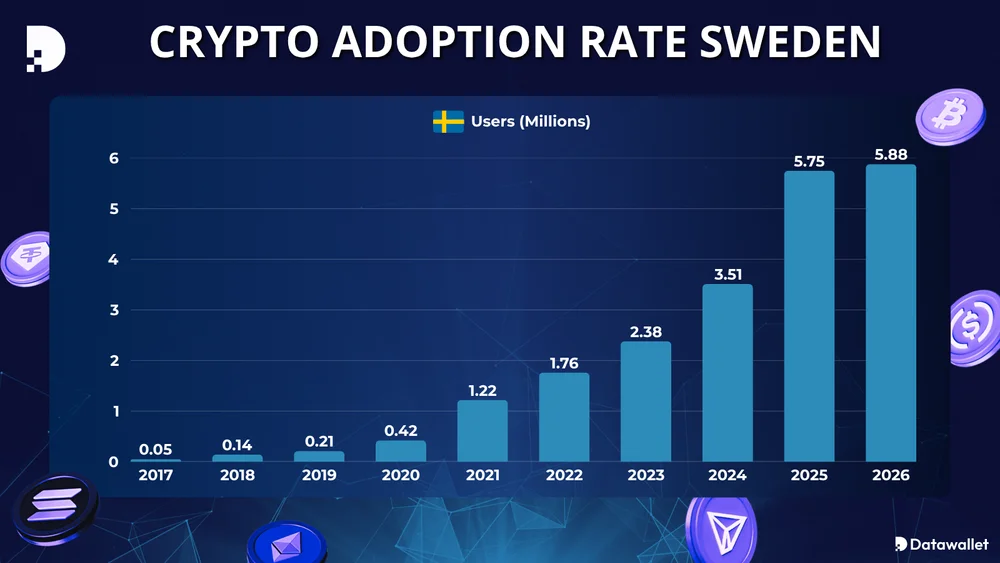
The Skatteverket crypto assessment does not consider it a form of money. Rather, it’s classified as a capital asset, similar to stocks, bonds, real estate and other forms of property.
This classification determines how your profits are taxed. Whenever you sell, trade, or spend your cryptocurrency, you are viewed as having disposed of an asset. Each disposal means levies that require state obligation if your net worth went up, even slightly.
In practice:
- Selling Bitcoin for SEK.
- Exchanging ETH for other digital coins, such as Solana
- Buying casino chips with virtual cash
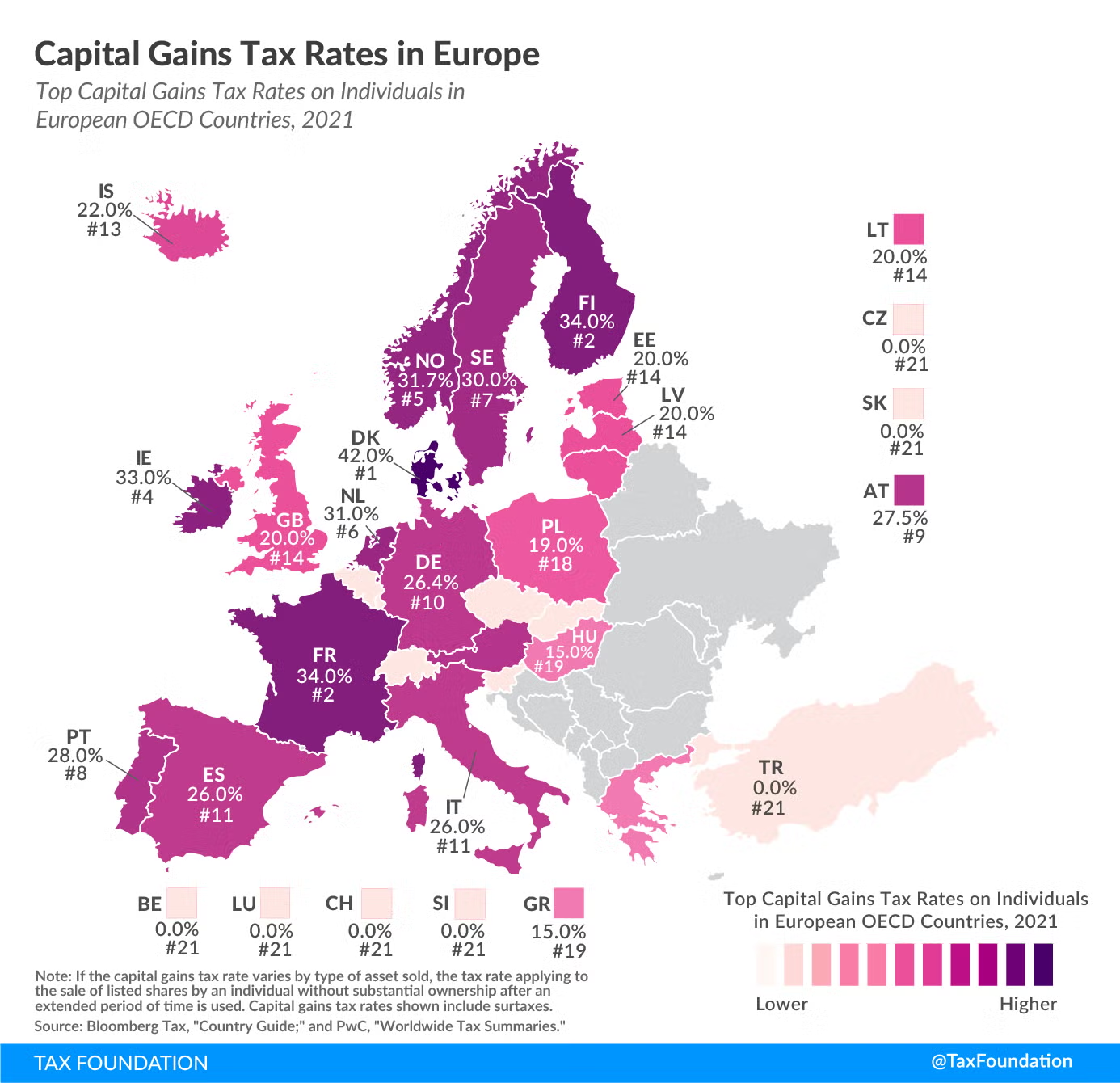
Sweden applies a flat 30% tax rate on capital appreciation, with a 70% loss write-off maximum that can be used next year too.
However, active virtual cash endeavors are considered earned income instead. These are reported separately. Just like salaries, which may be higher or lower than this 30%.
Actually, Sweden usually doesn’t apply a national income tax. The majority of people pay taxes only to their municipality, which ranges from 29 to 35 percent. Typically about 32%. Only people who make over 598,500 SEK per year have to pay a 20% national income tax on top of their municipal tax.
Lina from Vasteras earned 400K kronas staking last year. She only paid regional tax at 31.24%, since her income was below the national tax threshold. In contrast, Felix from Stockholm earned 700,000 SEK. He paid close to the same 31% municipal tax plus an additional 20% national tax on the portion above 598,500 SEK, bringing his total tax bill significantly higher.
For anyone trying to get a clearer sense of how their crypto activity adds up financially, it’s also worth considering how to make that crypto work for you. Platforms like 8lends make it possible to earn passive income through collateral-backed crowdlending and digital asset investing. You can grow your holdings in a compliant, transparent way while keeping full visibility over your taxable gains and income streams – something that’s especially useful later on.
Determining Crypto Capital Gains
As we all know, crypto capital gains is a calculation of how much valuables appreciated between the time acquired and sold. It’s also likely that each cryptocurrency you own you didn’t acquire in one single acquisition, but repeatedly added to your holdings. So, with the value of the Doge coin, Monero, Zcash, Bitcoin, and Ethereum going up and down all the time, can you just choose the cost basis arbitrarily?
FIFO
Methods to choose from vary actually, which the government will likely be okay with. Most in Europe is counting the first virtual coins you sell based on the price of the oldest ones you bought. This is called the first-in-first-out method.
Johan, a 32-year-old accountant from Gothenburg, has been trading crypto casually for a few years. Like many Swedes, he started small, mostly out of curiosity, but the value of his digital portfolio has grown. Now, as tax season approaches, Johan sits down to figure out his capital gains.
He made three main Ethereum purchases:
- 1 ETH in 2020 for 10K
- 1 ETH in 2021 for 20K
- 1 ETH in 2023 for 30K
In 2024, he sold 2 ETH for 35,000 SEK each, making a total of 70,000 SEK from the sale. But how much of that is actually taxable depends on the calculation method.
Under the FIFO method, Johan is deemed as selling the earliest coins first, meaning the 2020 and 2021 purchases. His total cost basis is 10,000 + 20,000 = 30,000 SEK. The sale value was 70,000 SEK, so his gain amounts to 40,000 SEK, resulting in 12,000 SEK in taxes owed at the 30 percent capital gains rate.
LIFO
Another common method of measuring is last-in-last-out. So you acquire a coin 3 years ago once, again last week, and then over the past week it went to the moon, and you sold. Then, you would only pay on the past week for the first units of it that you dispose of.
Using the LIFO method, Johan’s newest coins are considered sold first – in this case, the 2023 and 2021 purchases. His cost basis becomes 30,000 + 20,000 = 50,000 SEK. The sale value is still 70,000 SEK, giving him a gain of 20,000 SEK and a tax bill of 6,000 SEK.
Average Cost
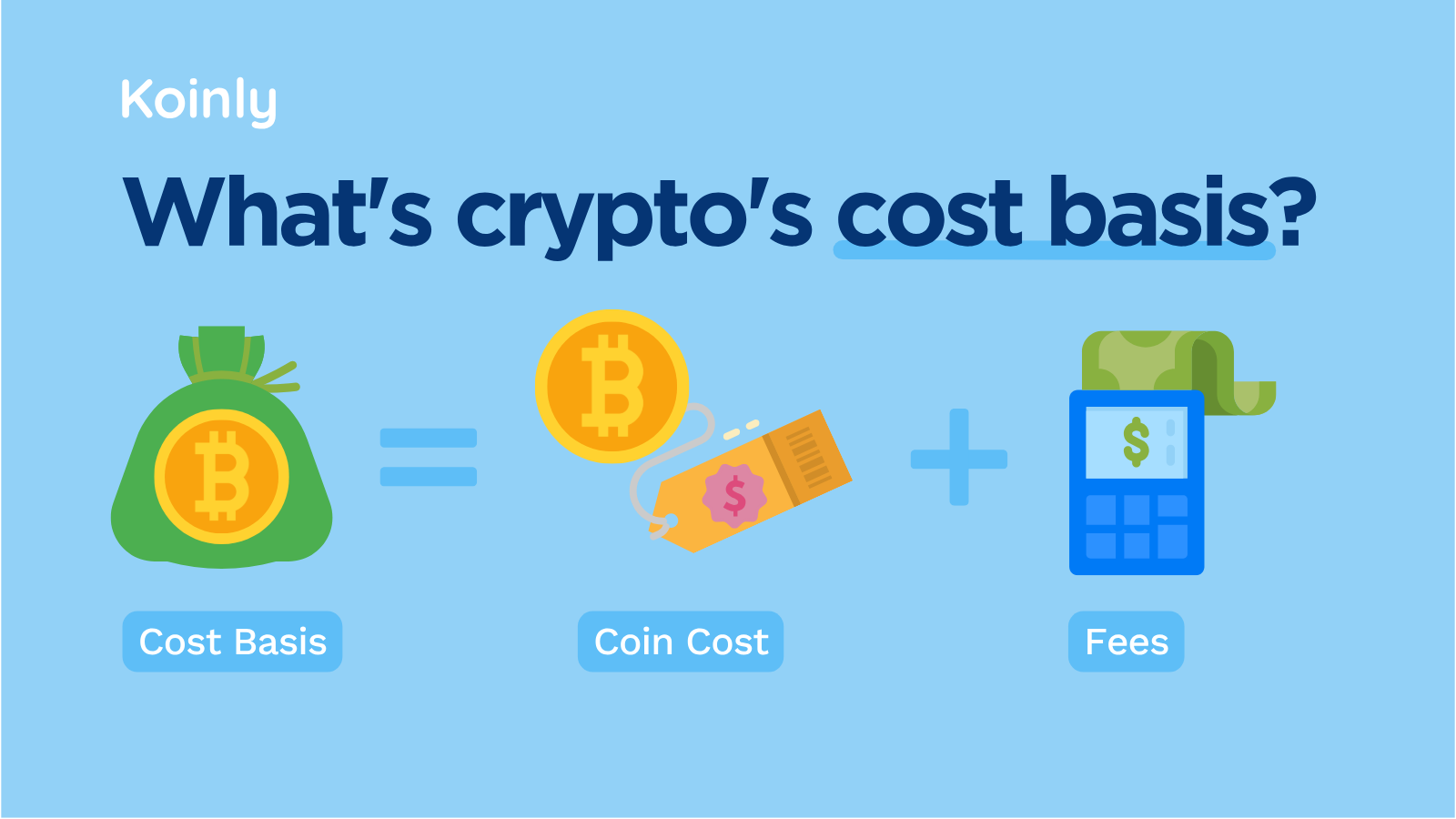
In Sweden, the government most prefers the average cost basis method. This one is very logical and is the easiest to wrap your mind around. In that method, you just count up the total amount of money you spent on that coin and how many units of it you own. You use the total money spent as the numerator and the total owned acquired as the denominator, and voila, you have your average cost basis.
The average cost method takes the total Johan spent on all coins — 10,000 + 20,000 + 30,000 = 60,000 SEK — and divides by the total number of ETH, which is three. This gives him an average cost of 20,000 SEK per coin. Since he sold two coins, his total cost basis is 40,000 SEK. Subtracting that from his sale value of 70,000 SEK gives him a gain of 30,000 SEK, leading to a tax liability of 9,000 SEK.
No Purchase Price

Upon mining digital cash, you didn’t “buy” it, so there’s no acquisition cost in the traditional sense. But the then market rate when you received the crypto becomes your reference value.
Emma from Umea earned 0.8 ETH through staking, worth 16,000 SEK at the time. She paid roughly 32% municipal income tax on it, 5,120 SEK. Later, when that ETH rose in value to 22,000 SEK and she sold it, her acquisition cost was 16,000 SEK, leaving a capital gain of 6,000 SEK. At the 30% capital gains rate, she owed another 1,800 SEK. Altogether, Emma paid 6,920 SEK in taxes on that staking reward.
It’s not particularly uncommon for people to get their hands on crypto for free. Your relative or friend could just decide to send you some as a present. Maybe they just did it to lower their tax burden. But when you receive it, you don’t owe tax, just like you don’t owe tax for buying cryptocurrency. If you go and sell it later, you would owe capital gains. But in that case, you could just use the market value of the day you received it as the cost basis.

Conclusion
Calculating your crypto gains and losses in Sweden isn’t as intimidating as it might seem once you understand how Skatteverket classifies each type of transaction. Whether you’re selling, swapping, or spending, every move creates a taxable event – and knowing how to record these correctly can save you a lot of trouble later. Keeping accurate records, choosing the right cost basis method, and reporting all forms of crypto income are key to staying compliant and avoiding penalties.
If you want your crypto to do more than just sit in your wallet, consider using 8lends. The platform helps you put your digital assets to work through crowdlending and other investment opportunities – all while keeping your transactions transparent for easy tax reporting.