How the Polish KAS taxes crypto
Under Polish law, cryptocurrencies are treated as property rather than currency. As a result, simply holding digital assets does not trigger any tax obligation. Tax liability arises only when a disposal event occurs — such as selling cryptocurrency for fiat currency, using digital assets to pay for goods and services, or settling debts. Each such event must be reported via PIT-38, the annual form for capital gains on securities and similar assets.
The system applies a flat 19% capital gains tax on net profits, calculated as the difference between the disposal value and the cost basis — a method common across most EU member states. Poland also allows traders to carry forward losses from previous years to offset gains in future filing periods, which is a useful tool for long-term portfolio management. While some other EU countries such as Germany, France, and Spain offer similar provisions, the rules and limitations vary considerably.
Deductions
In Poland, only fees directly related to acquiring or disposing of digital assets — such as exchange trading fees, platform commissions, and transaction costs — can be deducted. Indirect costs, including mining hardware, electricity, or other operational expenses, are not deductible. This contrasts with most EU countries, where professional mining or staking may qualify as business income, allowing a broader range of expenses to be deducted under standard income tax rules.
Tax-exempt events
Receiving cryptocurrency as a gift or inheritance does not trigger immediate PIT-38 obligations. Instead, these assets fall under Poland's inheritance and donation tax rules. Close relatives in bracket 1 — spouses, children, grandchildren, parents, siblings, and step-relatives — can be fully exempt if they file the SD-Z2 form within six months of official confirmation.
Other cryptocurrency activities, including staking, NFTs, and mining, are taxable only when the digital assets are disposed of or used to generate a measurable economic benefit. Staking rewards or mined coins, for instance, are not immediately taxable, but once sold or exchanged, the difference between the disposal value and a zero cost basis is subject to the 19% rate. Gains from NFT sales or DeFi interest are reported on PIT-38, with associated trading fees deductible. DeFi interest is not subject to VAT or PCC.
Common EU crypto tax approaches
Across the European Union, cryptocurrency taxation differs significantly from country to country. Many nations classify cryptocurrency as property — similar to Poland — while others treat it as currency or a financial instrument, which affects which events are taxable and what reporting requirements apply. In most EU countries, capital gains are subject either to a flat rate or to progressive income tax brackets, depending on total gains and the taxpayer's overall income.
Long-term holding exemption
Countries like Portugal and Germany treat digital assets as private property rather than securities. In Germany, capital gains on cryptocurrency held for more than one year are tax-exempt. Short-term gains are subject to progressive income tax, and costs related to acquiring digital assets can reduce the taxable amount. Portugal applies a 28% rate on short-term capital gains, which is higher than Poland's flat 19%, though certain long-term holdings may benefit from reduced rates. Poland, by contrast, offers no holding-period exemption — all disposal events are taxed at 19% regardless of how long the asset was held.
Standard deductions
Most EU countries offer a minimum tax-free allowance so that modest crypto gains fall below the threshold for taxation. Poland offers no such exemption. Countries that do include Hungary, the Netherlands, and Belgium, among others.
Deductible business expenses
In most EU countries, costs related to professional cryptocurrency activities can reduce taxable income. Miners or professional traders in Germany, France, or the Netherlands may deduct electricity, hardware, software, or office expenses if the activity qualifies as business income — typically subject to progressive income or corporate tax rates.
In Poland, acquired digital assets are treated as property rather than legal tender, so they are not subject to income tax at the point of acquisition. However, the deduction rules are stricter: only fees directly tied to buying, selling, or transferring digital assets — such as exchange commissions, platform fees, and transaction costs — are deductible. Business overhead, mining hardware, and electricity costs are explicitly excluded, making the Polish system simpler but less flexible for active professionals.
LIFO vs. FIFO for cost basis
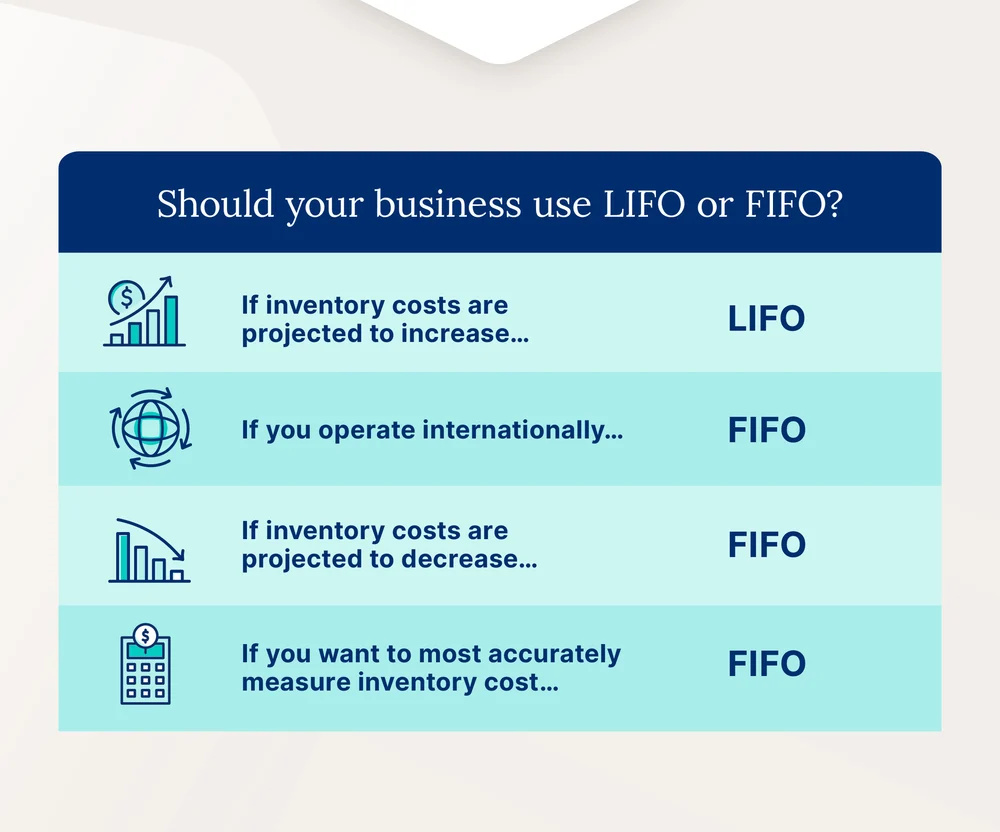
Different EU countries permit different accounting methods for calculating cost basis. FIFO (first in, first out) treats the oldest assets as sold first; LIFO (last in, first out) does the opposite. The choice can significantly affect reported gains, especially in volatile markets. Poland effectively uses a proportional method rather than strictly FIFO or LIFO, which simplifies reporting for most taxpayers.
Speculation intent
In several EU countries, the holding period and total profit determine whether a person is treated as a casual investor, a speculative trader, or a business. Belgium categorises traders based on their activity profile; casual investors may pay no tax at all, while those deemed speculative traders face rates of up to 33%. The distinction hinges on whether the authorities view the activity as long-term market participation or short-term profit-seeking.
DAC8 and MiCA
The DAC8 reporting requirements significantly reduce the ability to conceal crypto earnings across EU borders. Cryptocurrency platforms and exchanges are now legally required to share detailed information with tax authorities — including wallet balances, transaction histories, and cross-border activity. This enables KAS and other EU revenue bodies to track realised gains, losses, and disposals, making non-compliance increasingly difficult. The MiCA Regulation further tightens the framework by introducing licensing requirements, consumer protection standards, and market conduct rules for crypto service providers across the bloc.
Tax residency in Poland
Depending on your circumstances, Polish tax rules may work in your favour — or you may find that another EU jurisdiction better suits your crypto activity profile. Either way, understanding how Polish residency is determined is essential. As a resident, you are taxed on your worldwide cryptocurrency gains.
A person is considered a Polish tax resident if they meet either of these criteria:
- Their centre of vital interests is in Poland — meaning their spouse, children, primary income source, investments, bank accounts, or property are based there; or
- They spend 183 or more days in Poland within a calendar year.
This framework broadly aligns with how most EU countries determine tax residency. Polish law also recognises mid-year residency changes: if a person relocates their centre of interests, they may be treated as a Polish resident for only part of the year, after which they are taxed only on Polish-source income.
Balancing crypto risk with alternative investments
For investors looking to diversify beyond cryptocurrency while maintaining structured returns, crowdlending offers an attractive option. Platforms like 8lends connect investors with creditworthy borrowers, with each loan typically funded by multiple participants — spreading risk across the platform.
Unlike crypto, crowdlending income is generally more predictable and subject to clear reporting rules, making it a natural complement for those who want exposure to higher returns without the volatility or complex tax treatment of DeFi or staking activities. With 8lends, investors also benefit from a sophisticated credit scoring system that uses leading credit agency data to assess borrower reliability. Such investments are free of VAT and PCC. Learn more about balancing high- and low-risk investments.
Conclusion
Poland's 19% flat capital gains tax and strict deduction rules may feel rigid compared to more flexible EU systems, but they offer clarity and predictability for traders. Understanding which events are taxable, what deductions are permitted, and which activities are tax-exempt is essential for staying compliant and optimising your crypto strategy. Cross-border investors must also account for DAC8 and MiCA, which are raising transparency and reporting standards across the EU — making accurate record-keeping more important than ever.
For investors looking to balance higher-risk crypto trading with more stable, structured returns, crowdlending is a compelling alternative. 8lends connects you with creditworthy borrowers, offering predictable interest income, robust credit scoring, and clear reporting — a steady complement to any crypto portfolio.