What BuyBack Protection Is — and What It Is Not
BuyBack is a mechanism that puts an obligation on the loan originator to repurchase the loan in case of a borrower's default if certain conditions are met. As a contractual mechanism, BuyBack provides an additional layer of loan protection in case the investor needs to return their principal under the predefined conditions.
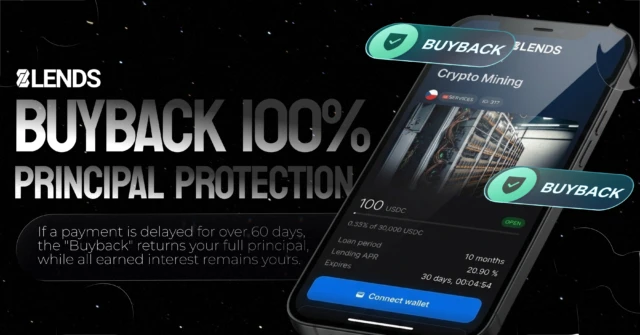
8lends lists projects with BuyBack mechanism, labeled as BuyB. If the borrower on the project goes bankrupt, the investor may be able to get up to 100% of their principal back in case the initial period for debt settlement equal to 60 days is effectively over. BuyBack does not equal a guarantee of the principal being returned; it is not identical to the insurance on the loan or a state-backed obligation. Capital loss is still possible because the originator may claim insolvency, encounter temporary payment disruptions, and have other circumstances that may limit the ability to use BuyBack too.
When Does BuyBack Trigger?
BuyBack triggers when the project with a BuyB label stays overdue in terms of the borrower's payments to the lender for more than 60 days. In that case, BuyBack may be activated to try and return the outstanding principal to the investor. However, the outcome is not guaranteed and capital remains at risk.
How BuyBack Works on 8lends, Step-by-Step
BuyBack activation process usually happens in the following timeline.
- On-time payments;
- Start of delinquency;
- Day 60, BuyBack trigger;
- BuyBack partner buys back the position;
- Potential return of 100% of the principal;
BuyBack activates only in case of a borrower missing the scheduled interest payments and failing to continue them within the defined timeframe. The principal in P2P lending typically remains unpaid until the claim reaches maturity; that is why, during the first stage of the loan repayment, the investor gets fixed monthly interest payments.
In case the borrower does not continue interest payments after a temporary disruption within the given timeframe, there is an option to activate BuyBack. The borrower can still settle the outstanding debt normally and that would mean there is no need to resort to BuyBack option that only becomes possible after a period of 60 days of overdue payments.
If the conditions that allow BuyBack activation are met, the partner repurchases the loan under terms specified in the lending agreement, and the investor can then receive up to 100% of the principal on the loan. The interest payments that have come from the borrower before also stay with the investor. Yet it is important to note that the supposed interest payments that should be paid to the investor during the timeframe when the loan stays overdue are not transferred. The issue of whether BuyBack will be successfully realized depends on the contractual terms of the loan agreement, the financial situation of the originator and the BuyBack partners, and a particular legal situation. That is why the returns recovered through BuyBack should be evaluated on a case-by-case basis.
A Worked Example: BuyBack on a Delinquent Loan
The following example illustrates how BuyBack works in case of a borrower's delinquency. Supposedly, the investor has purchased the loan with 9 months until maturity of the claim, an APR of 20%, and the overall amount of the loan amounting to 5,000 USD. By calculating interest payments, it can be inferred that the investor will accrue 83.3 USD of monthly interest. The borrower makes regular interest payments for the first 5 months before claiming insolvency. The outcome of the case is presented in the table below.
| Month | Interest received | Cumulative interest | Event |
|---|---|---|---|
| First month | 83.3 USD | 83.3 USD | Normal interest payment |
| Second month | 83.3 USD | 166.6 USD | Normal interest payment |
| Third month | 83.3 USD | 249.9 USD | Normal interest payment |
| Fourth month | 83.3 USD | 333.2 USD | Normal interest payment |
| Fifth month | 83.3 USD | 416.5 USD | Normal interest payment |
| Default | None | 416.5 USD | Last interest payment received |
| Day 60 | 5,000 USD principal returned | 416.5 USD retained | BuyBack activated |
What BuyBack Does Not Cover
BuyBack is not a guarantee of returns of the principal in case of the borrower's default. First of all, only the projects with a BuyB badge on 8lends are eligible for BuyBack mechanism activation. Moreover, BuyBack is not designed to pay back the interest that the investor has lost due to the borrower's delinquency. Furthermore, BuyBack does not insure the investor's funds similarly to the bank's insurance on the client's deposits or state-backed schemes.
BuyBack, instead, functions on the premise that the partner will repurchase the loan under predefined conditions if those are met and if the partner has enough money to do so. There have been cases where BuyBack has not performed as planned due to issues coming from the partner or the specific legal circumstances. Therefore, it is important to acknowledge that BuyBack is not synonymous with guaranteed returns on investment and should be viewed as another layer of risk management instead.
Does BuyBack Mean I Can't Lose Money?
BuyBack does not mean that the investor cannot lose money. BuyBack establishes a contractual obligation to repurchase the loan under specific circumstances to try and return up to 100% of the principal to the investor. However, it is not equal to a risk-free guarantee of repayment and should be treated as another layer of risk mitigation instead.
What Happens if the BuyBack Partner Can't Pay?
If BuyBack partner cannot repurchase the loan due to a tough financial situation, BuyBack may not function as planned. In case of the partner's insolvency or certain technical inability to make timely repurchasing or a legal issue, the investor may lose money even if the BuyBack option exists.
What Protects You on Projects Without a BuyBack Badge
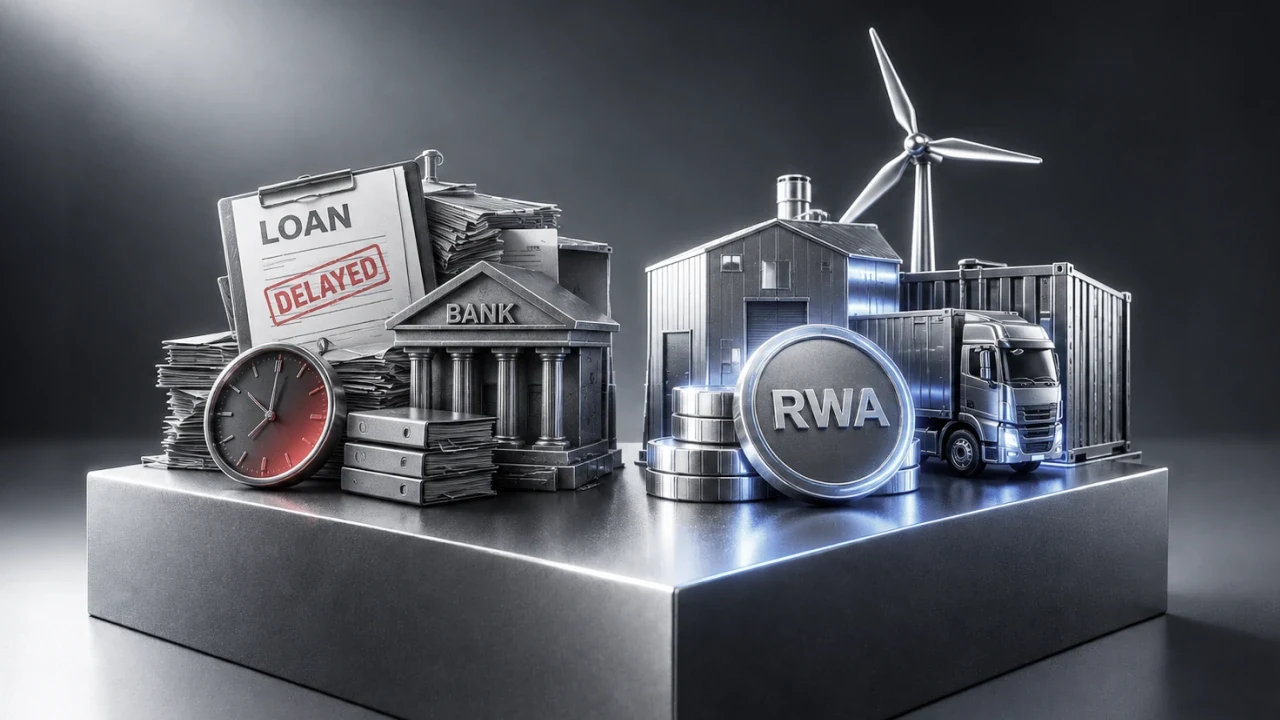
The projects without the BuyB badge on 8lends are protected with collateral against the loan instead. A Real-World Asset (RWA) collateral that may come in the form of real estate objects, commercial vehicles, or operational assets of the company may provide a secured loan instead of BuyBack.
8lends may start collateral liquidation after 60 days of the payments towards the loan are overdue. The settlement of debt through the legal procedure with the collateral is managed by Maclear AG, an independent Collateral Agent that controls the legal proceeding regarding the liquidation of the collateral. In case the proceeding results in the successful sale of the asset, the money can be distributed between the investors on a pro rata basis. The success of the collateral's enforcement depends on factors like Loan-to-Value ratio (LTV), showing the debt security with the market value of the collateral pledged against the loan amount; the type of asset that is used as collateral; and the particular jurisdiction.
Two layers of protection, defined in advance
On 8lends, investors fund real SME loans using USD and receive monthly interest at fixed rates. Every transaction — investment, interest payout, principal return — is recorded on the Base blockchain and publicly verifiable.
Each borrower passes 40+ due diligence criteria assessed by Maclear AG and is rated AAA–D before listing. Loans are backed by real-world collateral and selected projects include BuyBack protection — returning 100% of principal if a borrower delays beyond 60 days.
FAQ
What is BuyBack protection?
BuyBack protection is a mechanism where a partner repurchases a delinquent loan position and returns 100% of an investor's principal — it is not insurance and not a guarantee. On 8lends, BuyBack applies only to projects carrying the BuyB badge and triggers after 60 days of delinquency.
Does a buyback guarantee mean I can't lose money?
No, BuyBack does not guarantee that the principal will be fully paid back to the investor. The success of BuyBack depends on the partner's solvency and cannot be viewed as a guarantee of repayment. Besides, BuyBack does not provide the investor with the financial compensation for the principal lost due to the borrower's delinquency.
When does BuyBack trigger on 8lends?
BuyBack may be triggered on 8lends only for the projects that have a BuyB badge and the loan on them is overdue for more than 60 days. If these conditions are met, BuyBack may be activated to try and return up to 100% of the principal to the investor.
Does BuyBack cover the interest too?
BuyBack only covers the interest before the debt is overdue. In case timely payment stops and the loan is overdue, the successfully activated BuyBack will not compensate the investor for the lost interest within the timeframe when the loan was past due.
How am I protected on projects without a BuyBack badge?
If the project on 8lends does not have a BuyBack badge, it means that the loan will be secured against an RWA collateral instead. The collateral may come in different forms, including, but not limited to, business assets, real estate objects, and commercial vehicles.
Related on 8lends
- Automated Investing in P2P Lending: How it Works and When to Use It
- How to invest in Web3: A comprehensive Guide to it
Explore 8lends' crowdlending projects — collateral-backed loans, with BuyBack protection on selected BuyB projects.
Start investing →