In the words of the Secretary Mendonça Mendes:
We are evaluating by comparing internationally what is the definition of crypto assets, which includes cryptocurrencies. We are evaluating the regulations in this area, be it in the fight against money laundering and the regulation of markets, to present a legislative initiative that truly serves a country in all aspects, not a legislative initiative that makes the front cover of a paper. (Mendes 2023).
Tax on Crypto Before 2023
Officials began to clamp down a little bit on declaring crypto income tax in 2023. Traders had exchanged Monero for Bitcoin or profitably sold Monero without the government needing anything, since the concept of cryptocurrency was outside of Portuguese law. So that rendered it a closed source just like other traded securities.
Some digital coins were already in the government’s grips though. Those engaging in crypto on a regular basis or pursuing crypto in some specialized way using an organized system and high-tech tools, rendered them professionals or commercially oriented ventures, whether they were individuals or organizations. So from that perspective, you had to pay income tax, according to the bracket you fell under. Granted that corporate tax and standard deductions were also available.
Individuals still claimed to be private investors, though deeply in business. Also, NFTs sat in limbo and many people treated and resold them as tax-free digital collectibles.
Non-Habitual Residents
The glee and value of submitting Portuguese taxes for people’s pocketbooks was obvious. Naturally, digital coin investors had a lot to gain from such a coveted destination. The nation drew people over, particularly around Europe, with its NHR as well. Its owners were unobligated to pay levies on anything for 10 whole years unless it was made domestically, which nationwide earnings entailed a flat 20% levy.
Whoever attained NHR status in 2023 could still continue to retain the benefits rather than paying an up to 48% bracket levy. Though this demanded they actually planned for immigration to the country, spending 183 days per annum there or have other proof of ties. That attracted thousands of high earners.
Gold Visa
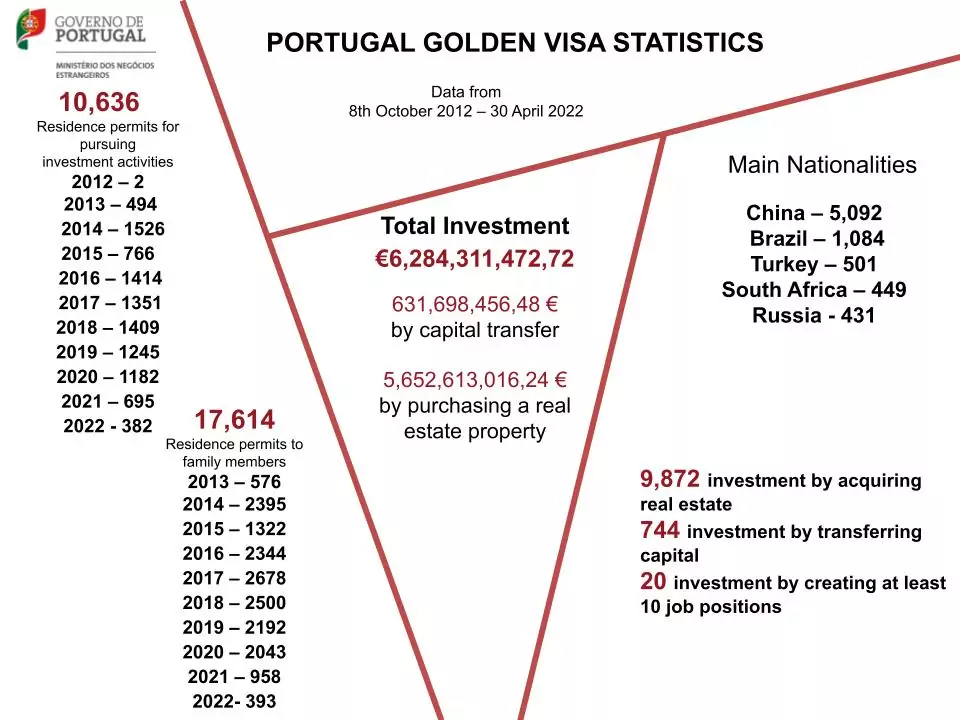
This program went even a step further. Launched in 2012, it gave people residency after 60 months, they were citizens. They could bring their wife, husband, mom, dad, and dependent children along with them. All they had to be there physically for was a week or two for a few years.
The biggest requirement could be fulfilled in one of the following forms:
- A 500-thousand-euro investment in particular investment funds and the heritage of the nation, previously had included real estate
- 350 thousand euros in renovation properties
- A 1.5 million euro capital transfer
- The creation of a business and a certain number of jobs under particular conditions
Guidance in Declaring Crypto in 2026
Even with clearer rules today, most crypto investors moving to Portugal still face the same tricky questions regarding tax on crypto:
- How do I prove long-term holding properly?
- Do my activities count as personal investment or professional trading?
- Which residency track actually fits my situation?
- How do I avoid accidental non-compliance?
As Portugal tightens its tax rules, many investors are rethinking how they balance long-term crypto positions with the need for more stable, predictable returns. That’s where 8lends
becomes especially useful. Through its crowdlending marketplace, investors can put part of their capital to work funding real businesses while earning interest-based returns that don’t depend on crypto volatility.
8lends evaluates borrowers using a credit-scoring approach inspired by major rating agencies, giving lenders a clearer sense of risk and reward. For anyone building a more balanced financial strategy while holding onto their long-term crypto gains, 8lends offers a steady and practical complement.
Crypto Tax Loopholes That Still Exist in 2026
First of all, tax residents continue to be unobligated to pay crypto tax on any income not made in Portugal. However, the big change was when they started taxing capital gains. Now, if you trade Doge coin and you exchange it for euros, you have to pay capital gains tax on the extra value you derived from your machinations.
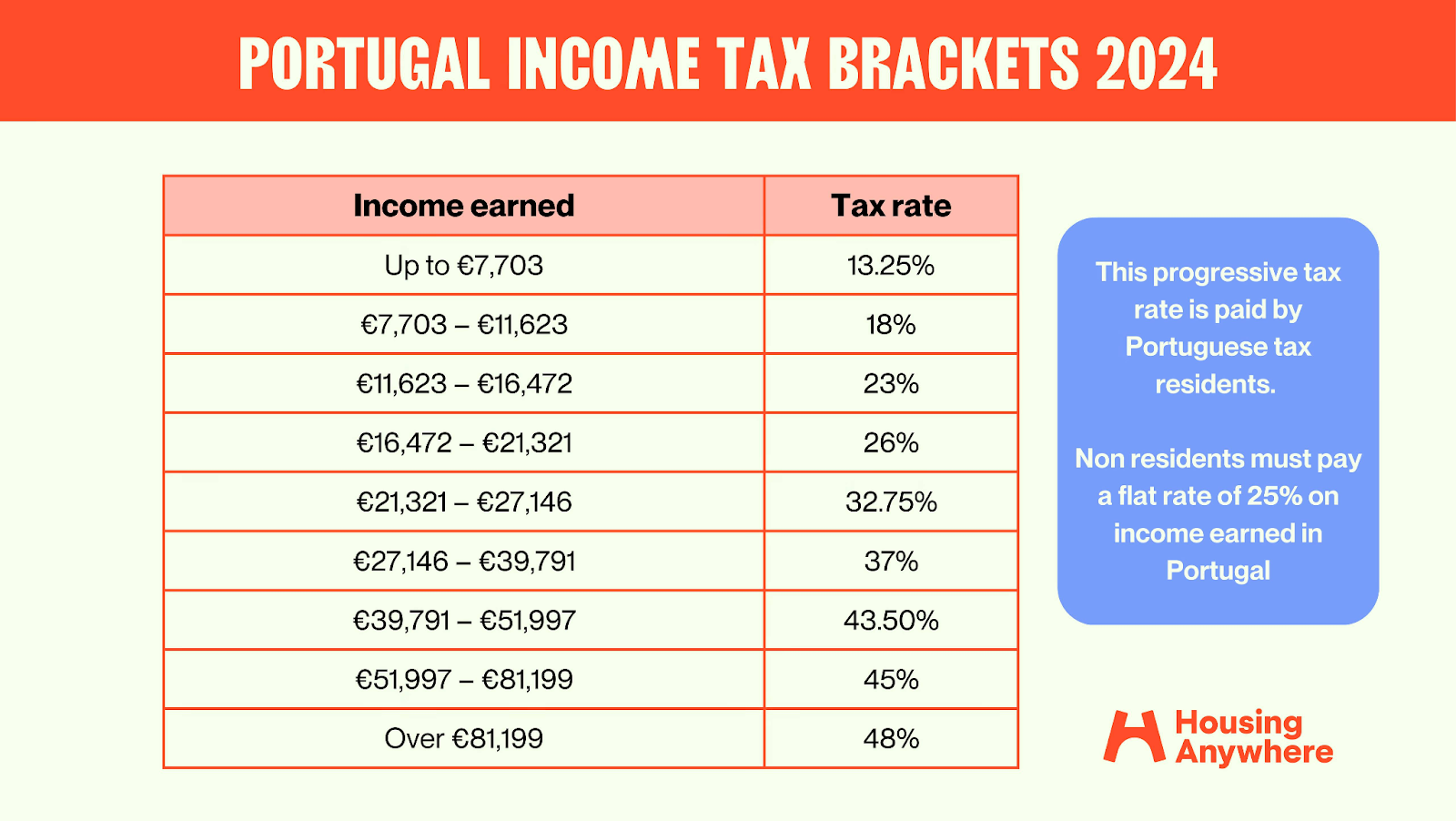
If you ran a business before without one of the special foreigner incentives, you would’ve had to pay 12.50 to 48% income taxes.
Capital Appreciation
They still left a loophole though: if you hold out at least 365 days before that exchange. Another condition is that you cannot be deeply engaged in crypto operations as a regular activity or running a digital currency business. Such operations after a year has passed are long-term trades. Short-term trades entail a duty to the state of 28%. The philosophy behind this is to discourage speculation and encourage stable market growth.
It’s also worth mentioning that simply spending your crypto in a purchase, entailing an automatic conversion into fiat currency, is deemed a conversion and is taxable.
NFTs
These are considered art collectibles, and the Portuguese government has indeed voiced a stance on them and decided that they should remain without tax.
Gifts
As long as you keep these under 5,000 euros, you do not have to pay tax. Above that amount, you pay 10%. There’s no wealth or inheritance levies there either.
NHR 2.0
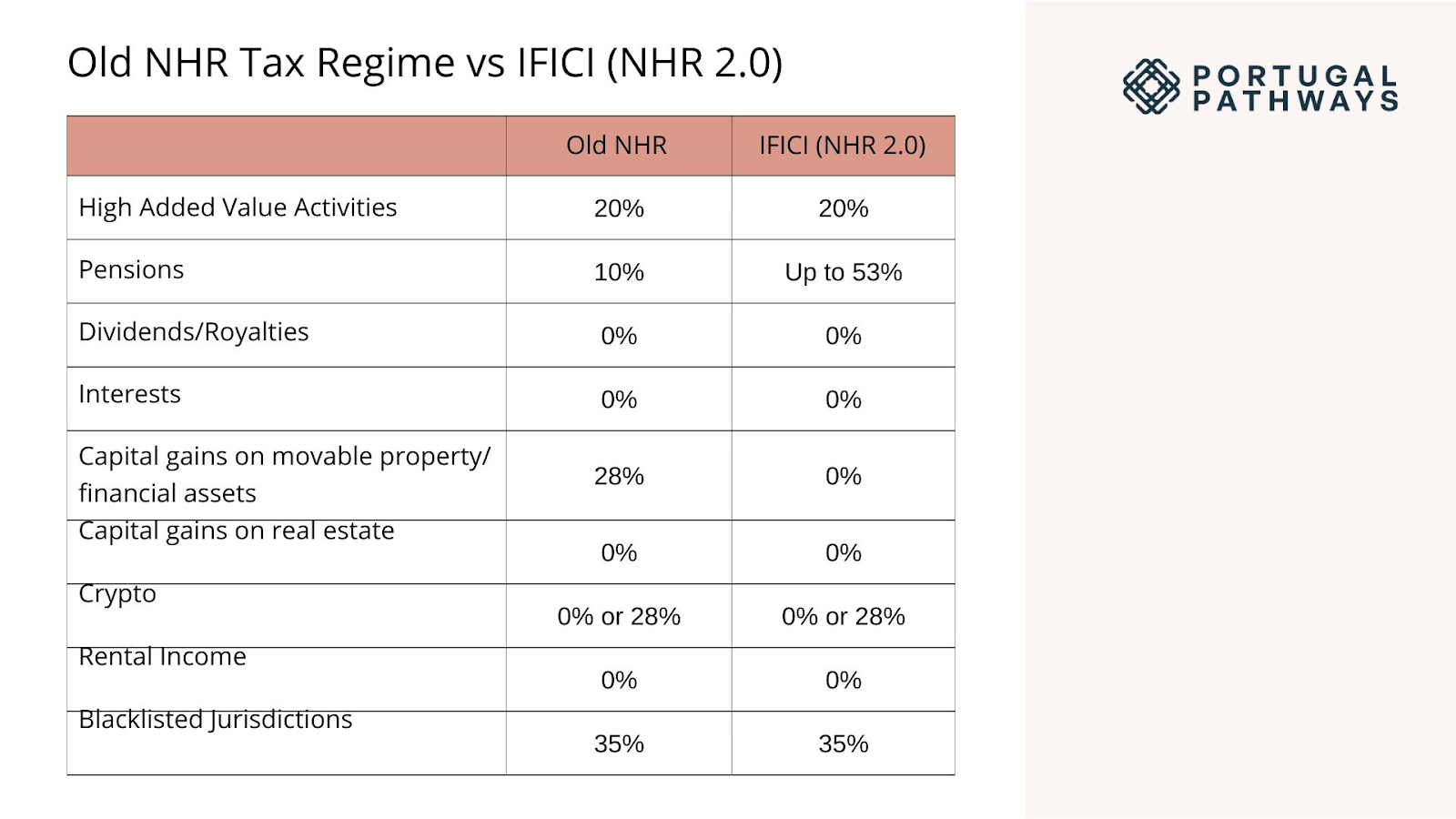
If you operate deeply in the crypto sphere, you still have to pay normal Portuguese income tax in this case, but if you receive your paycheck from Portuguese companies or are a self-employed person there, you can still pay the 20% flat tax. As for pensions from other countries, that tax is 10%.
Application requires spending over half a year there and taking 2 weeks to apply. Once again though, if you applied for the old program before 2024 came around, or submitted some of your documents before then, you can still ride that whole program. Proof of your intent would still be required, such as a lease or rights to rent or own real estate, as well as a residence permit or certificate that your child is enrolled in school.
2025 Changes to the Golden Visa Under Discussion
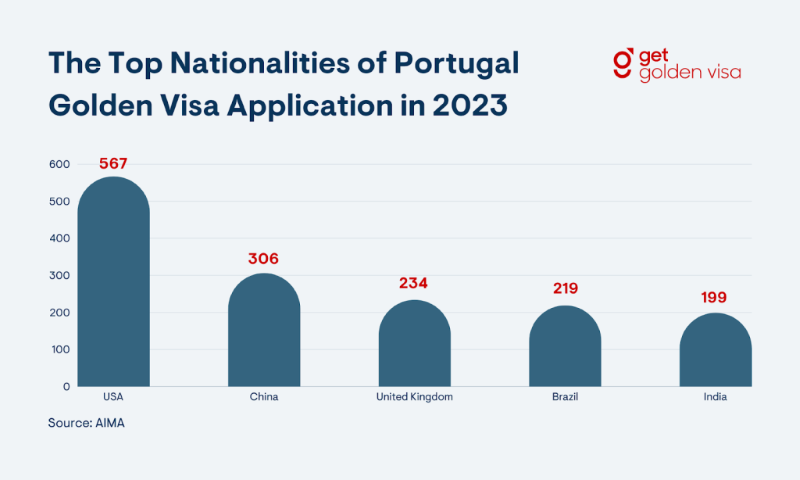
At the end of June 2025, officials proposed amendments to this law. What it suggested was extending the minimum period that you had to live there from 5 years to 10, 7 for EU citizens. It also proposed that this naturalization period would start after the provision of a residence card. As of November 3, 2025, it just now passed, but it has not yet gone into effect, so if you’re considering taking advantage of this, you might want to act now, while the requirement is a mere 5 years. That said, the president has to make a decision on it himself. If you get the process going now, you’ll still qualify under the old rules.
Final Thoughts
Portugal may have shut the door on the wild-west era of unlimited tax-free crypto gains, but it didn’t close it completely. Instead, the country shifted from “no rules” to a structured, yet still investor-friendly, framework where long-term holders, careful planners, and genuine residents continue to benefit.
Short-term flipping? Taxed. Loose residency? No longer enough. Long-term investing with roots in Portugal? Still a powerful opportunity. If you're serious about crypto wealth planning, the message is clear: Portugal didn’t kill its crypto appeal – it matured. And in 2026, the advantage goes to investors who structure their strategy intelligently rather than chasing loopholes. With the right approach, Portugal remains one of the most favorable jurisdictions in Europe for crypto wealth, especially for long-term thinkers who build a real life here rather than just a tax setup.
If you want more stability while keeping your crypto strategy intact, 8lends gives you a way to diversify without cashing out your positions. Its crowdlending model lets you earn consistent, interest-based returns by supporting vetted businesses, adding a reliable income stream to balance the swings of digital assets.