

September 3, 202610 min read
Tax on interest income generally arises when interest is received or credited, not only when money is withdrawn from an investment account. In P2B lending, interest may arrive monthly and be reinvested immediately, and the platform may pay it without withholding local tax, leaving the investor responsible for reporting it. Interest is taxed as income, not capital gain.
Interest Income vs. Capital Gains: Why the Tax Treatment Is Different
| Relevant | Irrelevant or partly relevant |
|---|---|
| An investor receiving regular interest payments from business loans (P2B/crowdlending) to a bank account or in digital dollars is required to declare the income themselves; the platform does not withhold taxes. | An investor using a tax-advantaged investment account in their jurisdiction (e.g., a tax-deferred pension or savings account), if such a product accepts such assets at all — the account rules override the general rules below; please check separately |
| A resident of the country who wants to understand the base rate and reporting procedures before investing | For investors who need an accurate tax calculation, this article explains the principle and does not replace consultation with a local tax professional. |
| An investor comparing the tax consequences of interest income and capital gains (for example, before deciding whether to hold a loan to maturity or sell it on the secondary market) | For readers seeking a way to legally avoid paying taxes, this material deliberately avoids such recommendations (YMYL, risk of misinterpretation of the law) |
Interest and capital gains arise from different economic events. Interest income is compensation for making capital available to a borrower. If an investor provides $10,000 through a business loan and receives $150 as an interest payment, the $150 is generated by the lending relationship. A capital gain normally arises when an asset or claim is sold for more than its relevant tax basis. If an investor bought an asset for $10,000 and later sold it for $11,000, the $1,000 difference may fall under capital-gains rules.
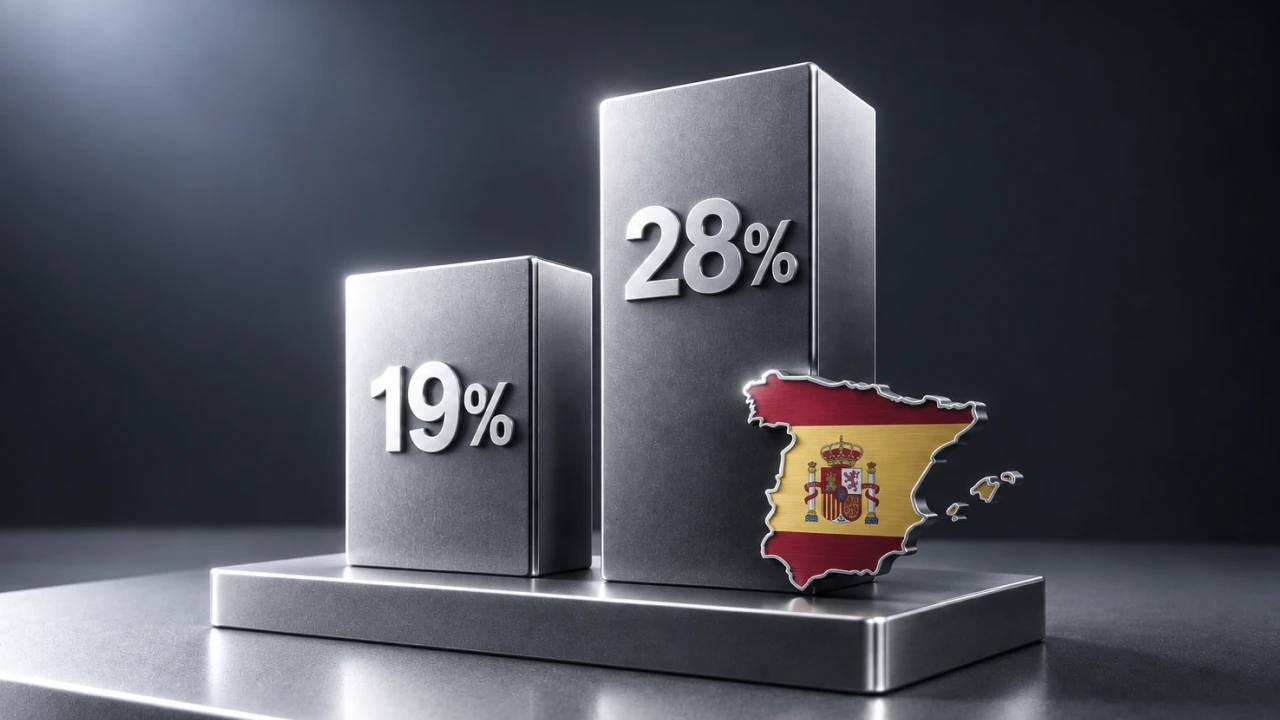
The distinction matters because an interest income tax rate does not necessarily equal the rate applicable to capital gains. Germany, for example, places interest within income from capital assets and generally applies a separate 25% income tax rate to qualifying capital income under §32d EStG, subject to exceptions and additional rules. France also classifies interest within investment income. Its tax administration describes interest as part of revenus de capitaux mobiliers, with the applicable treatment depending on the taxpayer and the relevant regime. Spain includes interest and similar returns from providing capital to third parties within the savings-income framework, which has its own progressive tax scale.
This separation has another consequence for P2B investors, as a monthly interest payment and a later loss on the underlying loan may belong to different tax categories. A loss cannot therefore automatically be deducted euro-for-euro from previously received interest.
When Does the Tax Obligation Arise? Accrual, Not Just Withdrawal
Investors often assume income becomes taxable only when they transfer it from an investment account to their bank. That is usually the wrong event to focus on, because, for an individual investor using a platform that credits monthly interest, the relevant tax event will generally be linked to when the investor becomes entitled to, receives, or has the interest placed at their disposal under local law.
Consider a simple example. An investor receives $100 interest in January, $100 in February, and $100 in March. The investor immediately places all $300 into new loans instead of withdrawing anything. Economically, the investor has still received $300 of interest. Reinvesting this income is a second transaction: the investor has chosen to deploy income that has already been credited. The exact concept can differ between jurisdictions. Some rules focus on receipt, others on when income becomes available to the taxpayer, and accounting treatment can differ for individuals and businesses. Investors should therefore confirm the precise timing rule where they are resident.
Do I Owe Tax on Interest Even If I Reinvest It?
In most ordinary individual-investor situations, yes. Reinvestment does not normally erase the original receipt of interest.
Suppose an investor earns $1,200 during a tax year and automatically puts every monthly payment into new loans. A tax authority can still regard the $1,200 as investment income for that year even though the investor's cash balance never increased by the full amount.
This is why investors should track gross interest received, not merely amounts withdrawn.
It is also one reason portfolio dashboards and transaction histories matter for tax reporting. The annual bank withdrawal total may be substantially lower than the income actually credited during the year.
Do Loan Defaults Reduce Your Taxable Interest Income?
No, loan defaults do not automatically reduce the investor’s taxable interest income. Suppose an investor receives $2,000 of interest during a year but one borrower later defaults, ultimately creating a $1,500 principal loss. It may be tempting to calculate $2,000 interest − $1,500 loss = $500 taxable income. But local tax law may not allow that calculation.
Interest and principal losses can fall under different classifications. A jurisdiction may allow some bad-debt or capital-loss relief, restrict it to specific legally recognized losses, allow it only against particular categories of income, or provide no useful offset for that type of private loan at all. Timing creates another complication.
A borrower becoming late is not necessarily a recognized tax loss. Even formal default does not automatically determine the final loss because recovery may still follow. Collateral could produce full recovery, partial recovery, or no recovery. A tax system may therefore require a much later event before a loss becomes deductible or otherwise recognizable. The correct question is not simply if the jurisdiction can classify the claim, but also at what point does it recognize an irrecoverable loss for tax purposes.
RiskTax rules for interest income vary by country and can change. This article explains general principles and cites official tax authority sources current as of the publication date — it is not tax advice. Always confirm the applicable rate and reporting method with your local tax authority or a qualified tax advisor before filing. Investing in P2B loans carries the risk of partial or total loss of principal; a fixed 19–25% APR is the rate on an individual loan, not a guaranteed or after-tax portfolio outcome.
What You Need to Keep for Your Tax Records
Good tax reporting starts with transaction-level records rather than a single annual balance. At minimum, an investor should be able to reconstruct the date of every interest payment, the gross amount received, the asset or currency in which it was received, the corresponding loan or borrower, and principal repayments separately from interest.
Principal and interest should not be mixed. If an investor puts $1,000 into a loan, receives $100 interest, and later gets the original $1,000 back, the $1,100 cash flow does not represent $1,100 of income. The principal repayment is economically different from the $100 earned. Where payments arrive in digital dollars, local tax rules may additionally require the investor to record the fiat value on the relevant date. A later disposal or conversion can potentially create a separate tax event depending on the jurisdiction.
Records should therefore retain both the original transaction and any valuation information needed for the local return. This becomes particularly important where there is no withholding tax on interest. If no domestic bank or broker is calculating and remitting tax automatically, the investor needs sufficient records to calculate and declare the amount independently.
Interest Income Tax Rates by Country: An Overview
There is no universal interest income tax rate by country. The same P2B payment can be classified and reported differently depending on tax residence, other income, exemptions, account structure, and whether a foreign intermediary withheld anything.
The following overview describes common treatment for individual residents. It should be used as a starting point for checking the relevant tax authority, not as a filing instruction.
| Country | General treatment of interest income | Indicative framework | What a P2B investor should verify |
|---|---|---|---|
| Germany | Generally income from capital assets | Qualifying capital income is usually taxed at 25% with a potential church tax and a solidarity surcharge. €1.000 annual allowance applies to individuals under the general regime | If foreign P2B interest must be declared directly because no German withholding agent deducted tax |
| France | Generally investment income / revenus de capitaux mobiliers | Interest is normally within the PFU framework; the income-tax component is 12.8%, while social contribution treatment must be checked for the relevant tax year | Current combined burden, whether progressive taxation is elected, and reporting of foreign platform or source interest |
| Spain | Generally included in savings income | Savings-income rates currently progress from 19% to 30% depending on the taxable savings-income band | Which bracket applies, and how is foreign-platform interest entered in the IRPF return |
| Italy | Interest and other returns from lending generally fall within redditi di capitale; exact treatment depends on the source and instrument | Italian rules commonly apply substitute or withholding taxation to many financial-income categories, yet foreign P2B lending needs classification before assuming a flat treatment | Whether the particular lending claim is taxed under a substitute regime or must be declared as foreign capital income |
| Portugal | Interest normally falls within capital income | Portuguese law provides a 28% final withholding rate for several categories of capital income and a 28% autonomous rate for certain capital income not subject to withholding | Whether foreign P2B interest is subject to autonomous taxation, aggregation, or another reporting treatment |
For Germany, the Federal Ministry of Finance confirms that capital income such as interest is generally taxed at 25% and that the saver allowance is €1,000 per individual, subject to the statutory rules and exceptions.
For France, the tax administration describes the PFU income-tax component on investment income as 12.8%. Investors should verify the applicable social contributions for the filing year rather than relying on an older headline, “30% flat tax,” because the administration's current materials reflect changes affecting social levies.
For Spain, the tax authority's current savings-income scale applies 19% to the first €6,000, 21% from €6,000 to €50,000, 23% from €50,000 to €200,000, 27% from €200,000 to €300,000, and 30% above €300,000.
For Portugal, Article 71 of the Personal Income Tax Code provides a 28% final withholding rate for specified capital income, while Article 72 provides a 28% autonomous rate for certain capital income not subject to withholding. The exact application to foreign P2B interest should therefore be checked before filing.
Italy illustrates why country tables should not be treated as tax calculators. The Italian tax authority categorizes interest and proceeds from capital lent under redditi di capitale reporting rules, including foreign-source capital income, but the precise rate and reporting mechanism depend on the instrument and whether an Italian withholding intermediary is involved.
How Tax Works on 8lends Interest Payments
8lends pays loan interest without calculating or withholding the individual investor's local income tax. That means the investor receives the payment and remains responsible for determining whether it must be declared in Germany, France, Spain, Italy, Portugal, or another jurisdiction.
The basic sequence is the following:
Loan generates interest → investor receives the interest → investor records the payment → investor reports it according to their country of tax residence.
The platform does not convert a fixed 19–25% APR, paid in USD, into an after-tax rate. The tax burden belongs to the investor's individual situation.
For example, suppose an investor receives the equivalent of $150 in interest each month for 12 months.
Gross annual interest would be $150 * 12 = $1,800
If the investor immediately reinvests every payment, gross interest received remains $1,800 for record-keeping purposes. Reinvestment does not turn the original interest back into principal. Investors can use their 8lends account payment history and statements to reconstruct the interest they received during the relevant reporting period.
Spotlight — 8lends Interest paid gross, declared by you On 8lends, investors fund real SME loans using USD, receiving monthly interest at fixed rates. Every transaction — investment, interest payout, principal return — is recorded on the Base blockchain and publicly verifiable. Each borrower passes 40+ due diligence criteria assessed by Maclear AG and is rated AAA–D before listing. Loans are backed by real-world collateral and selected projects include BuyBack protection — returning 100% of principal if a borrower delays beyond 60 days. 19–25% APR Fixed APR in USD $152.7M+ Total funded $53.2M+ Total repaid 50.8K+ Investors View open projects →
FAQIs interest income taxed the same as capital gains?No — most jurisdictions classify interest as ordinary/investment income with its own rate, separate from capital gains rules.Do I owe tax on interest even if I reinvest it?In most jurisdictions, yes — the tax obligation generally arises when interest is credited/accrued to you, not only when you withdraw it; confirm the exact rule for your country with your local tax authority.Does 8lends withhold tax on interest payments?No — 8lends does not withhold or file taxes on behalf of investors; interest is paid in full, and the investor is responsible for declaring it under their own jurisdiction's rules.Can a borrower default reduce my taxable interest income?Not automatically — whether a loss from a default can offset interest income depends on your jurisdiction's rules for capital losses vs. income, and on how the claim is classified; this is not addressed uniformly across countries.Where can I find how much interest I received on 8lends?Investors can review their payment history and statements in their 8lends account dashboard to support their own tax declaration.
Explore open 8lends projects — SME loans secured by real-world collateral, legally registered through an independent Swiss collateral agent.Start investing →The content of this article is provided for informational and educational purposes only. It does not constitute investment, financial, tax, or legal advice. P2P lending and crowdlending investments carry a risk of partial or total capital loss. Collateral and BuyBack arrangements do not guarantee the return of funds; recovery outcomes vary. Past performance is not indicative of future results. Readers should conduct independent research and consult qualified advisors before making any financial decisions. Availability of products and services may be restricted in certain jurisdictions.
Read next
Do You Have Any Questions?
All questionsThe platform has been audited by CertiK and Cyberscope, and all transactions are publicly visible on the Base blockchain. Two companies with clear responsibilities stand behind the platform: CLEARCHAIN CORP operates the platform and is registered as a Money Services Business with FINTRAC (Canada), and Maclear AG conducts due diligence and monitors collateral. So the platform is well regulated, transparent and accountable
If the project has BuyBack, the partner buys the loan and returns 100% of the principal once it is overdue for 60 days or more. Without BuyBack, Maclear AG initiates the sale of the collateral, and the proceeds are distributed proportionally among investors. Since launch there have been no defaults
The platform is operated by CLEARCHAIN CORP, registered in Canada as a Money Services Business (MSB) and subject to mandatory AML/CFT compliance requirements under FINTRAC. Settlements are made in USD. The platform is not a CASP, so DAC8 requirements do not apply
Small and medium-sized businesses in developing regions do not have easy access to bank financing and are willing to pay higher rates than businesses in the EU or US
You can sell your position to another investor through the Secondary Market before the end of the loan term. With Fastlending there is no fixed term: the principal and accrued income can be withdrawn at any time
The minimum investment is 100 USD
Risk of non-payment by the business, risk of changes in the value of the collateral, risk of limited liquidity if there is no buyer on the Secondary Market, and technical risk associated with the smart contract
Investments from 100 to 500 USD are available without KYC. For amounts over 500 USD, full verification is required: an identity document and proof of address