


Nella finanza tradizionale, l'investitore vede solo cifre aride nei report. Non sai dove si trovano realmente i soldi in quel preciso secondo. In 8lends professiamo il principio della trasparenza radicale: non ti chiediamo di crederci sulla parola, ti diamo gli strumenti per verificare.
In questo articolo spiegheremo "senza parole complicate" su quale tecnologia lavoriamo, come è strutturato il nostro Smart Contract (Contratto Intelligente) e come chiunque può controllare la cronologia dei pagamenti direttamente sul sito.
Le fondamenta: Perché abbiamo scelto Base?
L'intera piattaforma 8lends funziona sulla rete Base. Immaginala come una moderna autostrada ad alta velocità per il denaro digitale.
Abbiamo scelto Base per due motivi importanti per te:
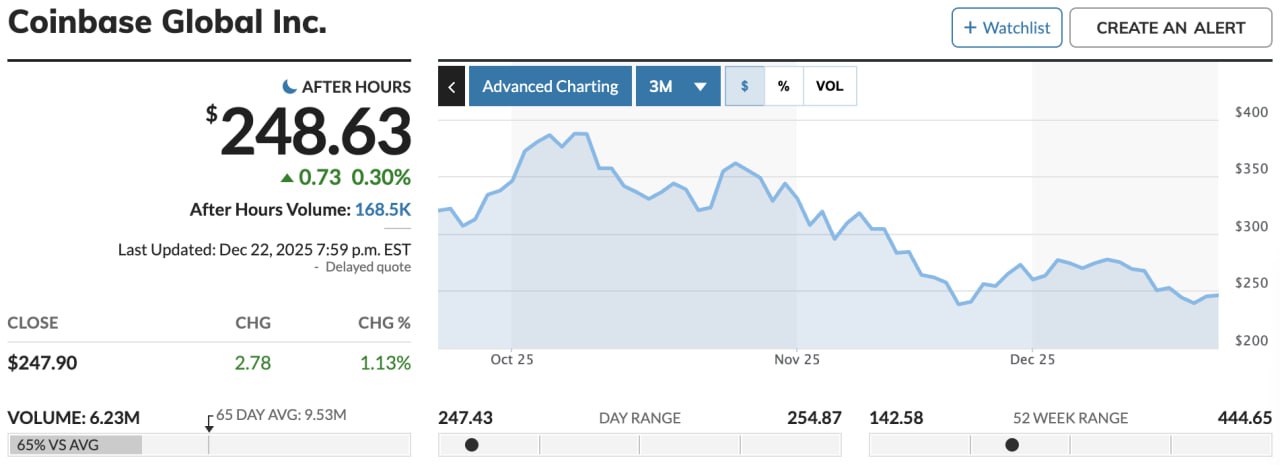
- Affidabilità di un gigante: Questa rete è stata creata ed è supportata da Coinbase, una delle più grandi società di criptovalute pubbliche al mondo, quotata al NASDAQ. È un'infrastruttura di livello istituzionale.
- Risparmio dei tuoi soldi: Nelle vecchie reti, la commissione per un bonifico poteva raggiungere i $10-50. Nella rete Base, le commissioni sono di appena pochi centesimi. Questo permette di effettuare frequenti pagamenti di interessi senza perdite.
Il ruolo dello Smart Contract: Eliminiamo il fattore umano
Il cuore del nostro sistema è lo Smart Contract. È un algoritmo digitale che esegue operazioni finanziarie rigorosamente secondo le regole.
Principio principale: La piattaforma 8lends tecnicamente non conserva denaro sui propri conti. Tutte le transazioni passano in transito attraverso lo smart contract automaticamente.
Il percorso del denaro è questo:
- Investitore → Contratto: Invii i fondi all'indirizzo sicuro del contratto.
- Contratto → Mutuatario: L'algoritmo trasferisce i fondi all'ente creditizio verificato.
- Mutuatario → Contratto: Il giorno del pagamento, il mutuatario restituisce il debito e gli interessi al contratto.
- Contratto → Investitore: L'algoritmo distribuisce istantaneamente i fondi ai portafogli degli investitori.
Ecco l'indirizzo del nostro smart contract principale. Tutte le operazioni passano attraverso di esso:
0xf435A133D6cDCb81061F18a4763560f9931DB57D

Verifica pubblica dei pagamenti: Istruzioni
Non devi essere un investitore o nemmeno registrarti sul sito per accertarti della solvibilità dei mutuatari. Tutta la cronologia dei pagamenti è accessibile pubblicamente sulla pagina di ogni progetto.
Ecco come utilizzare l'interfaccia per condurre il tuo audit personale.
Passo 1. Trova la tabella dei pagamenti
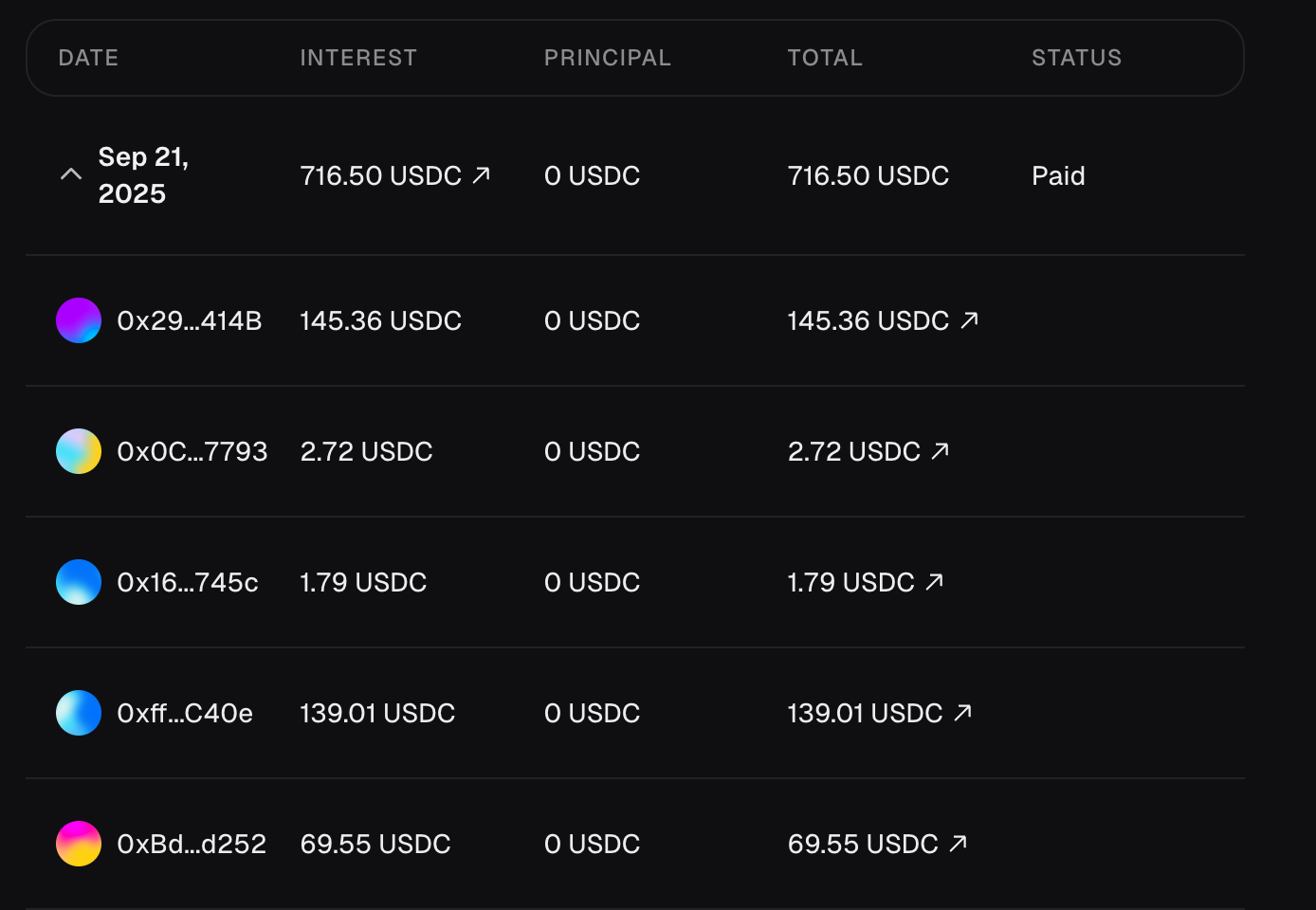
Vai alla pagina di qualsiasi pool attivo o concluso. In basso vedrai il piano dei pagamenti.
- Date: Data del pagamento pianificato (es. Sep 21, 2025).
- Total: Importo totale del pagamento (es. 716.50 USDC).
- Status: Paid (Pagato).
Passo 2. Espandi i dettagli (Freccia verso il basso)
A sinistra della data c'è una piccola freccia/spunta (v). Cliccaci sopra. L'elenco si espanderà e vedrai il dettaglio completo: a chi e quanti soldi sono andati dall'importo totale.
Cosa c'è dentro:
- 0x29...414B — 145.36 USDC
- 0x0C...7793 — 2.72 USDC
Questi sono i portafogli anonimizzati di investitori reali. Puoi vedere che la somma totale di 716.50 USDC non è sparita, ma è stata divisa tra i partecipanti del pool fino all'ultimo centesimo.
Passo 3. Prova sulla blockchain (Freccia ↗)
Non disegniamo semplicemente numeri sul sito. Ogni cifra è un link al registro indipendente BaseScan.
Accanto a ogni importo c'è una freccia diagonale (↗).
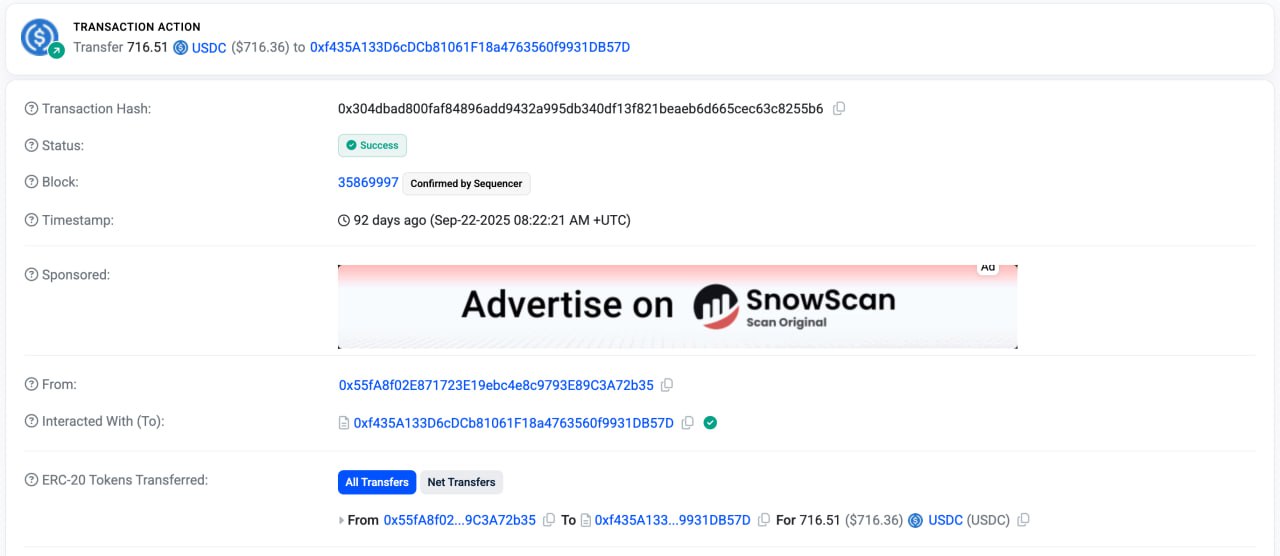
- Clicca sulla freccia dell'importo Totale (716.50 USDC ↗): vedrai la transazione in cui il Mutuatario ha trasferito il denaro allo smart contract.
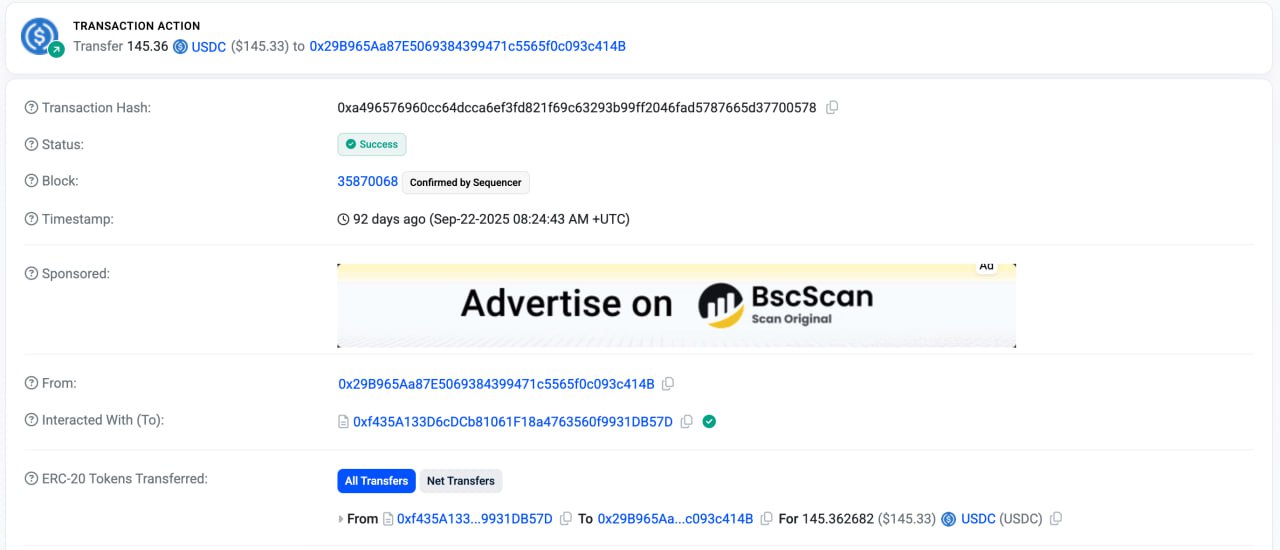
- Clicca sulla freccia di un importo privato (145.36 USDC ↗): vedrai la transazione in cui lo Smart Contract ha inviato il profitto a un investitore specifico.
Riepilogo
In 8lends non ci sono "scatole nere". Chiunque da qualsiasi parte del mondo può andare sulla pagina del progetto, espandere i dettagli del pagamento e tracciare il percorso del denaro dal business all'investitore attraverso la blockchain. Questo è lo standard di trasparenza a cui aspiriamo.