
Maximize the €2,000 Annual Exemption
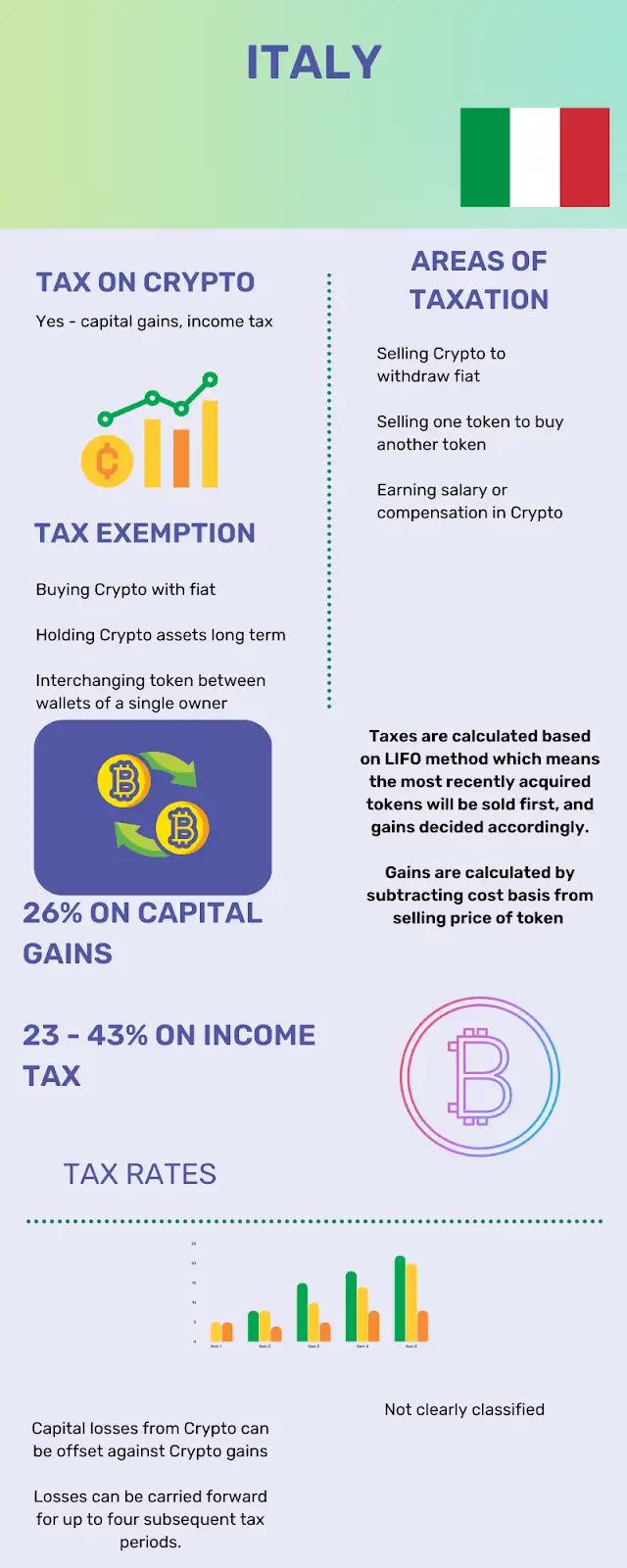
One game-changer that is often overlooked is the annual exemption threshold. Under current Italian law, crypto gains of up to €2,000 annually remain tax-free.
But there is a catch. This threshold cannot be accumulated over multiple tax years. You either use it within the current year or lose it. The next year comes with a fresh threshold to apply to your crypto transactions. Hence, strategic traders often time their disposals over years to maximize this €2K annual exemption.
However, if you have significant transactions to make that could exceed these thresholds, sharing these transactions within the family could further up your threshold. Essentially, a couple has up to €4,000 in exemption each, with €2,000 available to each of them. Hence, they can transfer digital assets between themselves and take full advantage of this combined threshold.
Nevertheless, maintaining detailed records of transactions and accurate logs of disposals is critical to ensure full compliance with Italy’s fiscal laws and to avoid losses due to fines. Employing digital tools and applications like Excel sheets is an effective way to maintain accurate records. Also, portfolio trackers can be utilized to help automate a system of maximizing the €2K tax-free threshold.
Strategic Loss Harvesting
This is another powerful yet underutilized strategy in the Italian crypto trader's toolkit. However, the loss harvesting approach has a mathematical method to it with a strategic timing angle. Essentially, it takes all the losses made in the year to offset the gains.
This typical scenario will give more clarification to this plan.
Say, you made gains of €15,000 trading Ethereum in one tax year but also made a loss of €5,000 trading Altcoins in the same year. Using Italy’s rate of 26%, you can reduce your effective duties by €1,300 after selling the Altcoin losses. This is because the net taxable gain drops from €15K to €10K after selling the losses.
The complete endeavor has a timing requirement, which is the 4th quarter of the year, given that the market is often volatile at this point in the year. Volatility can sometimes reach its peak in December, allowing traders to assess the strength of their portfolios in anticipation of a temporary loss.
Ultimately, integrating scheme with loss harvesting in conjunction with market analysis gives you leverage for a more profitable virtual cash trading year.

Leverage Alternative Portfolio Tax Selections
Professional digital currency traders with a multi-currency portfolio across multiple exchanges often benefit most from this third scheme. This is due to the flexible alternative provided by the Italian fiscal system for advanced investors, which allows a substantial overall reduction in liability. However, these alternatives apply to specific circumstances. This system calculates obligation based on 18% of the short-term gains for high investors with net gains exceeding €25K.
A common factor to all the approaches mentioned thus far is their timing. With appropriate timing by the investor, they can generate substantial savings at an 18% rate.
Also, the election of this system follows some strict timing rules. Once the election is made, it can't be reversed, and there is a deadline that must be followed for the election.
Furthermore, a complete analysis of trading patterns and market conditions is likewise put into perspective before fully committing to this rate.
Optimize Income Source Classification and Holding Periods
One matching feature of both French and Italian crypto tax systems is the classification of income sources in relation to your virtual trading activities.
This classification works to determine your obligation by first determining if you are a casual trader (subject to capital gains treatment) or a professional trader (subject to business income tax). Essentially, your classification greatly determines your fiscal liability under Italian fiscal law.
To understand when and how your crypto activities cross from investment to business, there are relevant factors you will need to carefully consider. These include digital cash holding periods, trading frequency, and overall financial profile. Additionally, factors like the primary source of income, trading patterns, and use of leverage are utilized by Agenzia delle Entrate too to determine your liability.
Classifications
As a long-term holder, being categorized under investment classification will benefit you more, as the potential for a lower effective rate is higher if timing strategies are also implemented. In contrast, being classified under the business category often favors virtual currency traders whose major source of income is their crypto activities. Digital currency-related costs, which can include the cost of equipment and development expenses, can be deducted, further reducing your obligation.
Essentially, reducing your rate is not only dependent on your obligation classification but also combined loss utilization rules, available deductions, and your strategic timing options.
At this stage, many investors find that staying compliant while maximizing savings quickly becomes too complex to manage manually. Between classification rules, loss harvesting, and multi-asset reporting, the margin for error is small. This is where 8lends proves invaluable, automating crypto tax compliance for Italian residents and investors by importing transactions from multiple wallets and exchanges, applying Italy’s 26% capital gains framework, and accurately reflecting exemptions and offsets like the €2,000 annual threshold.
It even helps identify optimal disposal timing to minimize tax exposure under Italian law. With 8lends handling your reporting, you can focus on your strategy while ensuring full compliance with Agenzia delle Entrate.
Explore Jurisdictional Optimization Within Legal Boundaries
Using your geographical location to reduce your duties is a possibility in Italy’s framework. This is what this scheme is all about. However, for optimal reward using this approach, you must be aware of the red tape and how to navigate it.
For investors with substantial digital holdings, jurisdictional optimization represents the most advanced and potentially rewarding approach to tax reduction.
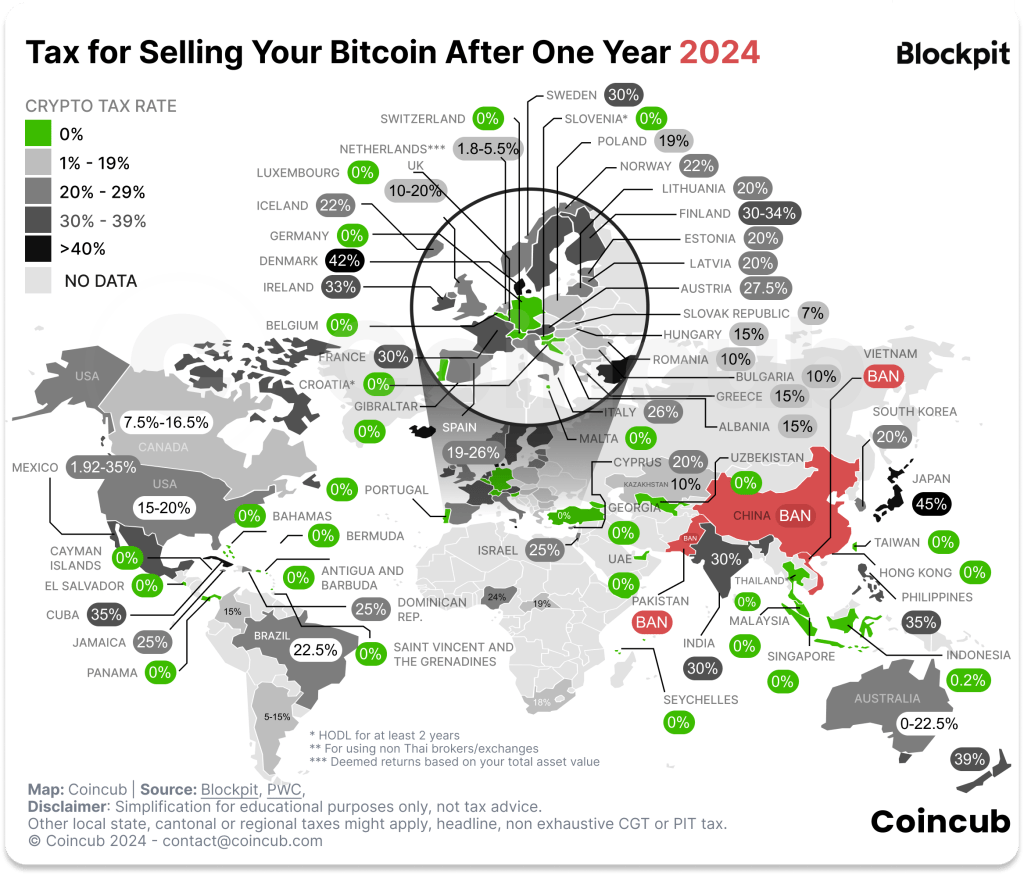
Primarily, you must be abreast of Italian laws on relocation and the liabilities that are attached to it. The same goes for EU member states. Some of these countries, such as Germany and Portugal, have even more flexible crypto tax laws.
These two EU countries guarantee an exemption for holding virtual cash for more than a year and give certain traditional advantages, respectively, to crypto holders. Nevertheless, as an astute digital currency investor, a thorough scrutiny of all residency criteria given by Italy should be done before deciding on the best opportunity to explore both for permanent and temporary relocations.
Both residents and non-residents pay tax in Italy. However, where residents pay on global income non non-residents only pay for income generated in Italy. Still, strategic temporary relocation can help you as a digital currency trader, make significant savings on your gains, especially if it is substantial.
Furthermore, you may require residence establishment if you are looking at using temporary relocation approaches to help you save on costs for a huge one-time gain. Local ties, physical presence, and maybe an intention to remain can be explored for this purpose.
For effectiveness, ensure that you have genuine relocation documents, as Italy's tracking systems have been so precise at tracking residence changes.

Advanced Legitimate Strategies for Sophisticated Investors
Strategies for cutting down on costs are not limited to the ones mentioned previously. There are still advanced techniques employed by seasoned crypto investors that further help you reduce your obligation without breaking any rules. One advanced method is leveraging the gift exemption offering, which Italian authorities have been magnanimous with.
This offering allows you to transfer virtual money to family members tax-free every year, ensuring that gains stay within the family while significantly cutting obligations. Digital cash donations are another scheme to cut duties further down. This allows donations to many charitable organizations, given that appreciated assets can eliminate capital tax gains according to Italian law.
There are others, such as retirement planning and international structures, that offer favorable, legitimate debt savings benefits. Savvy investors have robust financial planning that incorporates all of these plans.
Implementation Framework
With all strategies outlined, converting them into actionable plans requires systematic assessment, implementation, and monitoring.
It begins with deploying assessment tools that will evaluate both the potential savings and implementation complexity of different strategies. There is no one-size-fits-all solution for every investor. Once completed, a cost-benefit analysis is necessary to identify the best approach. This will highlight how to save on tax, the cost of implementation, ongoing compliance requirements, and time opportunity cost.
Timeline planning follows closely behind cost-benefit analysis. Loss harvesting, residence changes, and liability preferences all operate within a predetermined timeline. Monitoring systems that track the effectiveness of the strategies can be implemented. The implementation framework should also include contingency planning for different market scenarios.
Conclusion
In a nutshell, crypto fiscal policy in Italy could be a slippery slope. But with the appropriate strategies and excellent implementation, it could be a walk in the park. Without any doubt, it continues evolving, and there is a hint of an increase of up to 33% rates coming soon. Nonetheless, strategies abound, including income source optimization, loss harvesting, jurisdictional planning, and alternative duties selection, all of which can be an effective part of your overall financial strategy.
The window for maximizing current advantages may not stay open for long. Whether you’re leveraging loss harvesting, optimizing classification, or planning relocations, precision and documentation are key. A single miscalculation or missed filing can cost far more than any savings achieved through strategy alone.
Interest paid by a lending platform is treated differently from trading profits in most European countries, and Italy is no exception. For the cross-border picture, see how P2P and crowdlending income is taxed in Europe.
Read next on 8lends
8lends provides an all-in-one automation and compliance solution designed specifically for Italy’s complex tax landscape. It calculates capital gains under FIFO and LIFO methods, tracks exemptions, and produces fully compliant reports in line with current and upcoming legislation. From individual traders to professional investors managing large portfolios, it ensures accuracy, transparency, and peace of mind.