
The Private Credit Market Is Growing to $2 Trillion — Why 8lends Is P2B, Not DeFi

September 30, 20265 min read
Private credit means lending to companies outside the traditional banking system and public bond markets. The market has grown from a few hundred billion dollars to around $1.7–2 trillion, according to various estimates.
Private credit means lending to companies outside the traditional banking system and public bond markets. The market has grown from a few hundred billion dollars to around $1.7–2 trillion, according to various estimates.
Why is it growing?
Banks have become more selective about lending to small and medium-sized businesses, partly because of tighter regulations. This has pushed businesses to look for other sources of funding.
8lends is one of those alternatives. But instead of using a traditional fund structure, we use blockchain technology. And that already makes 8lends different from a typical DeFi project.
Why Is the Private Credit Market Growing Right Now?
As banking regulations became stricter, such as with Basel III and Dodd-Frank, major banks became more selective about lending to SMEs. Smaller deals can be less attractive for banks once capital requirements are taken into account.
This trend has lasted for more than a decade and, according to analysts, is likely to continue.
At the same time, institutional and private investors are looking for higher yields than traditional bonds can offer, while still wanting more predictable cash flows than they can get from public stocks.
Following a strategy review in September 2024, the pension fund CalPERS doubled its target allocation to private credit from 5% to 8%, adding around $12 billion in new capital over three years.
The Dutch firm APG, Europe’s largest pension investor, plans to increase its private market exposure to more than 30% of its assets. It plans to do this partly by increasing its allocation to private debt from around 1.5% to 2–4%.
The UK pension fund Nest has allocated £450 million to US private credit as part of a goal to bring its private market exposure to around 30% by 2030.
A small group of major asset managers controls a large part of the market, and that group has changed significantly over the past year.
Blackstone Credit manages around $370 billion and remains one of the largest players.
BlackRock joined the group of major private credit managers in July 2025 after acquiring HPS Investment Partners for $12 billion. The deal brought BlackRock’s private credit business to around $220 billion, putting it on a similar scale to Apollo and Blue Owl, which also passed the $200 billion mark.
BlackRock expects the private debt market to more than double and reach $4.5 trillion by 2030.
As a result, businesses that struggle to get loans from banks are turning to private lenders for funding, including for projects with reasonable risk profiles.
What does 8lends take from all of this?
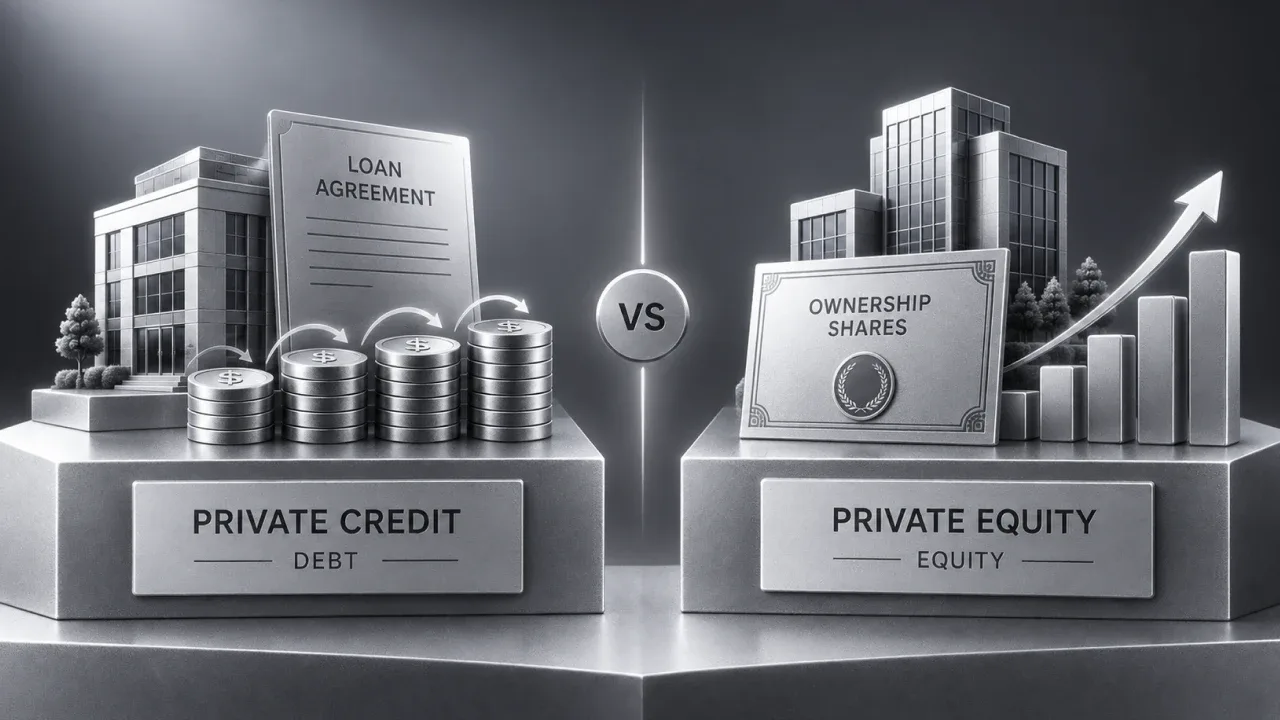
8lends works in the same way as classic private credit: investor capital goes directly to a specific business, bypassing banks, at a fixed interest rate and with tangible collateral.
This is known as P2B (peer-to-business). An investor funds a business loan with a fixed annual rate of 19–25%, with a minimum investment of 100 USDC.
The loan is secured by a tangible asset belonging to the borrower. An independent collateral agent, Maclear AG, values and monitors the collateral.
The project’s credit rating (on an AAA–CCC scale) is set before the loan becomes available to investors.
On our platform, blockchain handles USDC-based settlements and provides transparent loan terms and access for investors across different jurisdictions without traditional fund-level intermediaries.
How is this different from crypto-DeFi lending?
The term “DeFi lending” is widely known and often refers to blockchain-based credit products. But the core model is different.
In DeFi lending, the collateral usually consists of cryptocurrency such as ETH or BTC. Interest rates are typically variable and depend on demand in the liquidity pool. If the collateral loses value, the position can be liquidated automatically.
8lends is a P2B platform. Businesses that take loans provide the collateral, interest rates are fixed, and there is no traditional liquidation mechanism.
The main risk is business default. That’s why every loan is secured by a tangible business asset. If a business defaults, we can sell the collateral and return the principal to investors.
Some projects on our platform also have BuyBack protection. In the event of a default on a project with BuyBack protection, investors receive their money much faster and in full.
However, we do have something similar to DeFi crypto lending.
8lends offers a separate product called FastLending, which works like crypto-collateralized, variable-rate DeFi lending.
What does this mean for you?
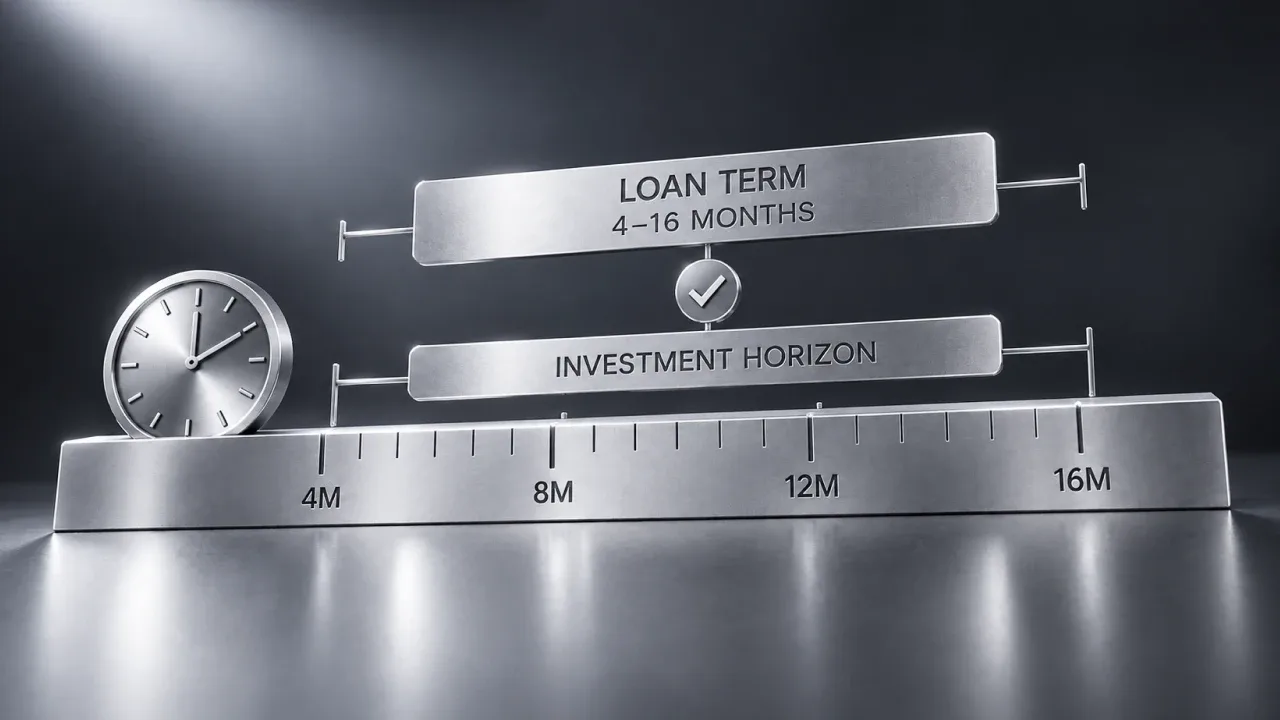
The institutional private credit market has traditionally been out of reach for individual investors. Minimum investments could run into hundreds of thousands of dollars, and investors often had to lock their money up for years through funds.
8lends brings the same model — direct business financing backed by real collateral at a fixed rate — with investments starting at 100 USDC. You can also exit early through the Secondary Market (the “Classifieds” section in your dashboard), where the seller pays a 10% fee.
Investing in business loans involves risk, including possible loss of principal. Fixed rates describe loan terms, not guaranteed outcomes, and collateral does not guarantee full recovery.
Frequently Asked Questions
Private credit means lending directly through non-bank lenders, often with more flexible terms and interest rates that reflect the lower liquidity of the investment.
Traditionally, access was mostly limited to institutional investors and funds with high minimum investments.
Read next

Do You Have Any Questions?
All questionsThe platform has been audited by CertiK and Cyberscope, and all transactions are publicly visible on the Base blockchain. Two companies with clear responsibilities stand behind the platform: CLEARCHAIN CORP operates the platform and is registered as a Money Services Business with FINTRAC (Canada), and Maclear AG conducts due diligence and monitors collateral. So the platform is well regulated, transparent and accountable
If the project has BuyBack, the partner buys the loan and returns 100% of the principal once it is overdue for 60 days or more. Without BuyBack, Maclear AG initiates the sale of the collateral, and the proceeds are distributed proportionally among investors. Since launch there have been no defaults
The platform is operated by CLEARCHAIN CORP, registered in Canada as a Money Services Business (MSB) and subject to mandatory AML/CFT compliance requirements under FINTRAC. Settlements are made in USD. The platform is not a CASP, so DAC8 requirements do not apply
Small and medium-sized businesses in developing regions do not have easy access to bank financing and are willing to pay higher rates than businesses in the EU or US
You can sell your position to another investor through the Secondary Market before the end of the loan term. With Fastlending there is no fixed term: the principal and accrued income can be withdrawn at any time
The minimum investment is 100 USD
Risk of non-payment by the business, risk of changes in the value of the collateral, risk of limited liquidity if there is no buyer on the Secondary Market, and technical risk associated with the smart contract
Investments from 100 to 500 USD are available without KYC. For amounts over 500 USD, full verification is required: an identity document and proof of address