
What Is RWA-Backed Lending? Real-World Collateral Explained
August 11, 20266 min read
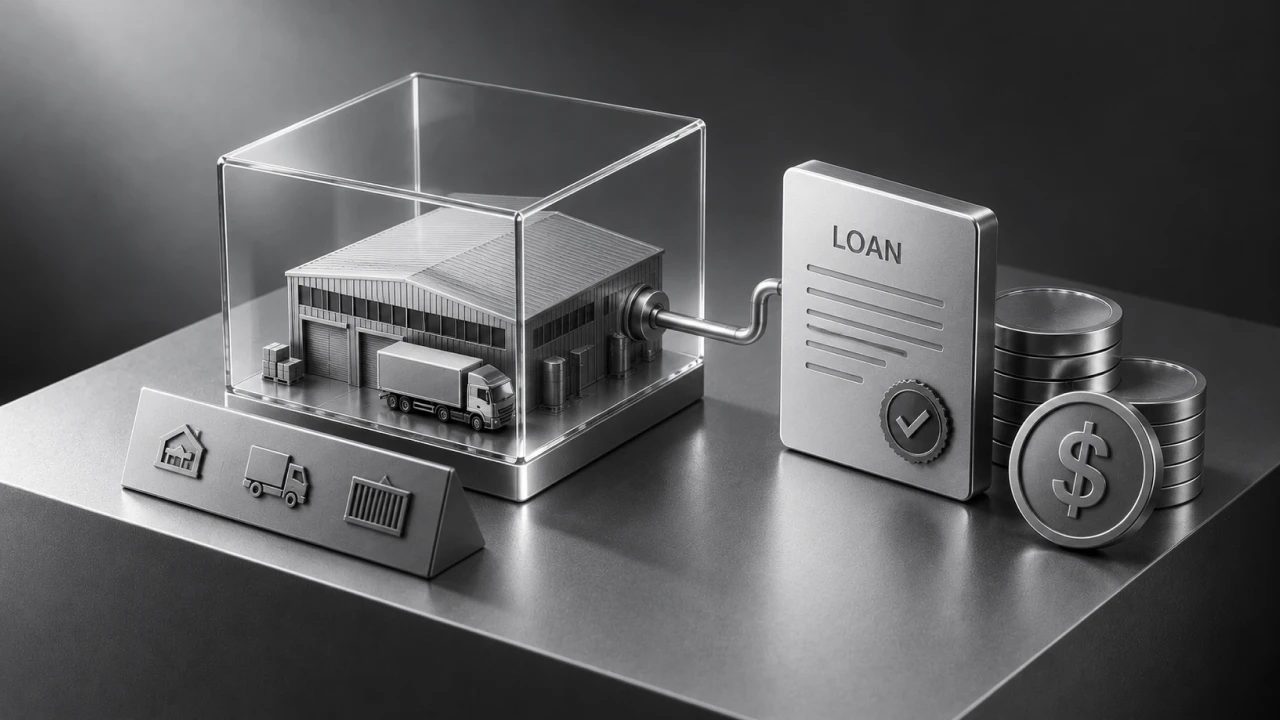
RWA-backed lending is lending secured by real-world assets — equipment, real estate, vehicles, or inventory — that are pledged as collateral against a loan. It differs from RWA digital issuance, which sells digitally issued shares of an asset. On 8lends, a Swiss collateral agent, Maclear AG, legally registers the collateral so it can be liquidated if a borrower defaults.
What RWA-Backed Lending Is
When a business can secure financing through the collateral that comes in the form of a real-world asset pledged against the loan, this type of asset-backed lending is called RWA-backed lending. The investors who fund the loan and then receive fixed monthly payments as interest do not get ownership of the company, with the borrower fully retaining it. In case of the borrower repaying the debt owed to the investor, the collateral pledged against the loan also stays in the borrower's possession.
The investor does not exercise ownership over the collateral or the business in case of an RWA-backed loan. The process involves the investor purchasing a claim that is secured against an asset the value of which is pledged against this claim.
What Is RWA Lending?
RWA lending is the loan that is secured by the real-world assets that may come in the form of operational equipment, machinery, commercial vehicles, real estate objects, storage capacities, or the company's other assets. In the case of RWA lending, the investor purchases a claim secured against the collateral instead of the right to own a business.
RWA Lending vs. RWA Digital Issuance: Two Different Things
RWA digital issuance and RWA lending mean different things; therefore, it is necessary to distinguish between these two notions. The summary of the differences is given in the table below.
| Feature | RWA Lending (8lends Model) | RWA Digital Issuance |
|---|---|---|
| What the investor receives | The claim for the loan is secured against a collateral | A share of the underlying asset that is digitally issued |
| Source of returns | Loan interest is fixed at 19-25% APR, paid in USD. Returns are not guaranteed | Performance or income generated by the underlying asset |
| Role of the real-world asset | Collateral that secures the loan | The investment itself |
| In case of default | The legal procedure to enforce the collateral and then distribute recovery to the investors | Depends on the structure of the asset and the issuer |
| Typical examples | SME lending that is backed by real-world assets | Treasuries that are digitally issued or money-market products |
What Is RWA Digital Issuance?
The investors may purchase the digitally issued instruments that represent their right of ownership or the claims on the real-world asset that backs the loan. This is the essence of RWA digital issuance. In this case, the investor can have exposure to the asset instead of simply providing the loan that is backed against the collateral to the borrower. Unlike RWA lending, RWA digital issuance gives the investor the right of ownership.
How Real-World Collateral Protects Investors
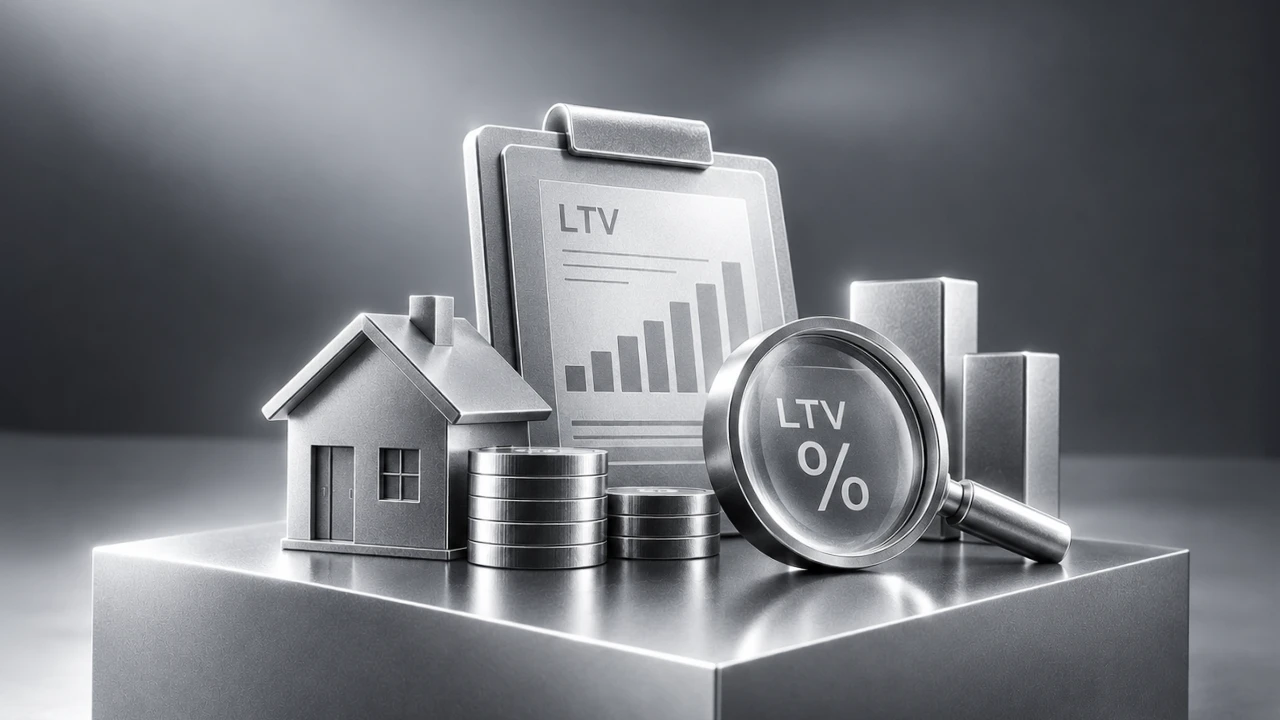
Real estate objects, commercial vehicles, storage facilities, and operational equipment are all assets that can be pledged against the loan in RWA-backed lending. The collateral that is offered as security of the loan can be assessed through the Loan-to-Value (LTV) metric. The formula for calculating LTV is as follows:
LTV=(Loan / Collateral Value) × 100
The following illustrative example gives an overview of what the LTV ratio means. Supposedly, the borrower is given the loan amounting to €500,000. The collateral against the loan is a real estate object with the market value of €1,000,000. In this case, LTV will be 50%. A conservative LTV (below 100%) means that the investor's funds are fully protected by the value of the collateral, generally giving more possibilities to recover the debt through the partial or complete liquidation of the collateral due to full coverage of the loan. A higher LTV (more than 100%) would mean that the loan is not fully backed by the collateral and that some parts of the loan are not secured by it.
What Assets Are Used as Collateral?
Different types of assets, including storage capacities, business vehicles, equipment, real estate objects, and inventory, can all be used as collateral against the loan. 8lends as the platform assesses the collateral that backs the loan with the help of the independent collateral agent Maclear AG that runs all the checks regarding the valuation and the legal assessment of the collateral in the jurisdiction of the borrower and the asset.
What Happens to the Collateral if a Borrower Defaults?
8lends has a specific procedure in case of the borrower's default. The procedure of the collateral's liquidation begins only after the repayment obligations under the loan agreement are not met. The first 60 days from the date of the failed payment towards the debt are supervised by Maclear AG, which works with the borrower to try and settle debt repayment without legal proceedings that can involve costly and lengthy procedures. In case the debt obligation is not settled in 60 days, the options of BuyBack as well as repayment reinstatement are evaluated. In case none of these options are available, Maclear AG can start legal proceedings involving the enforcement of the collateral.
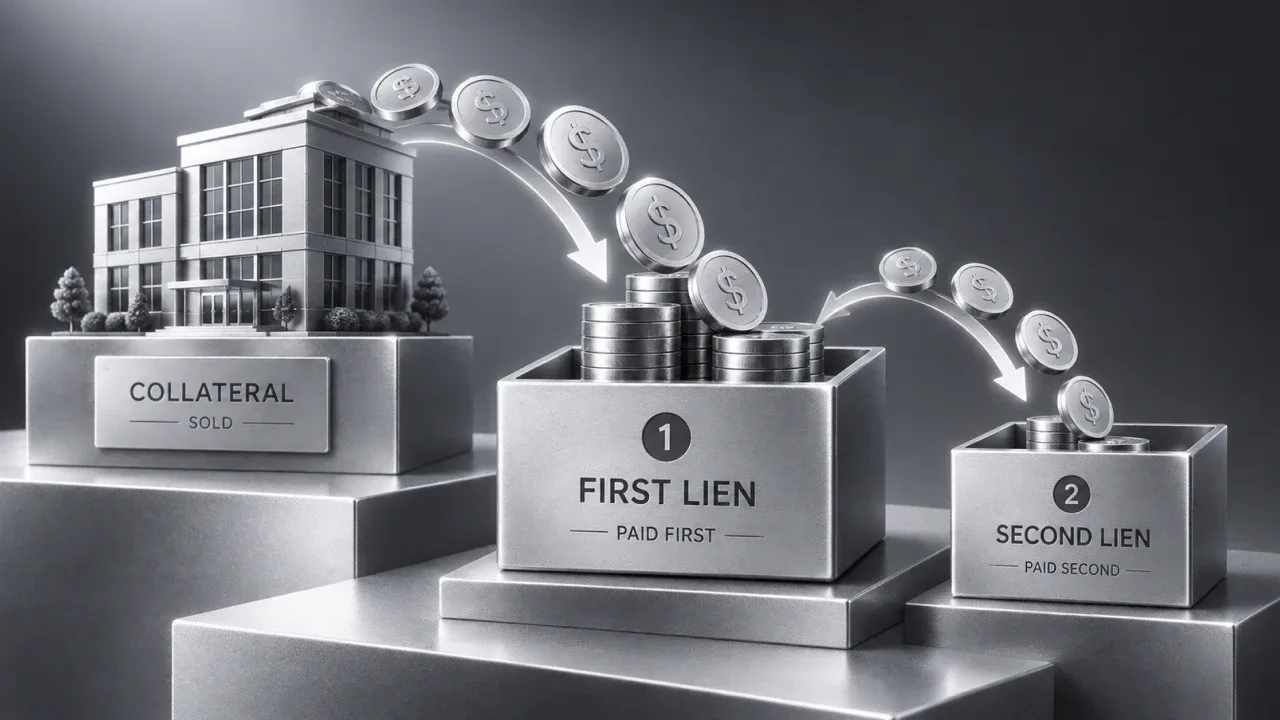
If the collateral is sold, the funds are distributed among the investors who have invested in the claims based on the pro rata principle. The process's duration depends on the particular case and the jurisdiction the case takes place in; the recovery may take from 1 to 12 months depending on these factors. The value of the collateral may change given the current market conditions, the legal and transaction fees, or the need to sell the asset within a limited timeframe. Capital remains at risk; recovery is not guaranteed.
How Does LTV Measure My Protection?
LTV measures the protection of the loan by calculating the value of the collateral pledged against the amount of the loan. If the value of the collateral is higher than the value of the loan against it, it would mean that LTV is conservative (less than 100%), giving the investor more protection because the loan is completely backed by the asset. In case LTV is higher than 100%, some percentage of the loan is not covered by the collateral. It is important to keep in mind that LTV is only one factor out of many during due diligence; that is why consideration of the broader financial and legal situation is required to make a weighted investment decision.
The Role of an Independent Collateral Agent
8lends separates the management of the collateral and the operations of the platform that involve the listing of the loan and prior borrower's due diligence. AlphaSystems LLC supports 8lends operations, while Maclear AG supports the assessment of the collateral against the loans on the market.
Maclear AG, as an independent Collateral Agent checks the company's legal registration, the loan terms, and the asset's status. The agent is also responsible for debt recovery and collateral enforcement if that becomes a necessity. However, the RWA-backed investment is not entirely risk-free. Even with the existence of the collateral and BuyBack, the borrower default risk remains, and capital loss can be a possibility.
Spotlight — 8lends Real-world collateral, independently registered On 8lends, investors fund real SME loans using USD, receiving monthly interest at fixed rates. Every transaction — investment, interest payout, principal return — is recorded on the Base blockchain and publicly verifiable. Each borrower passes 40+ due diligence criteria assessed by Maclear AG and is rated AAA–D before listing. Loans are backed by real-world collateral and selected projects include BuyBack protection — returning 100% of principal if a borrower delays beyond 60 days. 19–25% APR Fixed APR in USD $152.7M+ Total funded $53.2M+ Total repaid 50.8K+ Investors View open projects →
FAQ What is RWA-backed lending? RWA-backed lending is lending secured by real-world assets — equipment, real estate, vehicles, or inventory — pledged as collateral against a loan. It differs from RWA digital issuance, which sells digitally issued shares of an asset. What is the difference between RWA lending and RWA digital issuance? RWA lending differs from RWA digital issuance in what the investor receives, the source of returns, the role of the asset, and the procedures in case of the borrower's default. However, the main difference is that RWA lending is a loan tool secured against the collateral where the lender does not own the company or the asset pledged against the loan. RWA digital issuance gives the investor exposure to the business the investor lends to in terms of ownership. What kind of assets back the loans? The collateral that backs the loans may come in many forms, including real estate objects, equipment, and commercial vehicles. Every asset type differs in terms of valuation, risk profile, and legal status. How does LTV protect investors? LTV protects investors by assessing the relative value of the collateral pledged against the loan. Lower LTV means that the investor has more buffer for the lent funds, while higher LTV would mean that some parts of the loan are not backed by the asset against it. What happens to the collateral if a borrower defaults? In case of the borrower's default, Maclear AG handles the first 60 days of debt repayment. The agent tries to solve the issue with the debt without immediate legal enforcement of the collateral. In case the issue remains unresolved by the end of that timeframe, Maclear can start a collateral enforcement procedure that may result in the liquidation of the asset and the distribution of funds among the investors on a pro rata basis.
Explore 8lends' RWA-backed crowdlending projects — collateral legally registered through an independent Swiss collateral agent. Start investing → The content of this article is provided for informational and educational purposes only. It does not constitute investment, financial, tax, or legal advice. P2P lending and crowdlending investments carry a risk of partial or total capital loss. Collateral and BuyBack arrangements do not guarantee the return of funds; recovery outcomes vary. Past performance is not indicative of future results. Readers should conduct independent research and consult qualified advisors before making any financial decisions. Availability of products and services may be restricted in certain jurisdictions.
Read next
Do You Have Any Questions?
All questionsThe platform has been audited by CertiK and Cyberscope, and all transactions are publicly visible on the Base blockchain. Two companies with clear responsibilities stand behind the platform: CLEARCHAIN CORP operates the platform and is registered as a Money Services Business with FINTRAC (Canada), and Maclear AG conducts due diligence and monitors collateral. So the platform is well regulated, transparent and accountable
If the project has BuyBack, the partner buys the loan and returns 100% of the principal once it is overdue for 60 days or more. Without BuyBack, Maclear AG initiates the sale of the collateral, and the proceeds are distributed proportionally among investors. Since launch there have been no defaults
The platform is operated by CLEARCHAIN CORP, registered in Canada as a Money Services Business (MSB) and subject to mandatory AML/CFT compliance requirements under FINTRAC. Settlements are made in USD. The platform is not a CASP, so DAC8 requirements do not apply
Small and medium-sized businesses in developing regions do not have easy access to bank financing and are willing to pay higher rates than businesses in the EU or US
You can sell your position to another investor through the Secondary Market before the end of the loan term. With Fastlending there is no fixed term: the principal and accrued income can be withdrawn at any time
The minimum investment is 100 USD
Risk of non-payment by the business, risk of changes in the value of the collateral, risk of limited liquidity if there is no buyer on the Secondary Market, and technical risk associated with the smart contract
Investments from 100 to 500 USD are available without KYC. For amounts over 500 USD, full verification is required: an identity document and proof of address