
November 4, 20268 min read
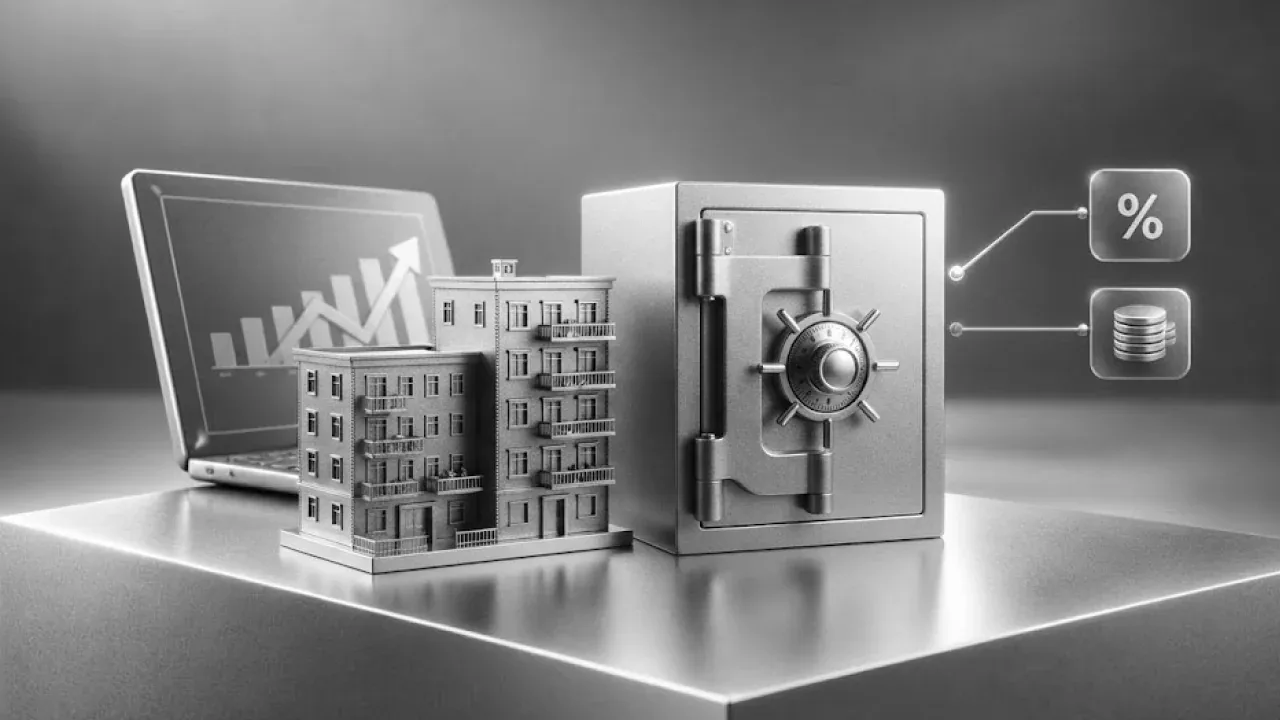
The same building can back two investments: owning it for rent and appreciation, or lending against it for fixed interest. Capital, workload, price exposure and exit, side by side.
The same property can support two very different investments. Its owner collects rent, pays the bills, and gains or loses as its value changes. A lender finances a loan secured against it. The lender earns contractual interest, subject to repayment, without owning the building or taking on the landlord’s day-to-day work.
How does owning rental property generate a return?
For an owner, the return comes from rent and, eventually, the price received on sale.
The bills keep arriving between tenants. Insurance, maintenance, and other expenses still need paying when the property is empty. A major repair can also absorb months of income, so the rent advertised in a listing tells only part of the story.
The pros and cons of being a landlord follow from that ownership. You have a say in how the property is used and maintained, within legal and contractual limits. You also pay when work is needed or rental income stops.
As with other income-producing assets, gross rent and the amount left after expenses are different figures.
How does lending against real estate work instead?
A lender’s starting point is the loan agreement. A borrower receives funding and agrees to repay principal with interest. The property stands behind that obligation as collateral, providing a possible source of recovery if the borrower fails to pay.
Is lending against real estate the same as owning it?
No. Real estate-backed loans for investors give the lender rights under a debt agreement, not ownership of the property. You do not choose tenants or arrange repairs. Your concern is whether the borrower can pay and whether the security can support recovery if it cannot.
For the loans discussed here, the annual percentage rate (APR) is fixed at 19–25% when each investment is made, for a term of 4–16 months.
Property is one type of Real World Assets (RWA) collateral. An independent Collateral Agent administers the security arrangements, as explained in the collateral FAQ. Check what actually backs each project: a secured business loan does not necessarily have rental property behind it.
If you want to invest in real estate without buying property, this distinction matters. Funding a property-backed claim makes you a creditor. It does not buy you a small ownership share in the building. The private credit guide explains that relationship in more detail.
How much capital does each role require?
How much money do you need to invest in rental property?
The amount depends on the property, its location, and the financing available. In many markets, the initial equity contribution alone can run to tens of thousands of USD. Transaction costs and a reserve come on top of that.
The lending positions discussed here start at 100 USD per loan. That makes a smaller commitment possible, but the minimum is simply an entry threshold. It says nothing about how much an individual should invest or how likely a borrower is to repay.
Do you need a mortgage to lend against real estate?
No. You are providing funds to the borrower, not borrowing to buy the building yourself. The security arrangement concerns the borrower’s property; it does not require the investor to become a property purchaser.
For an actual comparison, check purchase prices against recent transactions or official property records and management charges against written provider terms. Date that check: local prices, rental yields, and management fees need verification for the property being considered.
Who carries the effect of rising or falling property values?
If the property rises in value, the gain belongs to its owner. If it falls, the owner bears the decline. Mortgage borrowing can magnify the effect on equity because the debt does not shrink simply because the building is worth less.
The lender does not receive extra interest just because the building becomes more valuable. But falling values can matter when repayment goes wrong.
What happens to your return if property values fall?
The owner’s asset is worth less, and a sale may leave less money after costs and debt repayment. The lender’s agreed payments do not automatically change. Instead, the concern is whether the property would still raise enough to cover the debt if recovery became necessary.
Loan-to-value (LTV) compares the loan amount with the assessed value of its collateral. Where the collateral is worth more than the debt, that difference provides a cushion against a fall. It does not guarantee that the debt will be repaid in full.
What matters in recovery is the money left after a sale and the claims against it. Enforcement costs, claim priority, and the price actually achieved can all affect that amount. The collateral valuation and LTV guide explains why an appraisal should not be read as a certain sale price.
Lending against a property does not make you its owner: your contractual return follows the loan terms, not entitlement to rent or appreciation. Falling collateral values can reduce recovery, LTV is not a guaranteed loss limit, and recovery after default can take one to twelve months without assuring full repayment.
For these loans, default is recorded at 60 days overdue. Recovery follows that stage; the first missed payment does not necessarily start the recovery clock.
What work and exit responsibilities come with each role?
As an owner, someone has to find tenants, arrange repairs, and meet the property’s legal obligations. Hiring a manager adds a cost.
As a lender, the work is concentrated before investment: examining the borrower, loan terms, and collateral. Screening against 40+ criteria supports that assessment without assuring repayment. After investing, you monitor payment and status information rather than dealing with tenants.
| Aspect | Owning the rental property | Lending against the property |
|---|---|---|
| Entry cost | Purchase equity, potentially mortgage financing, transaction costs and reserves; amounts depend on the market. | From 100 USD per position for the loans discussed here. |
| Ongoing involvement | Tenant arrangements, repairs and management, directly or through paid providers. | Assess the loan before entry and monitor repayments; no ordinary tenant-management duties. |
| Income source | Rent after applicable expenses; sale gains or losses are separate. | Fixed contractual interest, subject to borrower performance. |
| Price exposure | Owner participates directly in appreciation and depreciation. | No ownership upside; falling collateral values can impair recovery if the borrower defaults. LTV provides a cushion, not a loss cap. |
| Liquidity | A sale requires a buyer and completion; it can take weeks or months, with local conditions determining timing. | Early exit requires a willing secondary-market buyer and carries a 5% seller fee. |
| Risk type | Property-price changes, vacancies, expenses and any financing obligations. | Borrower credit and recovery risk; 40+ screening criteria and collateral mitigate risk without eliminating it. |
For a lender, listing a position does not release the money. Another investor must buy it, potentially at a discount as well as the seller fee. The buyer fee is 0%. The investor fees FAQ separates investment commission from early-sale charges.
Which role suits which investor?
Ownership may suit someone who wants the building itself, has capital for the purchase and reserves, and accepts the work or cost of management. Without those resources or that willingness, the responsibilities can become a burden.
Lending offers a different role for someone seeking passive income from real estate without being a landlord: contractual interest without tenant management, alongside borrower risk and uncertain early access. It does not give the lender property appreciation or control over the building. Neither role is a recommendation to sell or buy a particular property.
Where do real estate funds fit?
A real estate fund provides a third route. Its manager selects assets and oversees the pool, potentially spreading exposure across several properties. In return, investors pay fees and give up direct control over individual holdings. The fund’s mandate determines how broad that spread really is. Check current costs and access terms in its official documents and date the comparison. This remains a separate investment structure.
The 8lends platform is run by CLEARCHAIN CORP, registered in British Columbia, Canada, and registered with FINTRAC as a money services business. Maclear AG (Switzerland), a member of PolyReg SRO, acts as the independent Collateral Agent; it does not operate the platform, is not its parent company, does not hold investor funds and is not directly licensed by FINMA.
Investing in business loans involves risk, including possible loss of principal. A fixed rate describes loan terms, not a guaranteed outcome, and collateral does not guarantee full recovery.
Frequently Asked Questions
No. Owning gives you the property, its rent, and any gain or loss in value. Lending gives you a claim for principal and interest, backed by the property. You do not become the landlord, and the collateral may not raise enough to repay everything owed if the borrower defaults.
You need funds for the purchase contribution, transaction costs, and reserves. The contribution can run to tens of thousands of USD in many markets, depending on prices and borrowing terms. By comparison, the lending positions discussed here start at 100 USD, but funding a loan does not buy you the property.
As an owner, you hold an asset that is now worth less. As a lender, your agreed payments stay the same, but the collateral may cover less of the debt if the borrower defaults. An LTV cushion can absorb some decline; it cannot promise full repayment after sale and enforcement costs.
No. Finding tenants, arranging repairs, and managing the property belong to the owner or its appointed manager. As a lender, you assess the loan and follow repayment updates. You avoid the landlord’s everyday workload, but you still need to understand the borrower’s position and what happens if payments stop.
A fund is a third option with its own terms. Its manager chooses and oversees the holdings, and you pay fees rather than control each asset yourself. The fund may spread exposure across properties, depending on its mandate. You hold an interest in that pool, not an individual property or a directly selected loan.
Read next


Do You Have Any Questions?
All questionsThe platform has been audited by CertiK and Cyberscope, and all transactions are publicly visible on the Base blockchain. Two companies with clear responsibilities stand behind the platform: CLEARCHAIN CORP operates the platform and is registered as a Money Services Business with FINTRAC (Canada), and Maclear AG conducts due diligence and monitors collateral. So the platform is well regulated, transparent and accountable
If the project has BuyBack, the partner buys the loan and returns 100% of the principal once it is overdue for 60 days or more. Without BuyBack, Maclear AG initiates the sale of the collateral, and the proceeds are distributed proportionally among investors. Since launch there have been no defaults
The platform is operated by CLEARCHAIN CORP, registered in Canada as a Money Services Business (MSB) and subject to mandatory AML/CFT compliance requirements under FINTRAC. Settlements are made in USD. The platform is not a CASP, so DAC8 requirements do not apply
Small and medium-sized businesses in developing regions do not have easy access to bank financing and are willing to pay higher rates than businesses in the EU or US
You can sell your position to another investor through the Secondary Market before the end of the loan term. With Fastlending there is no fixed term: the principal and accrued income can be withdrawn at any time
The minimum investment is 100 USD
Risk of non-payment by the business, risk of changes in the value of the collateral, risk of limited liquidity if there is no buyer on the Secondary Market, and technical risk associated with the smart contract
Investments from 100 to 500 USD are available without KYC. For amounts over 500 USD, full verification is required: an identity document and proof of address