
September 15, 202612 min read
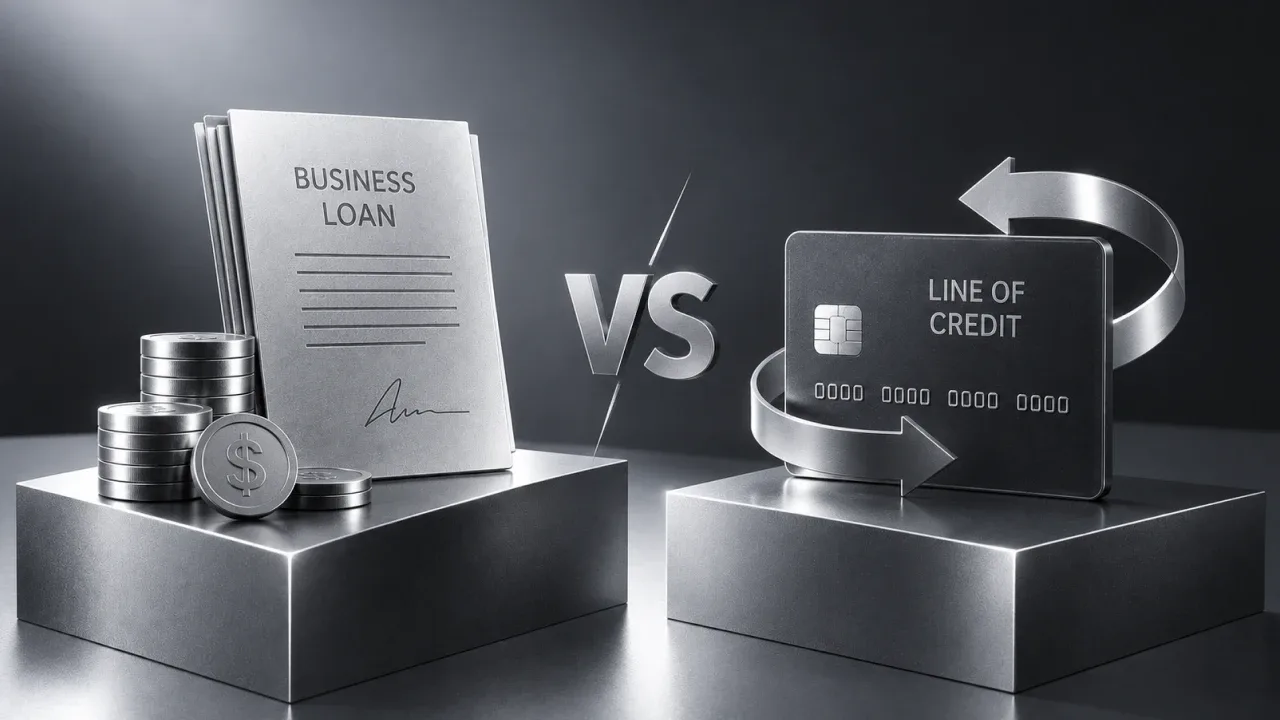
A business loan and a business line of credit solve the same problem — access to outside capital — with opposite structures. A term loan gives a fixed amount for a fixed period, usually against a specific purpose and, if secured, against a specific asset. A line of credit gives a revolving limit you can draw, repay, and draw again, paying interest only on what you actually use. Neither is universally cheaper or faster; which one costs less depends on how the money will actually be used.
A business loan and a business line of credit solve the same problem — access to outside capital — with opposite structures. A term loan gives a fixed amount for a fixed period, usually against a specific purpose and, if secured, against a specific asset. A line of credit gives a revolving limit you can draw, repay, and draw again, paying interest only on what you actually use. Neither is universally cheaper or faster; which one costs less depends on how the money will actually be used.
Business Loan vs. Line of Credit: The Core Structural Difference
The difference starts with how the money becomes available.
A term loan is funded once. The borrower receives an agreed amount and repays it according to a fixed structure over a defined term.
A business line of credit works more like a standing borrowing limit. The company can draw part of it, repay that balance, and usually borrow again while the facility remains open.
That changes the cost as well.
With a term loan, interest is generally calculated on the full funded amount. With a revolving line, interest is normally charged only on the balance actually drawn, although commitment, maintenance, or draw fees can still apply.
What Is a Term Business Loan?
A term business loan provides a known amount for a known period.
It tends to fit expenses that can be identified before funding: a piece of equipment, a new contract, a planned expansion, or another project with a defined budget.
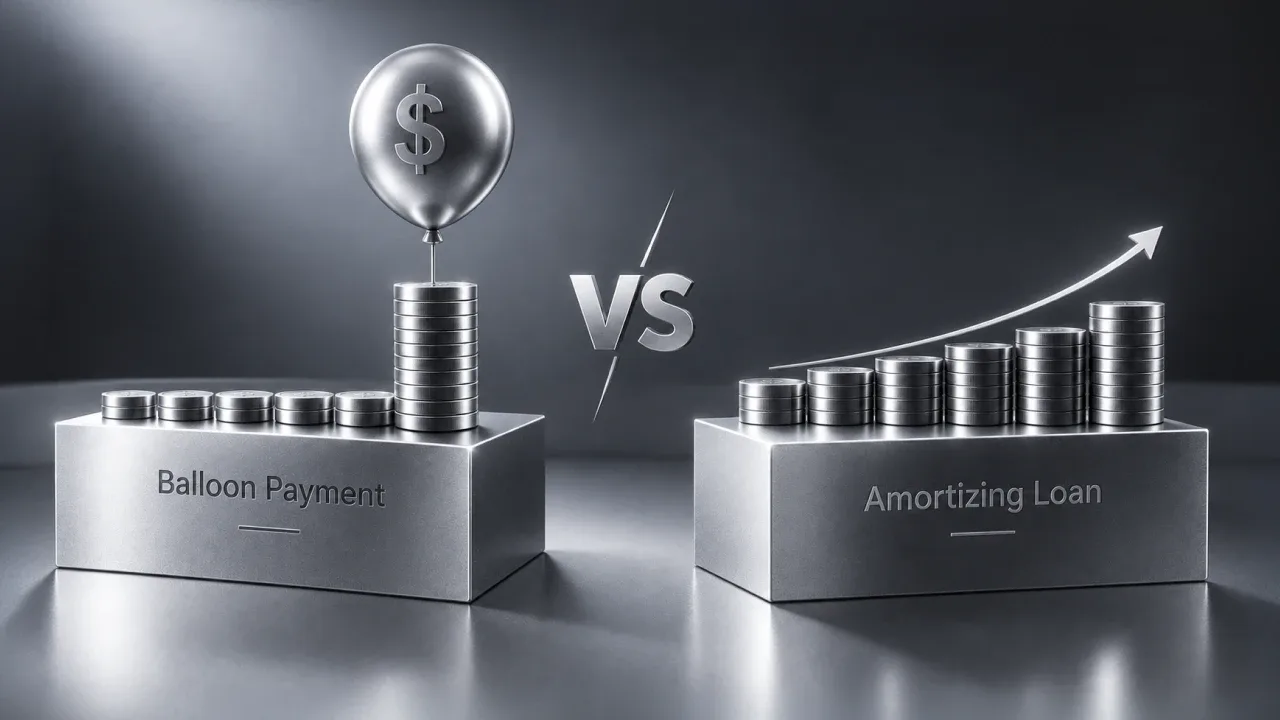
The rate is often fixed, which makes the financing cost easier to model in advance. Repayment can be amortizing, or the loan can pay interest during the term with principal due in one larger payment at maturity.
If the loan is secured, a specific business asset may also stand behind the obligation.
What Is a Business Line of Credit?
A business line of credit does not necessarily put the entire approved amount into the company's account.
Instead, it establishes a maximum limit.
If a company has access to 100,000 USD but only draws 30,000 USD, interest is typically charged on the 30,000 USD outstanding rather than the full 100,000 USD.
Once part of that balance is repaid, the borrowing capacity can usually be used again.
The trade-off is predictability. Rates are commonly variable or floating, and some facilities charge a fee for keeping unused capacity available.
A line therefore gives the borrower more flexibility, but less certainty about the final cost.
When a Term Loan Fits Better Than a Line of Credit
A term loan tends to make more sense when the business already knows what it needs to fund and expects to use most of the money straight away.
Take an 80,000 USD machine purchase. If the full amount is required on day one, there may be little advantage in paying for access to a larger revolving limit.
The same can apply to a defined contract, renovation, expansion project, or other one-off investment.
A fixed rate can also make budgeting easier. The company knows the agreed borrowing cost and is not directly exposed to changes in a floating reference rate during the term.
The drawback is equally clear: once the full amount has been funded, interest is generally charged on that full principal even if part of the cash sits unused for some time.
When a Line of Credit Fits Better Than a Term Loan
A line of credit is usually more useful when either the amount or timing of the financing need is uncertain.
A seasonal business might need 20,000 USD now, repay it once customer invoices clear, and then need another 40,000 USD several months later.
Funding the entire amount through one loan at the beginning could mean paying interest on money that has not yet been put to work.
That is why lines are commonly used for recurring cash-flow gaps, inventory purchases, short-term working capital, or expenses that are difficult to time precisely.
A company can also use both structures at once, subject to lender approval and existing covenants. A term loan might finance an asset purchase, while a credit line remains available for day-to-day operating needs.
What Happens If You Don't Use the Full Credit Line?
Unused capacity usually does not attract the same interest charge as money already borrowed.
If a company has a 100,000 USD line but carries an average balance of 60,000 USD, interest is normally calculated on that 60,000 USD.
The other 40,000 USD is still available, but keeping that capacity open may come with a commitment or maintenance fee.
That is why a line is not automatically the cheaper option. Its main cost advantage appears when the business genuinely uses only part of the approved limit, or borrows for relatively short periods.
Comparing the Real Cost: Fixed Loan vs. Revolving Line
Headline interest rates are only part of the calculation.
The amount actually used matters. So does the length of time it remains outstanding, whether interest is charged on the entire principal or only the drawn balance, and which additional fees apply.
The following comparison is illustrative, not an offer. The term-loan example uses a fixed 22% annual rate within the 19–25% investor APR range used on 8lends. The revolving line is a general market illustration only; 8lends does not offer a revolving business line of credit.
Illustrative Example: $80,000 Need Over 9 Months
Assume a business needs financing for nine months.
Option A: fixed secured term loan
The company receives 80,000 USD at a fixed annual rate of 22%. A 3% origination fee is charged once at funding. Interest is paid monthly, while the full principal is repaid at the end of month nine.
Monthly interest:
80,000 × 22% / 12 = 1,466.67 USD
Interest over nine months:
1,466.67 × 9 = 13,200 USD
Origination fee:
80,000 × 3% = 2,400 USD
Total borrowing cost:
13,200 + 2,400 = 15,600 USD
In month nine, the borrower repays the 80,000 USD principal together with the final interest payment:
80,000 + 1,466.67 = 81,466.67 USD
The total cost over nine months is:
15,600 / 80,000 = 19.5%
Annualized on a simple basis:
19.5% × 12 / 9 ≈ 26.0%
The annualized figure is higher than the 22% nominal rate because the 3% origination fee is being absorbed over a relatively short nine-month period.
Option B: hypothetical revolving line of credit
The business has a 100,000 USD approved limit but uses an average of 60% of it.
That gives an average outstanding balance of 60,000 USD.
Assume the line carries a hypothetical floating annual rate of 16% on the drawn balance, plus a 1% annual commitment fee on the unused portion. On average, 40,000 USD remains unused.
Monthly interest:
60,000 × 16% / 12 = 800 USD
Interest over nine months:
800 × 9 = 7,200 USD
Commitment fee:
40,000 × 1% × 9 / 12 = 300 USD
Total cost:
7,200 + 300 = 7,500 USD
Relative to the average 60,000 USD actually used:
7,500 / 60,000 = 12.5%
Annualized on the same simple basis:
12.5% × 12 / 9 ≈ 16.7%
The difference between 22% and 16% is only part of the story.
The term loan charges interest on the entire 80,000 USD for the full nine months and adds an origination fee. The line charges interest on an average 60,000 USD balance and then adds a much smaller commitment fee on unused capacity.
In this particular example, the line costs substantially less in dollar terms.
That does not mean a line of credit is generally the cheaper product. If the business needs the full amount for the whole term, the advantage of paying interest only on what is drawn becomes much smaller and may disappear entirely.
A lower headline rate does not automatically mean lower cost. Fees, the amount on which interest is calculated, and whether the financing is fixed or revolving all affect the final borrowing cost. A secured loan or credit line also puts pledged business assets at risk if payments are missed. Recovery against collateral is a real consequence of default. Compare the full cost of a specific amount over a specific period, rather than relying on the advertised rate alone.
Collateral, Personal Guarantees, and Approval Speed
Collateral requirements vary widely.
The lender, facility size, business profile, term, and type of financing all matter.
Larger or longer-term loans may be secured against equipment, vehicles, property, inventory, or other business assets. A lender can also ask for a personal guarantee.
Lines of credit cover a broader range. Smaller facilities may be unsecured, while larger ones are often backed by receivables or general business assets.
There is also more than one kind of “speed.”
A secured term loan can take time to underwrite because the lender may need to assess both the business and the collateral.
A line of credit also requires underwriting at the start. Its main speed advantage comes afterward: once the facility has been approved, future draws can often be made without starting the entire credit process again.
Do You Need Collateral for a Business Line of Credit?
Not always.
Some lenders offer smaller unsecured facilities to borrowers that meet their credit requirements. Larger limits are more likely to require collateral, a personal guarantee, or both.
This is a general market observation rather than a description of an 8lends product.
8lends does not offer revolving credit lines. Its business financing is structured as fixed-term loans backed by real-world collateral.
Business Loan vs Line of Credit at a Glance
| Feature | Term Business Loan | Business Line of Credit |
|---|---|---|
| Structure | Fixed amount, disbursed once, repaid on a fixed schedule | Revolving limit; draw, repay, and redraw within the approved period |
| Rate | Typically fixed for the life of the loan | Typically variable/floating, tied to a reference rate |
| What you pay interest on | The full principal for the full term, regardless of how it's used | Only the amount actually drawn, for the time it's outstanding |
| Typical fees | Origination fee paid once at funding | Commitment/maintenance fee on the undrawn (or total) limit, sometimes a draw fee |
| Repayment | Fixed schedule – interest paid periodically, principal amortized or paid as one lump sum (bullet) at term end | Minimum payment on the drawn balance; the business decides how much of the balance to pay down and when |
| Typical collateral | Often required for larger or longer-term amounts – equipment, vehicles, real estate, inventory | Ranges from unsecured (smaller limits, strong credit) to secured by receivables or general business assets |
| Speed to funding | Depends on underwriting depth – days for some short-term products, weeks to months for larger secured loans | Underwriting happens once, up front; once approved, draws can be near-instant |
| Best fit | A one-time, identifiable need: a purchase, a project, a contract to fulfill | A recurring or unpredictable need: seasonal cash-flow gaps, opportunistic purchases, a buffer against timing risk |
The question is not which product is universally better.
A term loan offers certainty: a defined amount, a known term, and usually a predictable repayment structure.
A line of credit offers flexibility. The borrower can use only what is needed and return to the limit later, but usually accepts a variable rate and may pay fees simply for keeping access available.
How an Asset-Backed Term Loan Works on 8lends
8lends offers fixed-term secured P2B loans rather than revolving credit lines.
Loan terms run from 4 to 16 months. Interest is paid monthly, with principal repaid as a bullet payment at maturity. Borrowers pay a one-time 3% origination fee.
Each loan is backed by real-world assets such as equipment, vehicles, real estate, or inventory. Maclear AG in Basel, Switzerland, acts as the independent collateral agent under the applicable PolyReg SRO framework.
Borrowers are assessed using more than 40 due-diligence criteria.
Investor rates are fixed at 19–25% APR. The 22% figure used in the worked example is simply an illustrative point within that range, used here to show how the borrowing-cost calculation works.
The platform is operated by Alpha Systems LLC in Saint Vincent and the Grenadines, a VASP under FSA SVG supervision. CLEARCHAIN CORP in Canada is registered as an MSB with FINTRAC under registration C100001102 through 31 August 2028.
For borrowers, the distinction is simple: an 8lends loan provides one secured amount for a defined term. It is not a revolving facility that can repeatedly be drawn down and replenished.
Frequently Asked Questions
A business loan provides a fixed amount under a defined repayment structure. A line of credit creates a revolving limit that can be drawn partially, repaid, and usually reused during the approved period.
Sometimes, but not automatically. A line may cost less when the business uses only part of its available limit because interest is normally charged only on the amount drawn. Commitment, maintenance, and other fees still need to be included in the comparison.
Not always. Smaller facilities may be unsecured, while larger lines are more likely to require receivables, other business assets, a personal guarantee, or a combination. 8lends offers secured term loans rather than revolving lines of credit.
That depends on the lender and facility terms. Many revolving lines allow borrowers to reduce the outstanding balance as cash becomes available, but fees and repayment conditions vary. An 8lends loan instead has a fixed 4–16-month term with principal repaid at maturity.
Initial underwriting can take a similar amount of time for either structure. Once a line has already been approved, later draws are often quicker because the borrower does not need to complete a full new financing process each time.
Read next
Do You Have Any Questions?
All questionsThe platform has been audited by CertiK and Cyberscope, and all transactions are publicly visible on the Base blockchain. Two companies with clear responsibilities stand behind the platform: CLEARCHAIN CORP operates the platform and is registered as a Money Services Business with FINTRAC (Canada), and Maclear AG conducts due diligence and monitors collateral. So the platform is well regulated, transparent and accountable
If the project has BuyBack, the partner buys the loan and returns 100% of the principal once it is overdue for 60 days or more. Without BuyBack, Maclear AG initiates the sale of the collateral, and the proceeds are distributed proportionally among investors. Since launch there have been no defaults
The platform is operated by CLEARCHAIN CORP, registered in Canada as a Money Services Business (MSB) and subject to mandatory AML/CFT compliance requirements under FINTRAC. Settlements are made in USD. The platform is not a CASP, so DAC8 requirements do not apply
Small and medium-sized businesses in developing regions do not have easy access to bank financing and are willing to pay higher rates than businesses in the EU or US
You can sell your position to another investor through the Secondary Market before the end of the loan term. With Fastlending there is no fixed term: the principal and accrued income can be withdrawn at any time
The minimum investment is 100 USD
Risk of non-payment by the business, risk of changes in the value of the collateral, risk of limited liquidity if there is no buyer on the Secondary Market, and technical risk associated with the smart contract
Investments from 100 to 500 USD are available without KYC. For amounts over 500 USD, full verification is required: an identity document and proof of address