

2025年9月23日5 分钟阅读
追求更高回报、更强分散性以及与借款人直接接触的个人,纷纷涌向点对点借贷。但尽管投资者常常仔细审查借款人档案和利率,却有一种更令人担忧、却经常被忽视的风险:平台风险,这是一种根本性的风险。也就是你所使用的P2P公司可能倒闭、冻结提现,或宣告破产的风险。一旦如此,你的资金就可能被困住。你或许幸运地暂时挺了过来,但这并不能消除永久性损失的风险。随着P2P借贷领域走向成熟并吸引到更多客户,了解一旦平台倒闭会发生什么,如今已不仅仅是有所帮助,而是保护你资本的关键所在。在本文中,我们将探讨什么是平台风险、一旦平台倒闭你的资金会发生什么,以及如何保护自己免受此类冲击。
Why Platform Risk is Often Overlooked
Whenever individuals think about risk in peer-to-peer lending, they typically consider the borrower. What happens to the borrowers when they default on the loan? Do they have a good credit history? Those are good concerns. However, they are just part of the story. The platform is probably the biggest unaccounted-for risk in P2P lending.
Investors assume that a platform is running if it is safe. But sometimes that isn't so. A platform may be poorly managed, underfunded, or poorly overseen. And even borrowers making repayments might not save investors from losing access to their money if that platform fails.
Many retail investors skip this altogether. However, understanding platform risk is as important as evaluating a loan on a case-by-case basis.
Why Platform Risk Matters
P2P platforms facilitate the entire loan lifecycle by matching investors with borrowers. They:
- Vet and list borrowers
- Handle payments & repayment schedules
- Manage communication and collection
- Offer investor dashboards and updates
When this middleman collapses, things get messy. If a borrower continues to pay, who collects that payment anyway? Who makes sure it reaches you? Who handles disputes?
Without strong safety measures, your investment may be stranded, or even worse, completely lost.
What Happens if a P2P Platform Fails?
A platform failure does not necessarily mean your money is gone. However, recovering is complicated by many factors. These include:
Disrupted Loan Servicing
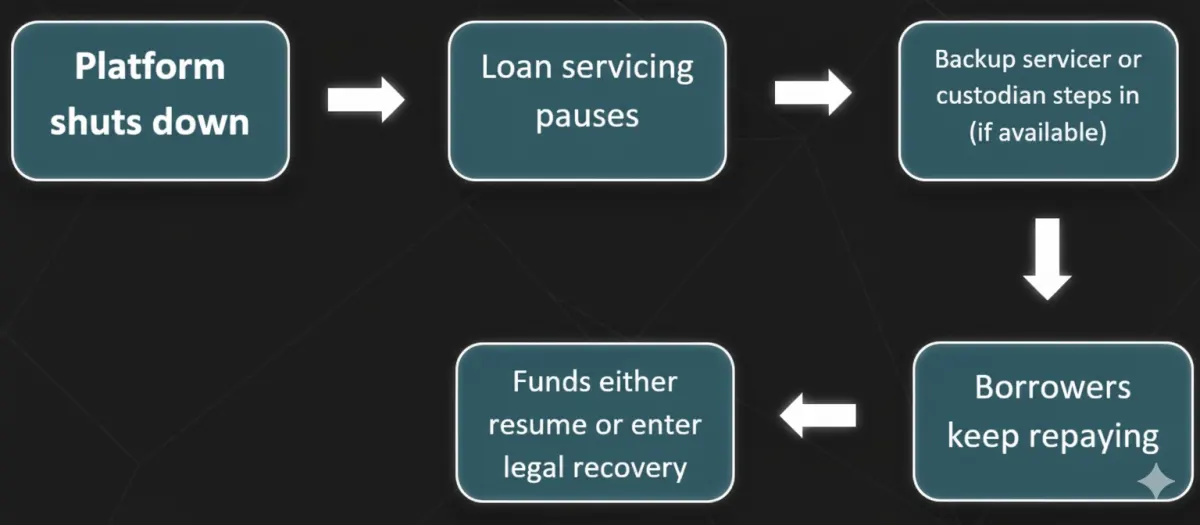
Backup servicers keep track of repayments and borrower communications if the platform fails. If the platform goes down and no backup servicer is available, payments from borrowers could stop. Communications would break down, and you may not receive your expected income.
Custodian Account / SPV
Reputable platforms often protect investor money through Custodian accounts / Special Purpose Vehicles (SPVs). This keeps investor funds separate and ensures they are less likely to disappear with the platform.
Activation of Backup Servicer
Some platforms have agreements with third-party servicers that can take over loan management when required. This may keep repayments up and limit losses.
Bankruptcy and Legal Process
Investors become unsecured creditors if the platform goes bankrupt. What this means is that you might get only a fraction of your money back. And even that may take months or years.
Real-World Examples of Platform Failure
Lendy (UK, 2019)
Lendy was once one of the top peer-to-peer lending platforms in the UK and yet things went wrong. The firm entered administration in 2019 after there was an increase in default rates and increased concern over poor transparency. The failure of the loans was worth more than 160 million pounds and years later there are still investors waiting to be paid back in full.
Grupeer (Latvia, 2020)
Grupeer, a P2P platform operating in Latvia, suffered platform failure; its sudden freezing of the withdrawals caught its users completely unexpectedly. It would be later realized that all the listed loans on the platform had some fake loans. Most investors sustained huge losses, especially with the lack of a straightforward plan of recovery and legal options. In most of the instances, the amount recovered was less than 20% of the original amount invested.
These examples demonstrate that a platform's power and regulation create a significant impact on whether investors retrieve funds or not.
8lends is a Swiss-based crowdlending company built with platform security and long-term investor protection at its core. With regulated operations, robust credit vetting, and transparent loan structuring through SPVs, 8lends offers not just strong returns – but peace of mind that your capital isn’t left exposed to platform chaos.
How To Know if a Platform is At Risk
Several signs can suggest trouble is coming.
| Red Flag | Why It Matters |
|---|---|
| Delayed interest payouts | May indicate liquidity problems |
| No recent audits published | Lack of transparency |
| Management turnover | Can signal internal instability |
| Poor communication | Often precedes operational shutdown |
| Withdrawal restrictions | A serious warning sign |
Red flags also include sudden shifts in strategy. For example, switching from low-risk consumer loans to high-risk digital assets without sufficient transparency. If you notice one or more of these, it's wise to consider exiting early.
Factors That Determine Recovery Success
Recovery depends on several technical and legal factors:
| Factor | Impact on Recovery |
|---|---|
| Custodian Account | Keeps investor funds separate from platform |
| SPV Loan Structure | Loans are easier to transfer and manage |
| Regulatory Oversight | Regulated platforms are more likely to have protocols |
| Jurisdiction | Strong legal frameworks help enforce recovery |
Visual Guide: What Happens When a Platform Collapses
Zopa’s Pandemic Response
Zopa, a regulated UK P2P platform established in 2005, ended the early 2020 market turmoil quite differently. Zopa implemented some protections and still operated despite investor withdrawals.
They froze new loan listings and capped withdrawals temporarily to maintain liquidity.
Weekly updates on portfolio and loan book performance were sent to investors. Zopa used its well-capitalised reserve and backup mechanisms to keep borrower repayments flowing.
Consequently, the platform did not collapse, and most investors continued to receive repayments. Zopa was transparent and prepared. And this proved to be pivotal in weathering a stressful period. This crisis-tested resilience bolstered Zopa's reputation and later helped it to gain traction as it transitioned to a fully licensed bank.
Risk Types
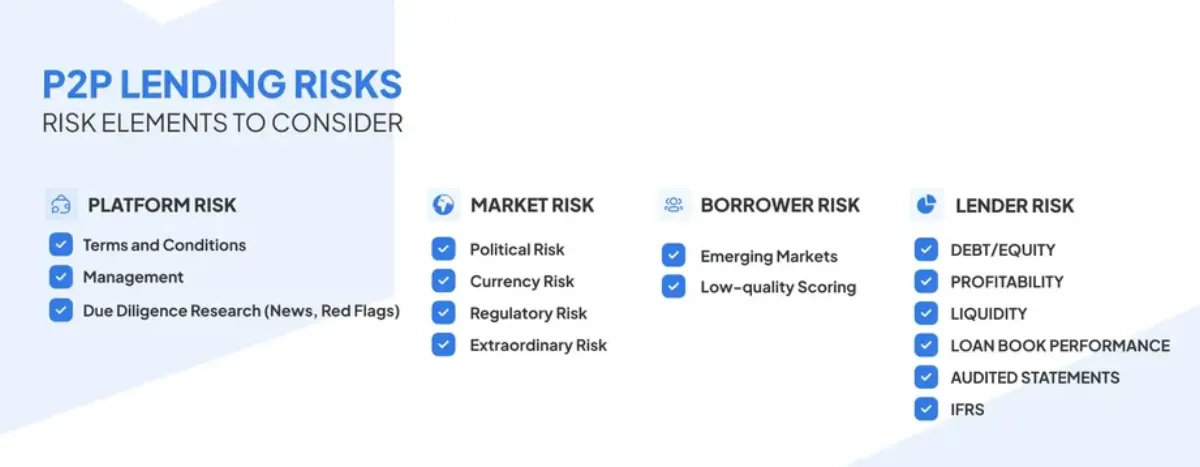
It’s important not to confuse platform failure with borrower default or other types.
| Type of Risk | Description | Can You Control It |
|---|---|---|
| Platform Risk | Platform collapses or goes bankrupt | Limited |
| Borrower Risk | Borrower misses payment | Medium |
| Currency Risk | FX losses on cross-border loans | Yes (Hedging) |
| Economy Risk | Recession causes widespread defaults | No |
Even if a borrower is paying on time, you won’t get your money unless there’s someone to process and pass on that payment.
Steps to Protect Yourself
Here’s what you can do:
- Confirm Custody Arrangements Verify that the platform uses separate accounts or custodians. Avoid platforms that jumble investor money with operating cash.
- Understand the Legal Setup Do loans under your name exist as SPVs or security? If so, they can be transferred more easily if there’s a collapse.
- Know Where It’s Regulated Licensed platforms are generally safer, for example, the UK's FCA. Other jurisdictions are more risky.
- Diversify Across Platforms Don’t put all your money on one platform. Consider 2-3 reliable ones, as they will reduce your risk tremendously.
- Monitor Platform Health Watch for delayed withdrawals, broken dashboards, or long silence. They are all early warnings of trouble.
- Keep Your Own Records Download contracts, payment schedules & communications. They might be crucial in legal proceedings.
Summary Table: Platform Risk at a Glance
| Risk Area | What it Means | What Can You Do? |
|---|---|---|
| No Custodian | Funds may disappear with the platform | Confirm use of third-party custodian |
| No SPV | Ownership of loans unclear | Ask how loans are legally structured |
| Weak Regulation | No protections during failure | Favour regulated platform |
| Single Platform Use | All eggs in one basket | Diversify your portfolio |
| Poor Transparency | Trouble can sneak up on you | Monitor platform communications and audits |
Final Thoughts
Platform risk isn't flashy, but it's real. It can be easy to get lost in interest rates and borrower profiles and not consider the platform itself as the glue holding everything together. The good news? You can minimize this risk by doing a little homework upfront: Pick regulated platforms, custodians & SPVs, lend across different asset classes, and be on the lookout.
Looking for a platform that takes your capital seriously? 8lends is redefining peer-to-peer lending with one of the most advanced risk-management frameworks in the industry. Whether you care about borrower quality, loan transparency, or long-term platform viability – 8lends delivers on every front.
接着读

有任何疑问吗?
全部问题平台已通过 CertiK 和 Cyberscope 审计,所有交易在 Base 区块链上公开可查。平台背后是两家职责清晰的公司:CLEARCHAIN CORP 负责平台运营,并在加拿大以 Money Services Business 身份在 FINTRAC 注册;Maclear AG 负责尽调与抵押物监管。平台受到良好监管,公开透明且责任清晰
若项目带有 BuyBack,逾期满 60 天后合作方将买断贷款并返还 100% 本金。若无 BuyBack,Maclear AG 将启动抵押物出售,所得按比例分配给投资者。平台上线以来从未发生违约
平台由 CLEARCHAIN CORP 运营,其在加拿大注册为 Money Services Business(MSB),并须在 FINTRAC 下履行强制性 AML/CFT 合规要求。结算以 USD 进行。平台并非 CASP,因此 DAC8 要求不适用
发展中地区的中小企业难以获得银行融资,愿意支付比欧盟或美国企业更高的利率
到期前可在二级市场将头寸卖给其他投资者。Fastlending 没有固定期限:本金和收益随时可提取
最低投资额为 100 USD
企业不还款的风险、抵押物价值波动的风险、二级市场无买家时的流动性受限风险,以及智能合约相关的技术风险
100 至 500 USD 的投资无需 KYC。超过 500 USD 需完成完整认证:身份证件和地址证明