
블록체인 대출 용어 해설: APY, TVL, 담보 비율 등

2025년 6월 3일5 분 소요
탈중앙 금융은 블록체인 기술을 이용해 사람들이 돈을 다루는 방식을 바꿔 놓았습니다. 누구나 쓸 수 있고 작동 과정을 지켜볼 수 있는 시스템을 만들어 냅니다. 프로토콜 기반 대출에서는 은행이 개입할 필요 없이 디지털 자산을 빌려주고 빌립니다. 전 과정이 블록체인에 심어진 자동화 계약 위에서 돌아갑니다. 덕분에 금융 서비스에 접근하기 쉬워지고, 자금이 어디로 가는지 정확히 드러나며, 전통적 선택지보다 높은 수익 가능성을 주는 경우도 많습니다. APY, TVL, 담보 비율 같은 용어를 알아 두면 예상치 못한 일을 피할 수 있습니다. 이 글에서는 각 용어의 뜻, 왜 중요한지, 그리고 프로토콜 기반 대출 이용자에게 무엇을 의미하는지 설명합니다.
The Basics
blockchain lending means lent and borrowed digital assets on self-operating platforms. You put your coins into a pool to earn interest. Or you lock up some coins as a guarantee to use other coins.
The whole system runs without a middleman, so you deal directly with others on the blockchain. Smart contracts handle all the details, leaving loan rules run on their own. Lenders earn interest and borrowers get cash without having to sell their coins. Digital asset prices tend to jump up and down fast, so this carries some risks.
Annual Percentage Yield (APY)
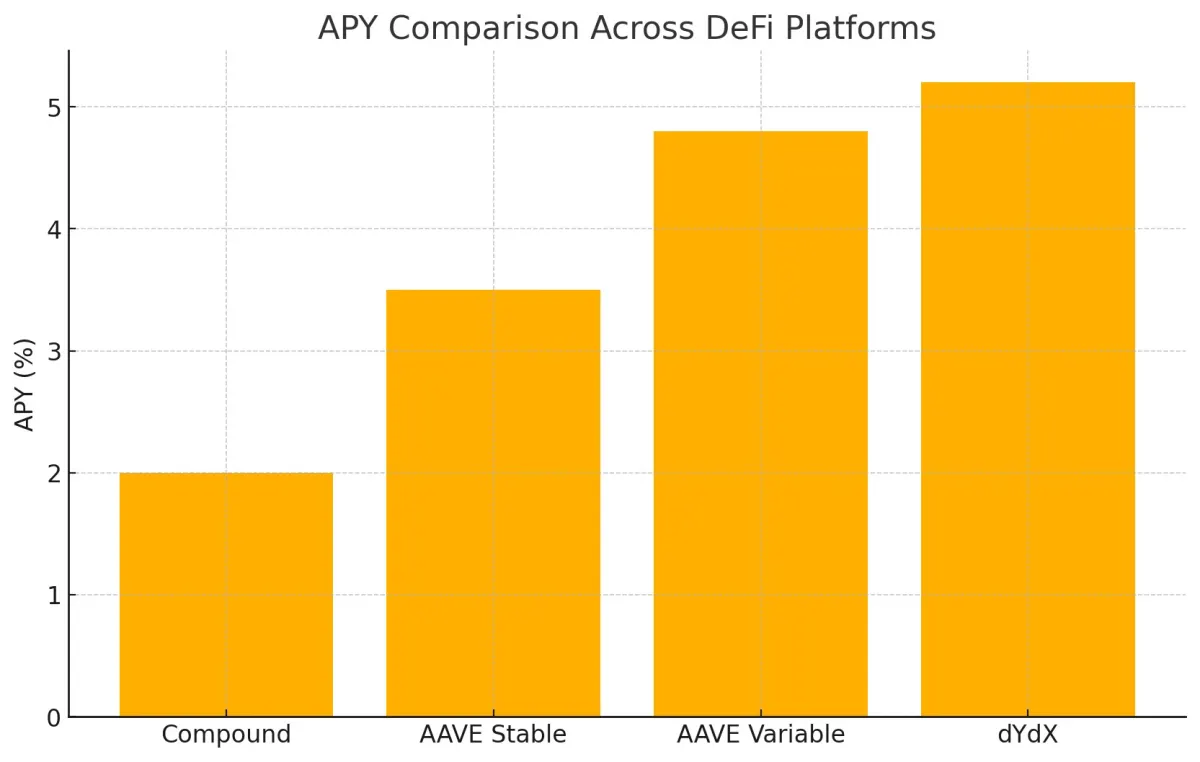
Annual percentage yield shows the yearly return on an investment, taking into account compound interest. In such P2P loans, it tells you how much interest you earn on assets you lend, or how much you have to pay when you borrow. Unlike banks, where charges stay the same for a set time, platforms often change APYs as users come and go.
Knowing APY helps you see possible gains or costs. A higher APY means better returns, so these types of loans are often seen as appealing when bank rates are low. These charges shift all the time because smart contracts adjust them to balance supply and demand. Some platforms calculate interest every few seconds on chains like Ethereum. You might even pick a “stable” APY on crowdlending sites such as 8lends, which stays the same for a while if you want predictability.
There is a trade-off. Higher APYs could yield higher rewards, but they also bring more risk. Smart contracts have weaknesses too. Markets may swing up and down. So it is wise to keep an eye on both the figures and the health of the platform you choose.
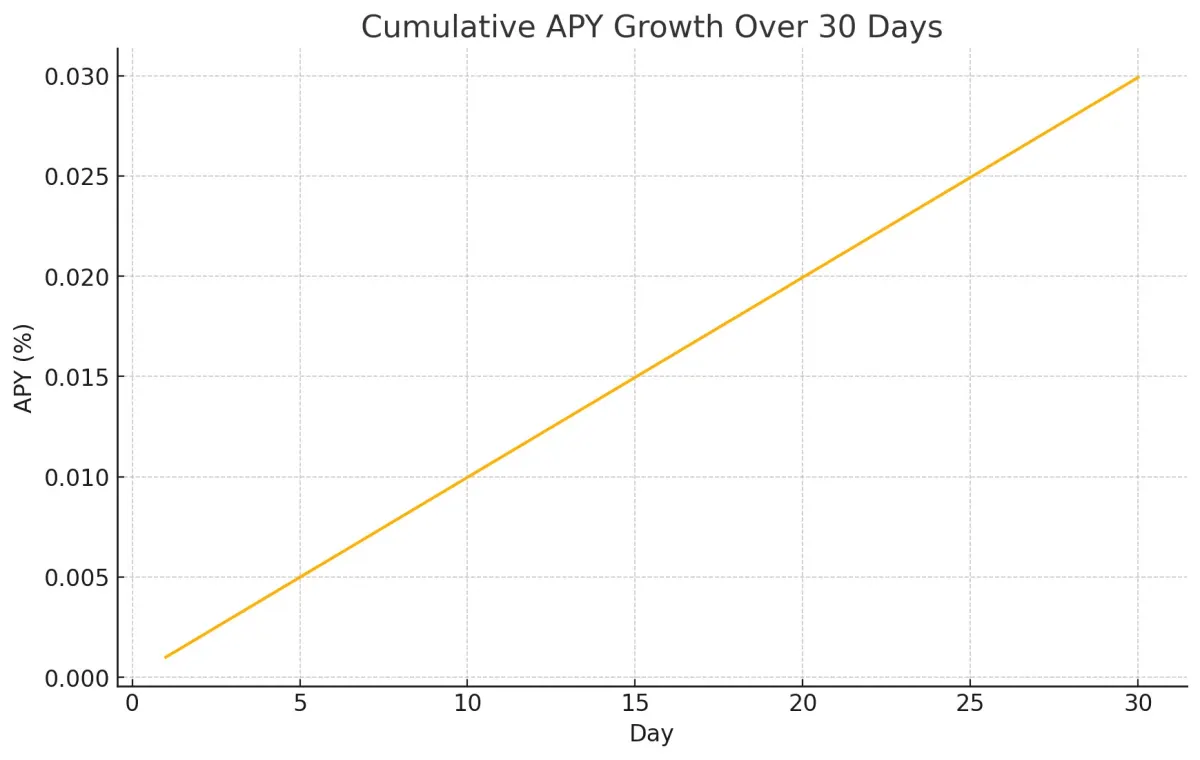
Here’s a quick example based on Compound Finance. If the cETH to ETH course grows by 0.0000000003 each block, and about five blocks happen every minute, your supply APY for a month will work out to roughly 2.005%.
On a 10 Ethereum deposit, that means about 0.2592 Ethereum in interest over thirty days. Frequent compounding like this might boost your earnings, but it also means you need to watch things closely.
Total Value Locked (TVL)
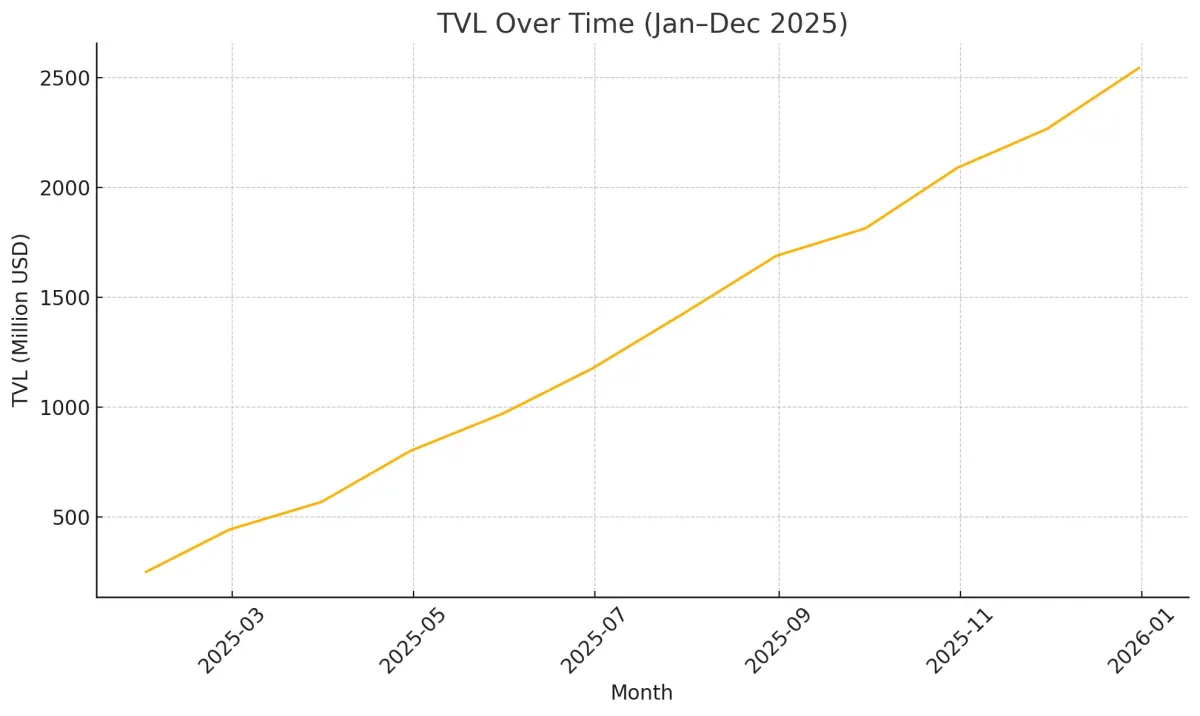
Total Value Locked shows how much money is sitting in a lending protocol at any moment. It is usually counted in US dollars or the protocol’s own digital asset, like ETH for Ethereum projects. In lending pools, TVL means all the funds lenders have added to those pools.
TVL matters because it tells us how popular and liquid a protocol is. More TVL means more money is up for borrowing, so trades might happen more smoothly and the interest may stay steadier. It also shows that people trust the protocol and use it, making it easy to compare different projects. TVL tends to jump around with market ups and downs, and it only measures what is locked in, not the earnings generated from it.
Imagine someone puts $1,000 worth of Ethereum into a protocol. Another user then takes up $500, backed by that deposit. The TVL here becomes $1,500, counting both what is deposited and what is used. Investors watch this number closely, using it to decide if a protocol, like MakerDAO or Compound, looks ahead to a bright future. So TVL gives a clear snapshot of a project’s health and size at any time.
Collateral Ratio
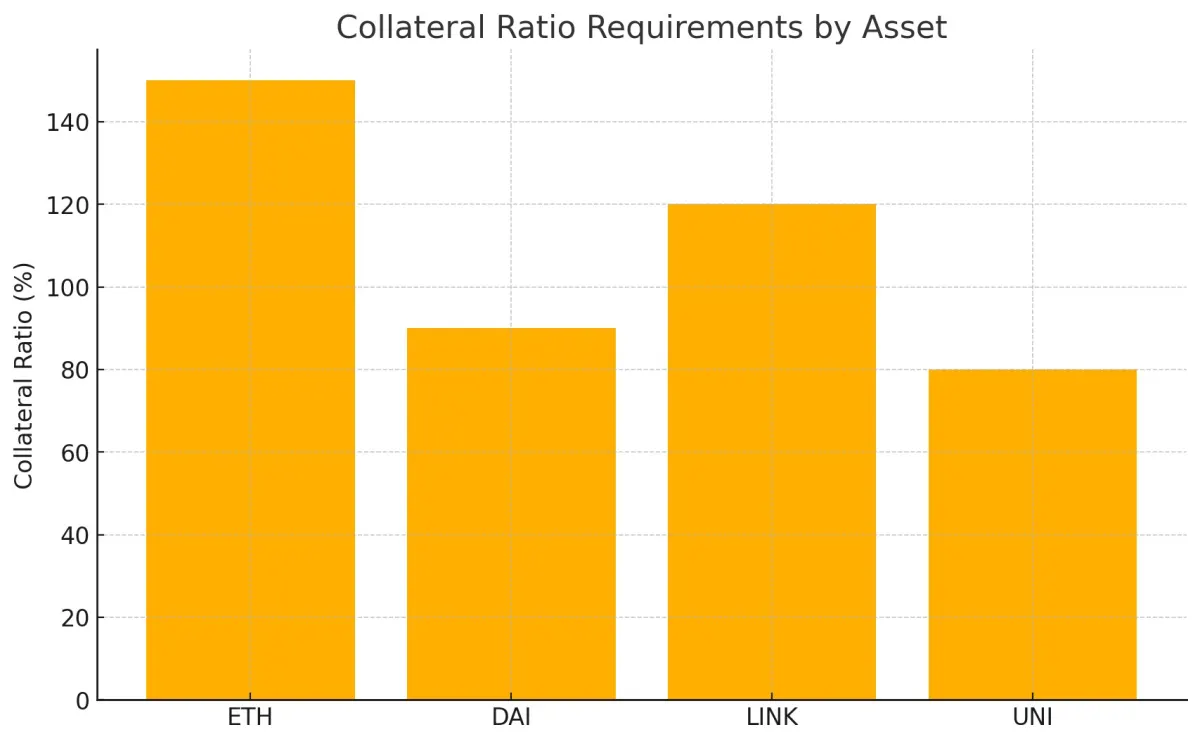
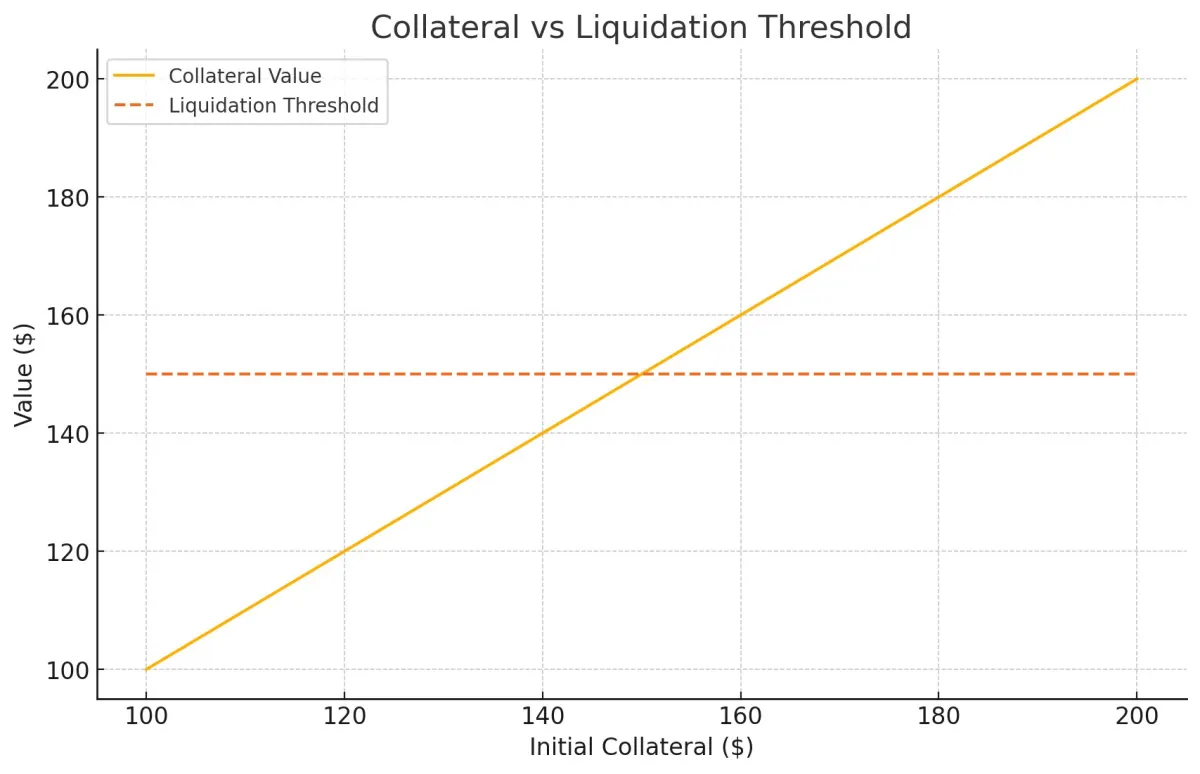
This shows how much value you lock up compared with the loan you take out. In these loans, you usually need to lock up more value than you borrow. This extra cushion guards against sudden price swings. For instance, MakerDAO asks you to lock up $150 worth of Ethereum to use $100 in DAI. That works out to a 150% ratio.
If the value of your Ethereum falls below that level, your loan may be liquidated. Lenders stay safe this way. Each asset carries its own limit. Riskier digital assets may only allow a 50% collateral factor. Digital dollars may go as high as 90%.
Let’s say you lock up $150 in Ethereum and take up $100 in DAI. If ETH’s price drops so that your security backing falls below $150, your position will face liquidation, and you’ll lose a bit extra as a penalty. This system protects lenders but could also cost borrowers. Keeping an eye on your collateral ratio is big.
Utilization Ratio
This measures how much of the total supply in a credit pool is actually borrowed. You find it by dividing the total borrowed by the total supplied. High-level utilization pushes interest rates up. Lower numbers result when there is more supply than demand. Most of these platforms adjust rates automatically based on that number.
Take a pool with $1,000 supplied and $800 borrowed. Its utilization ratio is 80%. With so much of the pool in use, rates rise to attract more suppliers and slow down utilization. Compound employs a simple formula: interest rate = 5% + 15% x the utilization ratio.
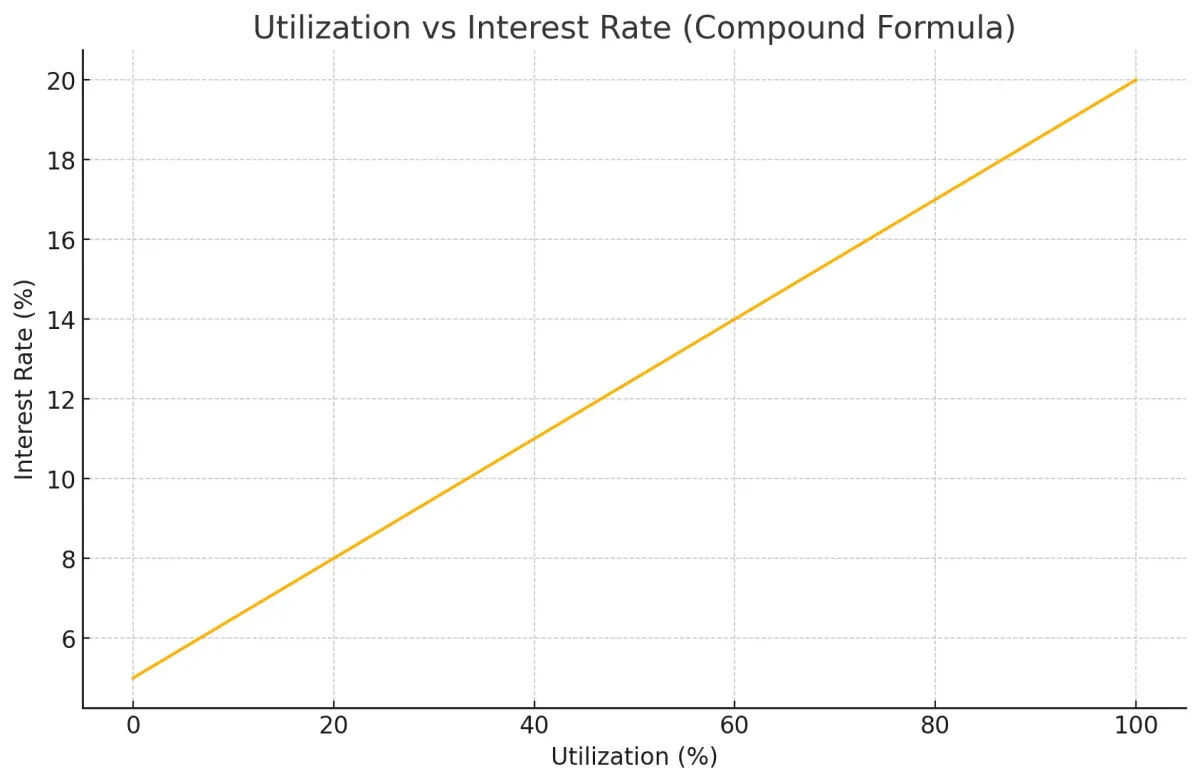
That means figures move from 5% at zero utilization up to 20% at full utilization. Other platforms like dYdX and DDEX apply steeper curves for faster rate changes. This ongoing innovation keeps blockchain lending credit both flexible and balanced.
Liquidation
Liquidation happens when a borrower’s collateral is sold to pay back their loan after its value drops too low. The protocol sets a safety score, often called a health factor, to make sure there is always enough of a guarantee. If the security backing falls below that score, it could be sold so that the loan stays covered. This keeps the system stable and the lenders protected.
Blockchain lending has no credit checks or courts to step in. Instead, overcollateralization and liquidation handle the risk. When a position becomes undercollateralized, anyone could trigger a sale. They repay part of the loan and receive the collateral at a small discount. In some projects, if the health factor drops below 1, up to 50% of the debt can be paid off this way, and the liquidator earns a fee. This protects lenders but may be painful for borrowers.
Imagine you lock up 10 Ethereum worth $3,000 as collateral and use $2,000 DAI. Your liquidation limit is 80%. If Ethereum’s price falls and your guarantee dips below $2,500, your position could be liquidated. A liquidator steps in, pays part of your debt, and takes some of your Ethereum at a discount. You lose some collateral, but your remaining debt goes down.
Health Factor
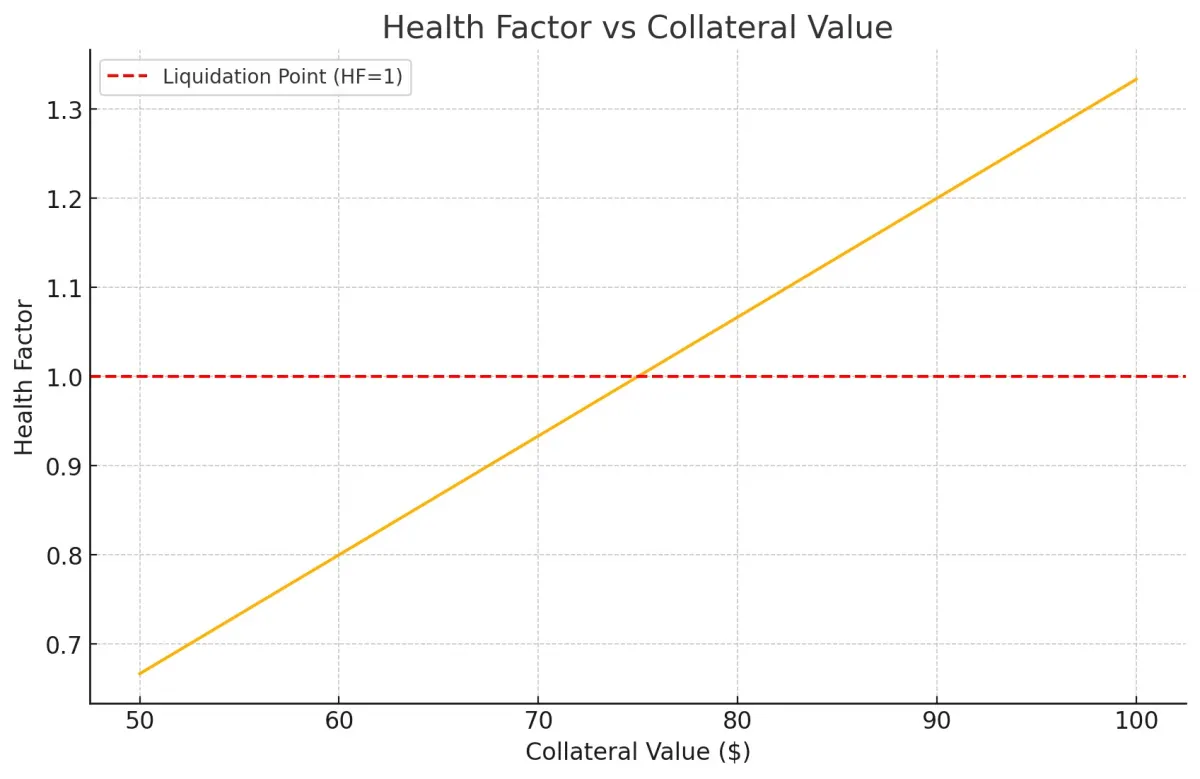
The health factor shows how safe a loan is. It is calculated as: (the sum of each collateral’s value × its liquidation cutoff) ÷ total borrowed
All values are usually in Ethereum.
A health factor above 1 means your loan has enough backing. If it falls below 1, you don’t have enough security, and your position can be liquidated. This number gives you a simple signal so you can add more collateral or pay back some debt.
Digital dollars often maintain a high cutoff rate (around 80%), while riskier digital assets sit closer to 65 %. That difference reflects how likely an asset is to swing in price. In busy markets, liquidators race to spot positions with low health factors and act fast when prices move.
For example, say you lock up $10,000 as a guarantee with an 80% cutoff and borrow $ 6,000. Your health factor is: (10,000 × 0.8) ÷ 6,000 = 1.33
That is above 1 and shows your position is safe. If the security value drops, pushing the health factor under 1, you face liquidation.
Conclusion
Blockchain lending opens up new ways to lend and borrow digital assets. Learning the terms helps you make smart choices and manage risks so that you feel more in control. Staying updated and using trusted platforms with smart contracts that have been checked is key to success. One of the highest-profile opportunities to make big profits with a low risk lately, by the way, is crowdlending. 8lends offers evenly spread-out risk among multiple projects backed by collateral for a 15% return rate.
다음 읽을거리



궁금한 점이 있으신가요?
모든 질문플랫폼은 CertiK와 Cyberscope의 감사를 받았으며 모든 거래는 Base에서 공개적으로 확인할 수 있습니다. 책임이 명확한 두 회사가 뒷받침합니다: CLEARCHAIN CORP(플랫폼 운영, 캐나다 FINTRAC에 MSB로 등록)와 Maclear AG(실사와 담보). 플랫폼은 잘 규제되고 투명하며 책임 있게 운영됩니다
BuyBack이 있는 프로젝트라면 60일 이상 연체 시 파트너가 대출을 매입해 원금의 100%를 돌려줍니다. BuyBack이 없으면 Maclear AG가 담보 매각을 시작하고 대금은 투자자에게 비례 배분됩니다. 출시 이후 부도는 없었습니다
플랫폼은 캐나다에서 Money Services Business(MSB)로 등록되어 FINTRAC의 의무 AML/CFT 컴플라이언스 요건을 적용받는 CLEARCHAIN CORP가 운영합니다. 정산은 USD로 이루어집니다. 플랫폼은 CASP가 아니므로 DAC8 요건이 적용되지 않습니다
개발도상 지역의 중소기업은 은행 금융에 쉽게 접근하지 못해 EU나 미국 기업보다 높은 금리를 감수합니다
만기 전에 세컨더리 마켓에서 다른 투자자에게 포지션을 판매할 수 있습니다. Fastlending은 고정 기간이 없어 원금과 수익을 언제든 인출할 수 있습니다
최소 투자액은 100 USD입니다
기업의 미상환 리스크, 담보 가치 변동 리스크, 세컨더리 마켓에 매수자가 없을 때의 유동성 제한 리스크, 스마트 컨트랙트 관련 기술 리스크
100–500 USD 투자는 KYC 없이 가능합니다. 500 USD 초과 시 신분증과 주소 증명을 통한 전체 인증이 필요합니다